
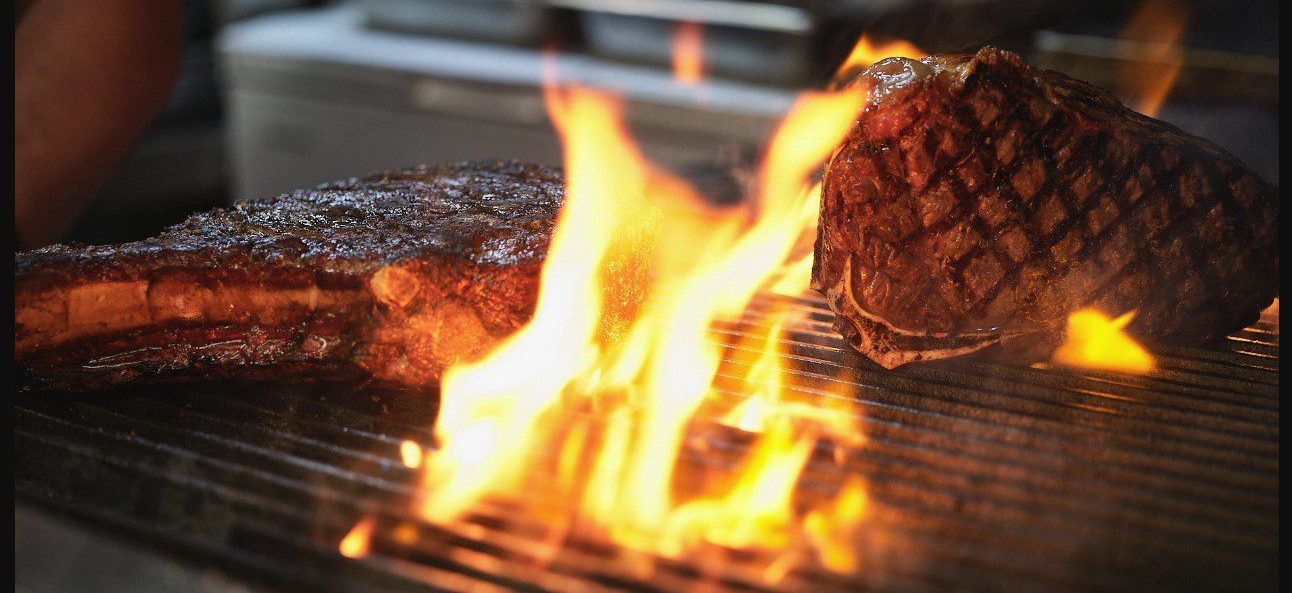
WITHIN the broader spectrum of high quality marbled beef being generated in Australia based on Wagyu genetics, a new brand niche is emerging for more moderately marbled product.
With high-end, high-marbling score Wagyu beef attracting blistering wholesale and menu prices across the world, brand managers are clearly looking to cater for another clientele with a ‘more approachable’ price-point, while still delivering a characteristic luscious, rich eating experience.
At least three or four of Australia’s larger Wagyu supply chains now accommodate entry-level brand programs for moderate marbling performers within their brand portfolio.
These typically apply to carcases from Wagyu cross cattle producing marbling scores anywhere from 3-5 – still an excellent eating quality product, by conventional beef standards – without ‘breaking the bank’ when it comes time to pay the bill.
Some, but certainly not all of these supply chains are applying fewer days on feed than conventional Wagyu programs, reducing input costs, and making the product more price competitive.
The Australian Wagyu Association’s Dr Matt McDonagh said he was aware of a number of grainfed supply chains doing some shorter feeding on Wagyu cross animals, settling for a lower marbling score end-point.
“They are not trying to directly compete with those typical 350-400 day Wagyu F1s (mostly Wagyu x Angus) chasing marbling scores of 6 or higher,” Dr McDonagh said.
“When I started with AWA, the average marbling score for F1 feeders was a 5. Now it is well over 6, so there has been a growing opportunity for that lower marbling score type product that sits just below that, but still eats exceptionally well,” he said.
 “Years ago, there was a much broader distribution of marbling scores, from highs to lows, but now, with the quality of the genetics being applied, that whole scale has shifted upwards. That’s created a market opportunity gap that probably did not exist ten or even five years ago.”
“And the beauty of Wagyu used in extensive northern production systems (click here to view earlier story) to lift fertility and calving rate is the potential to do more with those animals – in a branded beef sense. It’s not just a 100-day grainfed commodity product any more, but potentially fed 200-250 days, for somewhat higher marbling scores 3-5 and really high MSA grades.”
“Product like that can compete more than favourably with higher-end Angus or USDA Prime Grade product in international markets. That’s an exceptional outcome for industry,” Dr McDonagh said.
AA Co ‘repurposes’ its 1824 brand identity
The Australian Agricultural Co has recently revived its 1824 brand identity – a reference to the year to company was founded. Launched with great fanfare during the early 2000s, the original 1824 brand was used by AA Co for its shortfed composite cattle fed around 130 days.
 The brand was later shelved as AA Co moved deeper into Wagyu operations, only to re-surface in its current form for Wagyu-influenced beef.
Managing director David Harris told Beef Central the 1824 brand was targeted at producing marbling scores 3-5, taking an ‘everyday western-style steak eating approach’ instead of a Japanese-style tiny portion of marbling score 9+ Wagyu.
“A customer can still have their full T-bone or OP rib on the bone in a larger serve size, but at a more economical price point than what thyey would pay for a highly marbled product.”
Mr Harris said the 1824 product suited steakhouses and better pub-style restaurants wanting to serve a decent-sized steak portion, rather than those really high-end restaurants chasing high marbling score.
“It’s a different product that still eats extremely well, but is designed to be eaten in a more (western style) traditional steak format.”
“Looking back five or ten years, consumers simply saw Wagyu as Wagyu,” Mr Harris said.
“What we are seeing now is evolution, with clearer segments appearing within the Wagyu beef spectrum as the sector refines and matures. Everybody (supply chains) is working through that, and 1824 is our attempt to address that lower marbling score segment.”
Wagyu cross cattle for the 1824 program are still fed for about 350 days, but with slightly different feeding programs and genetics from the higher-marbling programs.
During the company’s full-year results released last Thursday AA Co told shareholders the 1824 brand was growing in penetration globally among consumers seeking quality Australian beef at accessible prices.
“The brand is finding support internationally across both retail and food service sectors,” shareholders were told, “reaching a distinct consumer segment, strengthening brand architecture and enhancing portfolio returns.”
Significantly, AA Co’s 1824 website makes only passing reference to Wagyu genetics, but celebrates the marbling and eating quality of the product.
Separate to its 1824 moderate marbling score grainfed program, AA Co has recently also established a new grassfed Wagyu brand program called ‘Forage’
“They’re not big numbers at this stage under the Westholme Forage program: we’re just trickling it in and trialling it in some specific markets,” Mr Harris said.
Hancock Kidman Premium
Also actively pursuing a lower marbling score Wagyu brand program is Hancock Agriculture/S. Kidman, with its Kidman Premium brand.
Hancock/Kidman is now marketing the lower marbling score Kidman Premium product into 12 export destinations across Europe, the UK, and the Middle East, as well as Australia. The brand features prominently in popular Brisbane steak pubs like the Norman Hotel.
Website commentary supporting the brand says the Kidman Premium product was developed specifically for the food service industry using 2GR Wagyu Full Blood Bulls & Kidman composite and Angus cattle.
The program is focussed on producing marbling scores MB2-3 & MB4-5, after feeding for 225 days – sitting below the high marbling performance 2GR Wagyu brands.
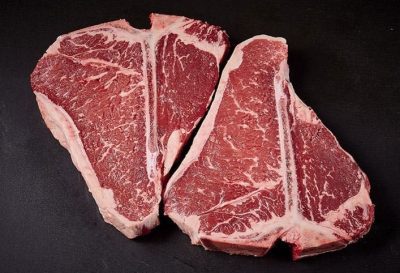
Kidman Premium T bones
“The product carries a good level of marbling to underscore the eating quality experience, but equally it’s about delivering more consistency in steak portion cut size,” a company spokesman told Beef Central.
“Hotels chefs want every portion-cut piece of steak to be within the same tight weight and size tolerances – with less variability in the carton,” he said.
“The whole F1 Wagyu x Angus beef market in Australia is now a very crowded field, with dozens of brands working in the same space. But there’s a definite market for a medium to lower marbling score product that still eats exceptionally well, while produced at a slightly lower cost.”
New branded beef awards celebrate mid-range marbling scores
In recognition of the emergence of this lower marbling score, more competitively priced branded product niche, the annual Australian Wagyu Association branded beef competition now includes a division for Commercial Wagyu showing marbling scores 5-7.

Click on image for a larger view
This year’s class attracted a record 14 entries from across Australia. Claimed feeding periods ranged from 260 to 420 days, averaging 375 days, with digital marbling scores from 5.6 to 7.9.
The class winner (eye muscle image pictured here) was a sample of Stockyard Beef’s Stockyard Silver brand, which accommodates marbling scores 5-7 after 400 days on feed.
“Stockyard Silver finds the sweet spot with its 5-7 marbling, bringing just the right amount of richness. Delicate channels of marbling enhance each bite with a tender, malty sweetness that melts on the palate. It’s an experience that’s both decadent and perfectly balanced,” the brand promotional literature says.