
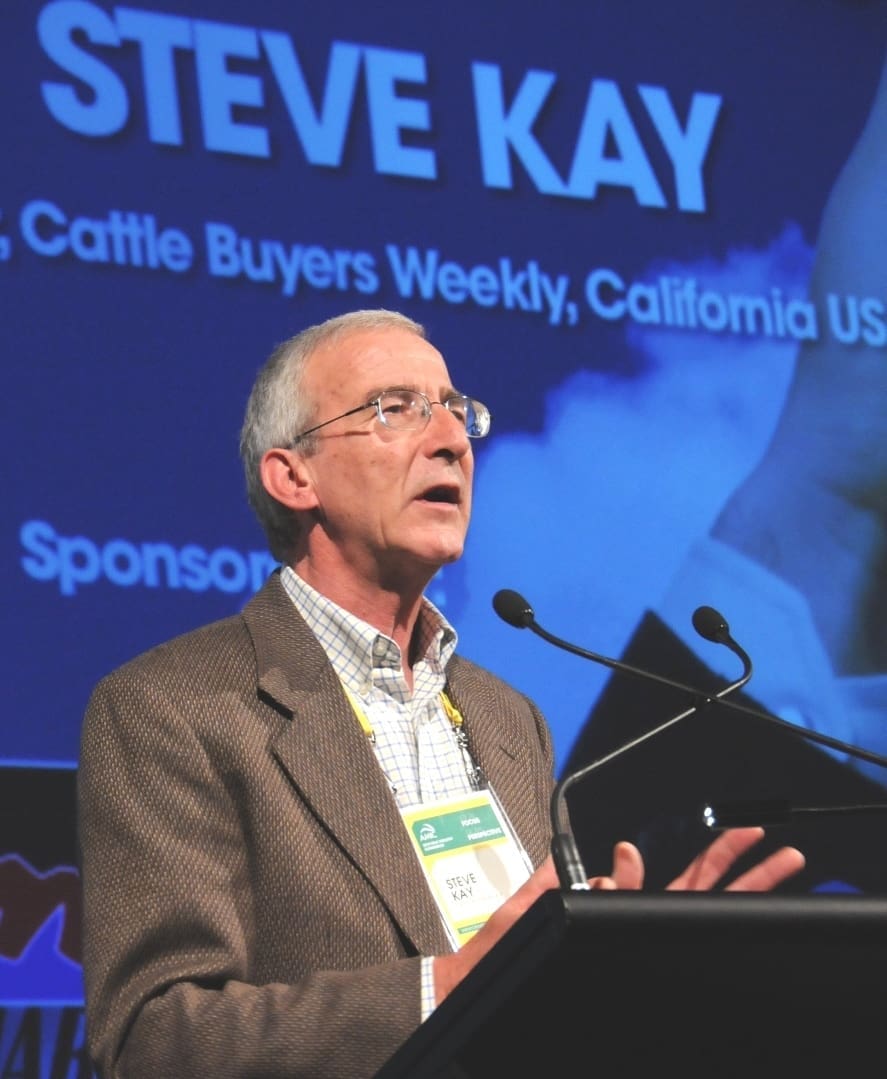
 A monthly column written for Beef Central by US meat and livestock markets commentator Steve Kay, publisher of US Cattle Buyers Weekly
United States beef packers who process grainfed cattle likely braced themselves in January for a tough year this year, after last year’s heavy losses.
Major player Tyson last year reported an operating loss of US$22 million, while JBS Beef North America reported an EBITDA loss of US$230 million.
However neither company, nor other US fed beef processors, could have forecast that losses in the first quarter this year might also be rough.
Tyson reported a loss of US$240 million for its first quarter, while JBS improved to report a negative US$113 million in EBITDA. Weekly losses this year were at times much worse than in 2025, according to HedgersEdge.com margin data. The biggest weekly loss was US$341 per head of cattle processed in mid-February.
JBS’s US beef business was particularly pressured in January and February, potentially two of the most challenging months in the company’s history, Wesley Batista Filho, CEO of JBS USA, told analysts.
As such, he expects improvement in the coming quarters, yet he believes 2026 will be an overall more challenging year than the previous one.
The year also brought US operation disruptions due to worker strikes. But Batista Filho said the impact was not significant on the business, since JBS was able to redirect volumes to other facilities during this time.
 Continued tight cattle supplies in the US weighed heavily on parent company JBS NV’s results in the first quarter of fiscal 2026 despite global beef demand remaining strong.
Other challenges in the quarter included foreign exchange headwinds, weather and temporary plant stoppages. For the three months ended March 31, JBS experienced a 55.8pc drop in net income year-over-year with a total of US$221 million, equal to US21c/share, compared to last year’s US$500m and 47c/share.
But revenue rose 11pc to US$21.6 billion compared to US$19.527b the previous year.
As the US beef business has evolved, several areas were already operating in an increased and integrated way, JBS told analysts.
Building on that, it brought together its three business units – fed beef, regional beef and case-ready beef – into a more unified structure.
This is a natural step. It reduces duplication, improves coordination and allows JBS to leverage its scale and talent more efficiently, while strengthening decision-making and positioning the business to improve performance over time. These actions are part of a broader effort driving efficiency across the company, it said.
Even bigger losses for Tyson
Meanwhile, competitor Tyson Foods’ beef segment suffered even bigger losses than JBS North America in the quarter – presumably because Tyson only processes grainfed cattle. JBS has a sizeable non-fed beef (primarily cows and bulls) business.
Tyson reported a smaller beef loss in the first quarter (its fiscal 2026 second quarter) than in its first quarter. But increased live cattle costs continue to hurt Tyson’s beef margins and its overall profits.
Cattle costs in the quarter were up US$600m versus a year earlier, Tyson said in a securities filing.
Average beef prices were up 11.5pc year-on-year, but sales volume was down 13.1pc. The segment’s six-month operating loss was US$559m, versus US$248m in 2025.
Tyson says it anticipates a beef operating loss of US$500m to US$350m in fiscal 2026.
The results reflected the expected volatility in the cattle cycle, President and CEO Donnie King said.
Tyson successfully completed the previously announced strategic decision to optimise its manufacturing footprint. As a result, its second quarter results reflect only a portion of these operational adjustments, which are intended to improve utilisation and strengthen Tyson’s cost positions, he said.
Importantly, Tyson is staying focused on the levers it can control: plant utilisation, operating discipline, customer bid and execution, said King.
Tyson expects the benefits from these adjustments to build as it moves through the year. Its outlook for the remainder of the year implies lower losses in the back half than the front half of the year. But Tyson will continue to expect results below historical margin levels until cattle supplies normalise, he said.
DOJ Investigation
Ironically, the US Justice Department (DOJ) announced that it was launching an investigation of the four largest U.S meatpackers on the same day that Tyson announced its beef losses.
The investigation will involve Tyson Foods, JBS USA, Cargill, and National Beef Packing. The investigation will include possible antitrust violations in the US cattle and beef industries, said the DOJ.
Multiple plant closures across the country, the current market structure and high concentration in the industry indicate anti-competitive activity, acting attorney general Todd Blanche said during a press conference.
An executive order was signed in December 2025 by President Trump, which was intended to investigate price fixing in the food supply chain. Blanche said the DOJ reviewed more than three million documents and contacted hundreds of stakeholders in the businesses, including ranchers, cattlemen, producers and processors.
The DOJ announcement, however, overstates the market share of the Big Four packers and omits the fact that beef processing consolidation has remained the same for years.
My data (compiled annually for the past two or three decades) by Cattle Buyers Weekly) reveals that the four firms have accounted for less than 75pc of total commercial total cattle slaughter for the past decade or more.
Consolidation occurred in US processing more than 20 years ago and total industry cattle slaughter capacity has declined sharply as well. I estimate that the one-time capacity of the 73 largest federally-inspected beef processing plants in the US is 129,000 head per day. The capacity total in 2011 was 138,000 head per day.
As with previous federal investigations, I suspect this new one will come up empty.