
PROSPECTS for US beef herd rebuild, implications from recent global tariff moves and Australia’s strong outlook for beef supply during a period of high global demand all came into focus during a recent JBS analysts’ briefing following the company’s first quarter results released last week.
As described in this earlier item, JBS’s first quarter was challenging in some parts of its global operations, shaped by market volatility, seasonality, operational disruptions and change in global trading flows.
The protein giant’s combined operations across North and South America and Australia last quarter delivered record in-quarter net sales growth of 11 percent, reaching US$21 billion; net income of US$221m and EBITDA of US$1.1 billion.
Results varied enormously, depending on location. In contrast with strong performance in Australia, the company’s North American beef division remained under heavy pressure, with pre-tax earnings of negative US$230 million impacted by constrained cattle supply and higher costs.
Here’s some of the main topics raised by analysts at the recent JBS analysts’ briefing:
Cost headwinds in Australia:
Analyst Benjamin Theurer from Barclays Bank asked about cost headwinds in the company’s Australian operations, where the Australian cattle cycle was up and the reasons behind a 300 basis points margin contraction in the first quarter.
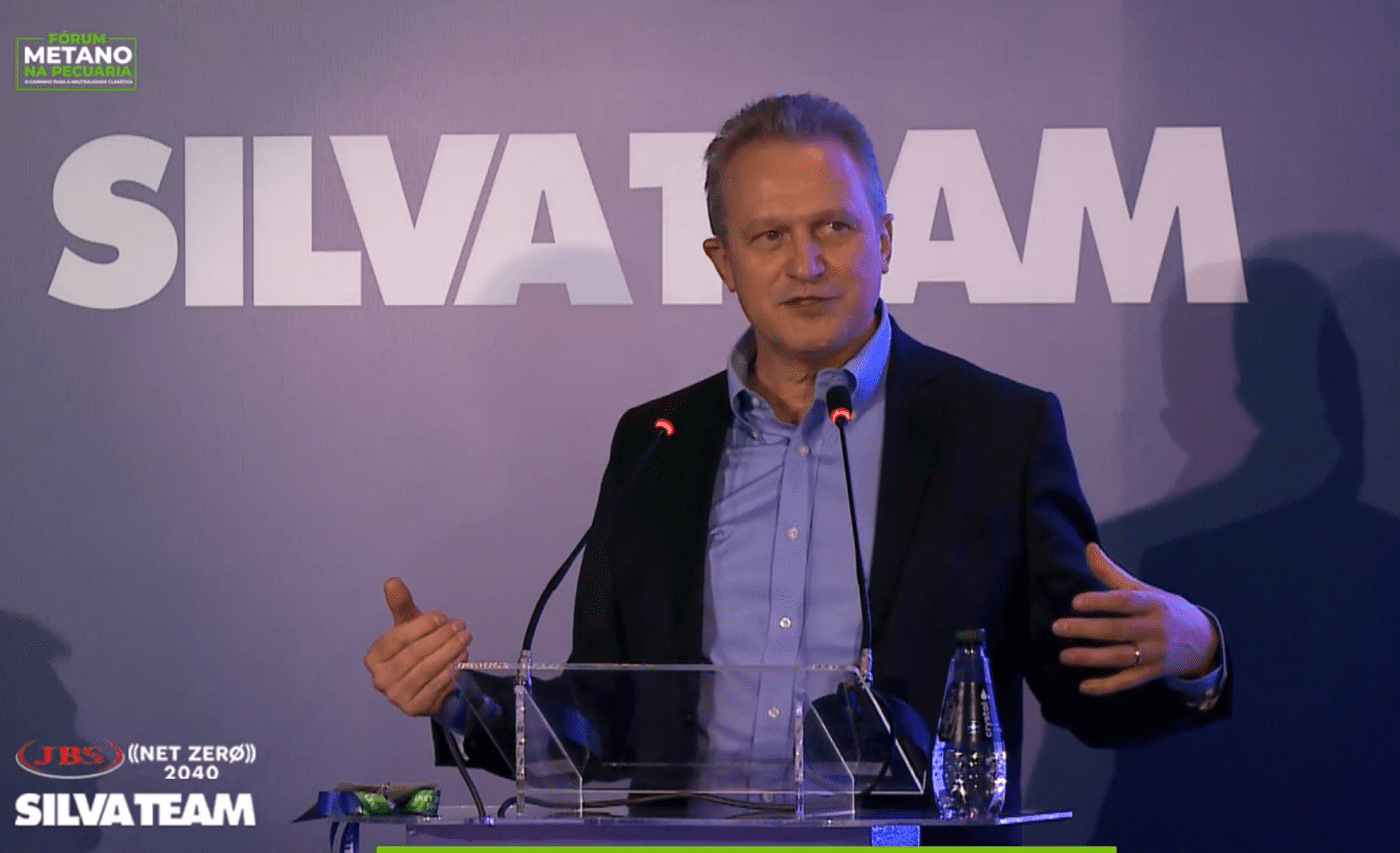
JBS global CEO Gilberto Tomazoni
JBS Global chief executive Gilberto Tomazoni said Australian operations remained very strong, with a good first quarter in terms of volume and sales.
He said the only impact on margin in the first quarter was currency movement, being around 15pc the valuation of the A$.
The business remains strong in Queensland, where almost 50pc of cattle are located. The pasture condition in the region is the best we have seen in the last three years, and we remain very positive with the Australia business,” he said.
JP Morgan analyst Lucas Ferreira asked about the potential trend for margins in the Australian business, given recent rises in the A$, cattle prices that ‘seemed to be sort of stable’, but with MLA’s outlook for some (regional) reduction in slaughtering this year. “Is it also some seasonal effects that should help lift the margins going forward?” he asked.
Mr Tomazoni said JBS remained very positive in terms of the volume of Australian cattle likely to be harvested this year.
“I think it will not be different from last year. Some periods of the year, I think will be higher. In Queensland, where we have our main operations, the seasonal conditions are very positive, suggesting that the coming months will be good when we talk about supply,” he said.
“At the same time global beef demand is very, very strong, and I think not just in the US, but all of the premium markets that Australia sells to, including Japan, Korea and elsewhere. Australia is very well-positioned for catching this benefit from this growing global protein demand, global protein growth demand. So we are positive that where we operate, it will be a great year for JBS Australia.”
US beef herd rebuild
Several analysts asked about forecasts for a US beef herd rebuild, and whether this cycle was “different than the previous down cycles, and whether the herd could be rebuilt at all, given ‘generational transitions and other issues.’
One analyst asked whether the US beef business model might change going forward, if there is chronic low supply.
JBS US beef division chief executive Wesley Batista said obviously, the current US herd rebuild cycle was “taking longer than we all wish for.”
 “But for the (processing) industry to consider any integration, in the form of investing in the cow-calf side of the business, is just not realistic for a few reasons,” he said.
“Cow-calf production is very, very specialised and the people that do it have very special knowledge that’s different from what we do. And the other point is that, especially on the cow-calf side of this supply chain, it’s very expansive, right? You need to manage a lot of land to be able to have a significant number of livestock – that’s very expensive (in terms of land value), and that’s not our business.”
Other analysts asked about the US drought impact on herd rebuilding, with any progress being pushed further and further out and likely to be “much slower and more meagre than expected.”
“So, even if everything goes right from here (including Mexican feeder cattle being re-admitted), we’re looking at like late 2028 before any significant increase in cattle availability is likely. It would seem that additional industry rationalisations (US beef plant closures) are required – is JBS considered rationalising facilities in the US?
Mr Batista said drought was going to delay the herd rebuild.
“I don’t think we will see further liquidation of cattle, but it’s probably going to delay the herd rebuild here,” he said.
“But we’re not really focused on talking about plant rationalisation. We’re focused just on making our business better with the things that we can control given the footprint we have.”
Another analyst asked about margins in the US beef processing business, heading into northern hemisphere summer grilling season.
“Margins, especially in January and February, were for sure very, very challenging and probably one of the most challenging periods we’ve ever seen in the US beef division’s history,” Wesley Batista said.
“But we anticipate that the current quarter ending June and the following quarter ending September to be better than what we had in Q1. But for sure, 2026 will be a more challenging year than 2025.”
Another analyst suggested US protein inventories for beef and chicken were down ‘big time’ in the US, suggesting beef purchases to be delivered in the June/July grilling season were down 15pc or so.
“How do you feel about channel inventory today when you’re thinking about retailers and food service as we head into grilling season? These pointswould indicate to us that there’s a lot of upside to cutout prices in the very near term?”
Wesley Batista said US beef cutouts started the year 15pc higher than the same period last year.
“The reason is, lower volume while demand continues to be strong – so you have a constant demand and a shorter supply. Price tends to go up when that happens.”
“We have to wait and see how that’s going to impact demand later in the year, but we’ll probably see demand continuing to stay strong, and we know the supply is short.
Ricardo Boiati, Safra asked what could be done to incentivise US ranchers to raise more cattle in the longer term.
Mr Batista said for US cow-calf producers and ranchers in general thinking about or starting to rebuild herds, regulation and over-regulation could be an obstacle.
“Anything the government does to help the ranchers is helpful, and for sure, it’s important.
The same analyst asked about the potential for the FIFA World Cup (being hosted in June-July in the US and Mexico) and its effect on overall protein demand in North America this summer.
“Protein demand is pretty strong overall. How impactful will the FIFA World Cup be? I don’t know,” Wesley Batista said. “I think it’s helpful; it’s certainly not negative, but I think it might be relevant in a few days of the next few months.
“But I don’t think it moves the needle enough to say that this substantially, structurally changes how we’re going to see the overall summer and spring in the US for beef demand.”
Brazil cattle prices:
Another analyst asked about the erratic and volatile nature of Brazilian cattle prices recently, and where Brazilainc attle prices might go later this year.
Mr Tomazoni linked Brazilian price volatility to the country’s 2026 quota in China, saying all of the players in the market were trying to produce as much beef as they can in order to able to fill their share of the quota.
“It is normal. The price of the cattle increased, but you saw in the last two weeks, the price started to go down. And we see that if the China quota will be filled – we believe that at the end of June – the volume should go down and the price of the cattle should be down as well.
“That will happen in a way to accommodate where Brazil will have to place an additional 100,000 tonnes of beef per month. This is normal, what we see in the situation that less cattle will be harvested, and the price of the cattle will be down.”
US beef import tariffs:
The prospect of lower beef import tariffs into the US also attracted interest from analysts.
“How is JBS seeing this for the company’s US beef division, and also for JBS Brazil and JBS Australia, with their exports? one asked.
Wesley Batista said if tariffs are lowered into the US, and there is a bigger volume of Australian and Brazilian beef (and from other geographies as well) arriving, he sw this as very complementary.
“The US has really gone into a production system that prioritises USDA Prime, Choice grade, and heavier cattle. Today, a much smaller percentage of US cattle are graded USDA Select or Standard.
“So I think that a potential increase in imports could complement that production that we’re doing a lot less of in the US industry. And I actually think that the by-product of having this priority on higher marbled, more premium beef production system that we have in the US is that we have a lot of fat trim as part of our production.
“Actually, you could almost argue that one of the main products that comes out of US fed cattle is fat trim. And the only reason why our fat trim is valued so highly, and it has such good value, is because we have available lean trim to complement it (balancing the fat:muscle ratio to produce the perfect hamburger pattie).
“If we don’t have that available lean trimmings (from Brazil or Australia), we actually could see our US fed cutout actually reduced, and the price of that well-marbled beef actually have to be higher, because we don’t have the credit for that fat trim.”
“My point is, in some cuts, yes, you would probably be, in a way, competitive with domestic production, but I would say that the majority of what potentially would come in as imported beef under a lower tariff would actually be pretty complementary and not what we’re targeting to produce in the US right now.”
Impact of GLP-1 (Ozempic) weight loss drugs on beef
Another analyst asked about the use of GLP-1 weightloss drugs like Ozempic, and how the structural shift towards high-protein diets was shifting demand in the US, where adoption rates have been rapid. “Are you seeing measurable change in the consumer behavior already, including preferencing beef over poultry?” the analyst asked.
Mr Tomazoni said he thought GLP-1 is one of the factors that is affecting strong global consumption of protein at present.
“But GLP-1 is not the most important issue behind strong global demand – I think this is the perception, and not just perception, but its more about the knowledge that protein is very important, even in younger and older generations,” he said.
“If you want to have longer life, you need to eat more protein. If you want to have muscle, you need to eat protein. So protein has become very important for all of the generations, regardless of weight loss desires.”
Mr Tomazoni also pointed to the US Government’s recent policy to invert the dietary pyramid, with protein at the top. “Eating more protein is healthier, and this is happening globally.
When new medical technology assisting weightloss is applied over the top of this, users needed to eat more protein in order not to lose muscle.
“And this is not in just one country, like the US – I think this is globally. We see it will be continuous, high protein consumption,” he said.
“Even among companies that produce high-carbohydrate products, they now want to adapt with products containing more protein.
“If you look at JBS’s business, our core is focused on protein (beef, pork, chicken, lamb and in the case of Australia, salmon). “We don’t need to adapt our core – we need to accelerate what we have done so far. For example, we have launched a high-protein line of products in the Seara (value-added foods division) and in other parts of the world, we are working on innovation in order to facilitate how the people eat protein.
“For example, many consumers now use an air-fryer to simplify their lives when cooking at home – and we see that people are cooking more at home.
JBS did not see higher protein as a short term fad, but as a structural trend, “and we are investing in a range of innovations in order to facilitate that,” he said.