
RURAL landowners are being forced to carry too much legal and financial risk when making routine property-management decisions under the Federal Government’s recently reformed environmental laws, AgForce says.
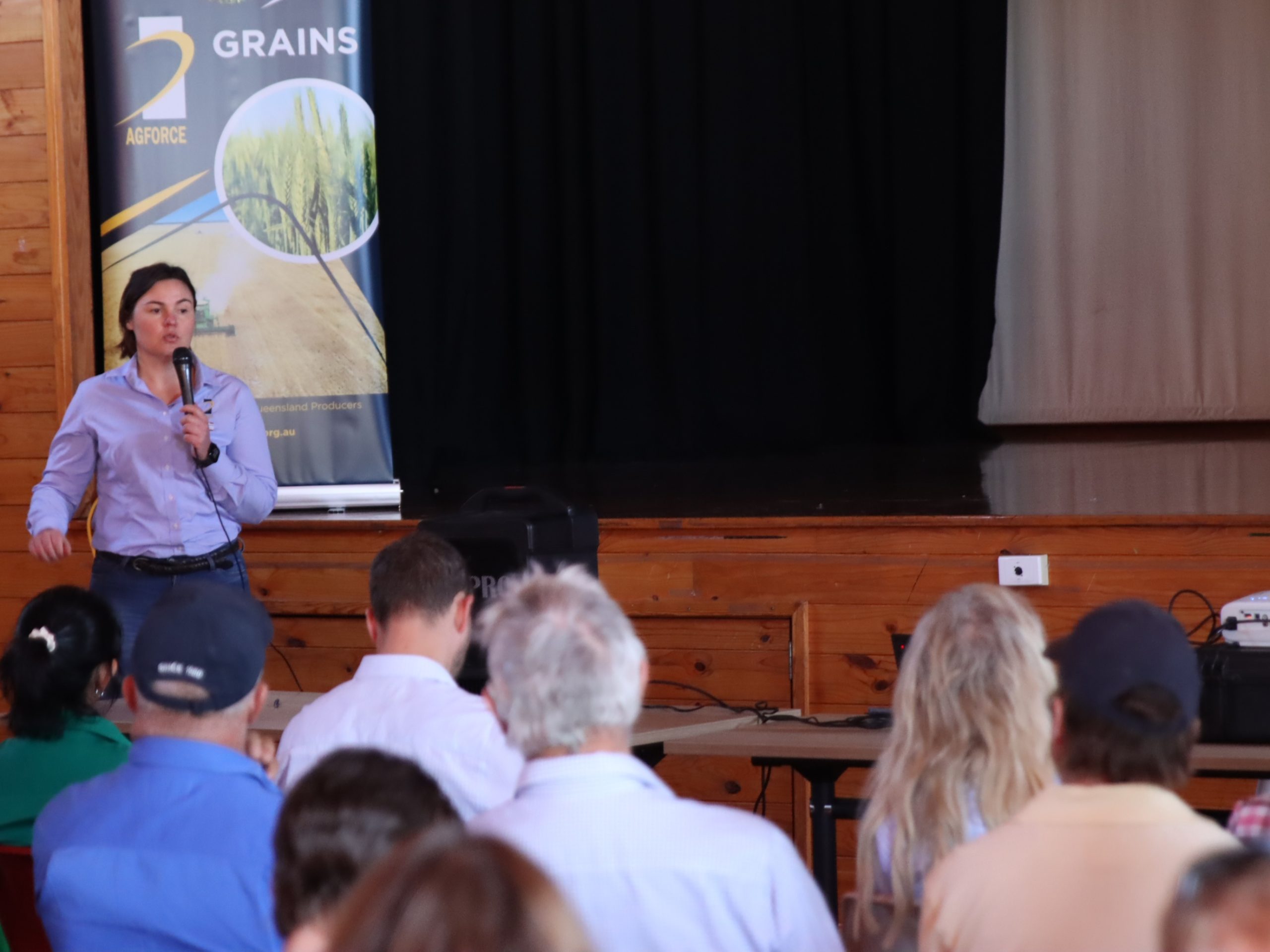
AgForce head of industry development Josefine Pettersson
The Queensland primary producer representative organisation says amendments made by the Federal Government to the Environment Protection and Biodiversity Conservation (EPBC) Act late last year have narrowed important agricultural exemptions and changed the continuing-use provisions on which producers may previously have relied.
AgForce is currently conducting a roadshow of information days to help Queensland landholders understand the legislation.
AgForce also invited representatives of the National Environmental Protection Agency to attend to hear producer concerns and to ensure key risks to agriculture are heard by the agency and addressed. EPA spokesperson Cormac Farrell also made a presentation, covered in this separate article.
AgForce says it does not support the guide for farmers released by the EPA in August and remains fundamentally concerned about the way the EPBC Act and the reforms introduced in late 2025 apply to Queensland agriculture.
The producer representative body has been pushing hard for legislative change and ministerial intervention which it says is now needed to give landholders the certainty they need to perform critical, routine agricultural activities.
Agforce says it should not be left to individual producers to carry the uncertainty and legal risk every time they make a normal management decision.
It says understanding what the new laws could mean for farming and grazing businesses has never been more important and is conducting the EPBC Roadshow events to help answer landowner questions (more details on upcoming locations and dates below).
AgForce head of industry development Josefine Pettersson highlighted the industry’s concerns with the narrowing of the continuous use exemption introduced in the 2025 reforms to the EPBC Act.
“What that means is typically in the Great Barrier catchment (which covers 424,000 square kilometres of Qld from Cape York to the Mary Valley around Gympie), if you are undertaking an activity within 50 metres on each side of a drainage line, wetland, or watercourse, you no longer have the continuous use exemption.
“And the same with regards to any activities that you want to do with regards to managing regrowth.
“So there’s now a narrowing in the legislation, if you haven’t undertaken that management activity within the past 15 years, you no longer have that continuous use exemption.”
In a normal legislative timeframe, a new bill took about 12 months to be approved, and included a regulatory impact statement process looking into how the new legislation would affect industry.
“With regards to the EPBC reforms at the end of last year, that went through in two weeks,” she said.
“There’s still a lot of confusion in industry in terms of the legislation.”
Fifteen-year limit narrows continuing-use exemption
The continuing-use exemption had previously allowed producers to continue established activities, provided there was no change, expansion or intensification of land use.
While this does not mean that vegetation older than 15 years cannot still be managed, it means that affected producers will now need to undertake a self-assessment to determine whether the proposed activity is likely to have a significant impact on a Matter of National Environmental Significance (MNES).
AgForce is concerned this places too great a responsibility on individual landholders to interpret highly complex federal environmental requirements and to apply the EPBC Act’s “significant impact” test.
“At this stage, we don’t necessarily think that the current process is simple enough for any producer to be able to undertake easily for all their management decisions,” Ms Pettersson said.
Even as a qualified ecologist, she said it would not be easy to complete a self-assessment because of the underlying data that had to be understood about every different species.
“The problem is that there is no clear threshold for a significant impact test, and it changes depending on where you are,” Ms Pettersson said.
“It changes how big your activity is. It changes depending on the species that you’re dealing with, in terms of their conservation status.
“And so, what we’ve been trying to push for how can we get a lot of low-risk activities triaged out, and those critical agriculture activities triaged out.”
Federal rules supercede Queensland property maps
Queensland’s State-based vegetation-management legislation, which uses a system of property maps of assessable vegetation (PMAVs) and accepted development codes, provided much clear guidance and certainty.
Many producers had purchased and valued properties on the understanding that Category X land (which is generally exempt from the Vegetation Management Act 1999 because it does not fall into the regulated high-value or regrowth categories) could be managed as allowed under Queensland law.
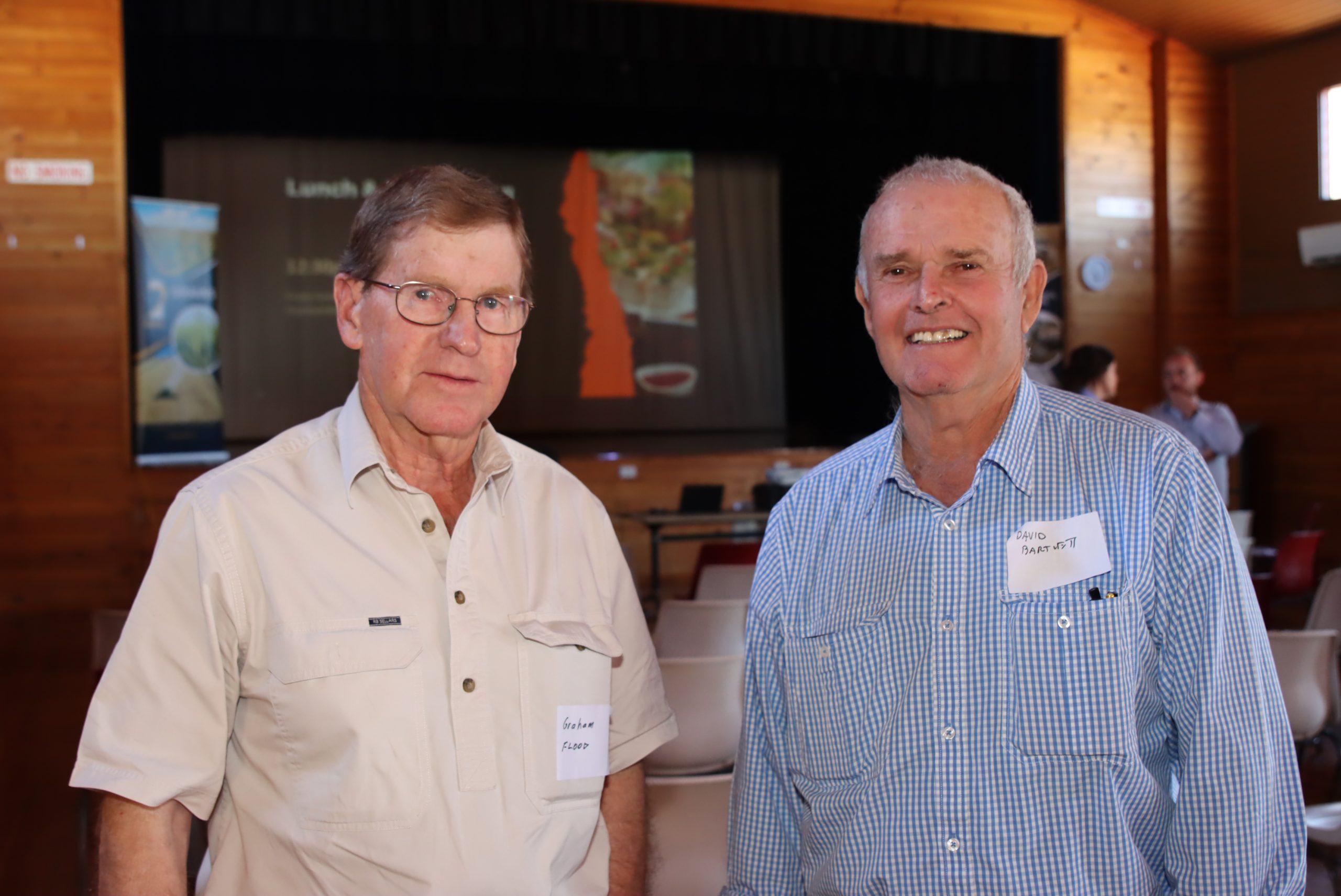
Livestock producers Graham Flood and David Bartlett at last Millmerran meeting.
However, federal legislation superseded state legislation and applied even when an activity is permitted under state laws or property maps.
Despite the EPBC Act having been in place since 1999, the changed regulatory environment since the introduction of reforms late last year was a key reason for the confusion many landholders are now feeling, particularly with landholders now being investigated years after work was completed that they believed to be fully compliant legally.
Agriculture ‘very different’ from one-off development
AgForce also argues that the idea that these reforms simply bring agriculture into line with how other industries such as mining are regulated misses the key “continuous-use” point that agriculture land management activities and should not be assessed the same way as a one-off mining development.
“The key thing with the referral process is it is based on the EBPC Act legislation that was really well designed for a one-off development activity, in terms of if you’re doing a large open cut mine and you are taking a certain amount of biodiversity away because you are developing that mine, you then have the program in place to be able to replace that biodiversity that you are taking away.
“However, for agriculture, where you have ongoing physical management, and especially in the Queensland context, where you might control the regrowth, and before you know it the regrowth is back, it’s a very different situation because you are permanently taking that vegetation away in most cases.”
AgForce also pointed to the role active vegetation management plays in the landscape controlling invasive weeds, reducing dense regrowth and monocultures which limit ground cover and carbon sequestration and increased erosion.
“Vegetation condition and environmental value cannot be assessed simply by the presence or absence of trees. Queensland landscapes require active management,” Ms Pettersson said.
Concern reforms could encourage more frequent clearing
AgForce also raised fears that the rigid 15-year limit could lead to unintended outcomes by providing an incentive for producers clear regrowth more frequently to maintain their access to the continuing-use exemption.
“One of the things that we’re worried about with the 15-year timeline is if you don’t make the process easy enough for a producer to be able to easily undertake self-assessment and manage that vegetation after 15 years,” Ms Pettersson said.
“It could create a perverse incentive to clear more frequently to preserve access to the continuing-use exemption, or effectively operate as a legislative barrier to legitimate, ongoing land management.”
High penalties and assessment costs fuel anxiety
The significant potential consequences of getting a self-assessment wrong were fuelling producer anxiety, she said.
The information day was told that an investigation could result in long-term loss of use of affected land and remediation orders to restore the landscape, and substantial fines including maximum financial penalties of up to $1.6 million or three times the financial benefit obtained from the activity.
The potentially high cost of obtaining specialist ecological advice and assessments was another concern raised by AgForce. AgForce said the farm ecological assessments it was aware of had typically cost producers between $30,000 and $100,000, depending on the scale, complexity and ecological matters involved.
For smaller activities, areas or less complex farming properties, a private consultant in the room told Beef Central that assessment costs may be in the vicinity of $10,000 to $15,000, a significant cost for a producer seeking certainty before undertaking a land-management activity.
AgForce said these costs needed to be distinguished from the additional requirements that can arise where an action proceeds to formal referral and assessment under the EPBC Act, which may involve First Nations, community engagement and other technical requirements.
AgForce said if the Government insisted that self-assessment was the required pathway it should make it “genuinely simply, practical and reliable” and give producers the legal certainty to know that if they follow the process in good faith that they can confidently get on with managing their property
AgForce said it was aware of more than 30 active EPBC compliance cases in Queensland, including cases involving relatively small areas and activities producers considered routine.
AgForce has also worked to secure a Queensland Productivity Commission inquiry examining the economic and environmental implications of the EPBC Act for the state.
The inquiry is due to produce an interim report in November and a final report in April.
Ms Pettersson said the roadshows and inquiry provided important opportunities for producers to ensure their concerns were being heard and understood.
“We just want you to be able to manage your farms and undertake some of those critical routine activities now and into the future,” Ms Pettersson said.
Upcoming AgForce roadshow sessions will take place at the following locations:
SIQ – St George
Date: Tues 29 Sep
Time: 12:30pm – 5:00pm
Venue: “Burwah”, Mitchell-St George Road, St George
SIQ – Muckadilla
Date: Wed 30 Sep
Time: 12:30pm – 5:00pm
Venue: Mucka Pub, 49122 Warrego Highway, Muckadilla
NWQ – Longreach
Date: Tues 6 Oct
Time: 8:30am – 12:30pm
Venue: AgForce Board Room, 33 Duck Street, Longreach
NWQ – Cloncurry
Date: Fri 9 Oct
Time: 8:30am – 12:30pm
Venue: Kuridala Room, Community Precinct, 37 Scarr Street, Cloncurry
NWQ – Birdsville
Date: Sat 10 Oct
Time: 6:30pm – 8:30pm
Venue: Birdsville Community Hall, Birdsville
SWQ – Quilpie
Date: Mon 12 Oct
Time: 9:00am – 1:00pm
Venue: Quilpie Shire Hall, 62 Brolga Street, Quilpie
SWQ – Augathella
Date: Tues 13 Oct
Time: 9:00am – 1:00pm
Venue: Connemara, 2829 Mount Tabor Road, Augathella
CQ – Rolleston
Date: Wed 4 Nov
Time: 10:30am – 5:00pm
Venue: Broken Plains, 338 Broken Plains Road, Coorumbene
They approved a transmission line to a Stoney Creek Wind Farm for a not a controlled Action before the new laws came in .. before the transmission line has even been approved be SARA or the Local Council. And on top of that the original windfarm had no BESS approval as Greenleaf Stoney Creek Wind Farm put that part of the project they had no consent to use 3months after it got approved. It is a bloody mess
You can be sure the bureaucrats enforcing these deliberately vague laws will sleep soundly at night after a hards days work of persecuting primary producers who cut down a tree that has leaves that could in theory be eaten by a koala. They are not going to give a stuff about whose lives they destroy.
It is just like that article of NHVR bureaucrats shutting down businesses from the comfort of their air conditioned office thousands of kilometres away.