
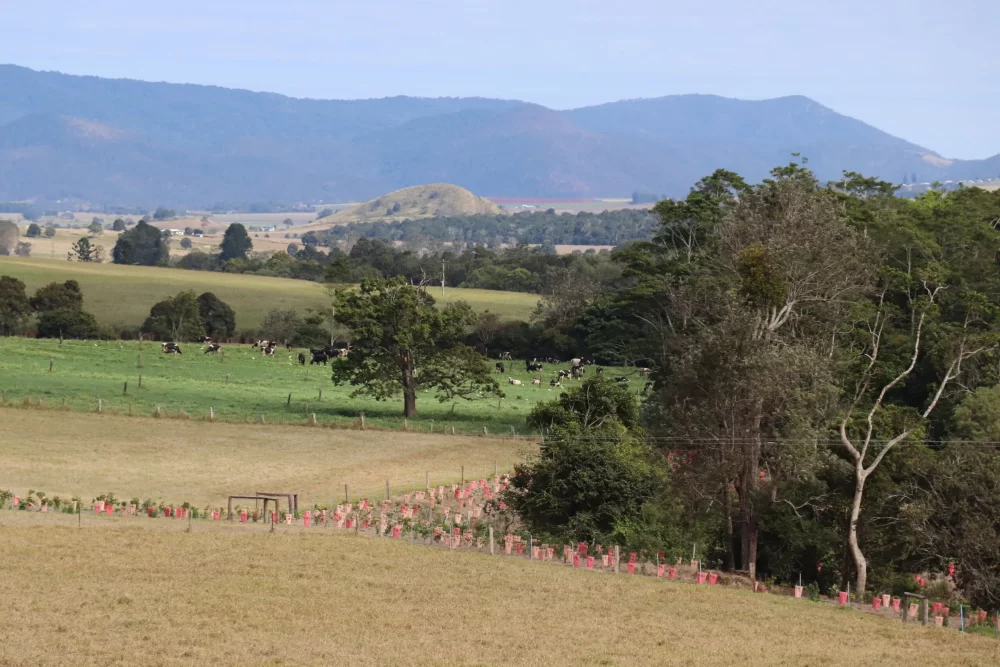
Picture: CSIRO
THE Albanese Government’s push to accelerate the purchase of ‘high-biodiversity land’ will artificially inflate agricultural land prices and further squeeze Australia’s food production base, Cattle Australia has warned.
Federal Environment and Water Minister Murray Watt this week announced the opening of a Request for Expression of Interest (REOI) process for strategic purchases of biodiverse land as part of the Albanese Government’s $250 million Australian Bushland Program.
He said the initiative is designed to help meet the Government’s target of protecting 30 percent of Australia’s landmass by 2030.
Minister Watt said almost 25 percent of the nation’s land was already protected but an additional 39 million hectares was needed to reach the “30 by 30” target.
“Achieving this target is crucial to reverse environmental decline and protect Australia’s native plants, animals and other species from extinction,” he said.
“It is important that this additional land acquired is strategic, in areas of particular importance for biodiversity.”
The Government said it was now seeking to shortlist eligible purchasing partners with the capability and experience to buy and manage land for conservation outcomes, with acquisitions to be made from willing sellers only.
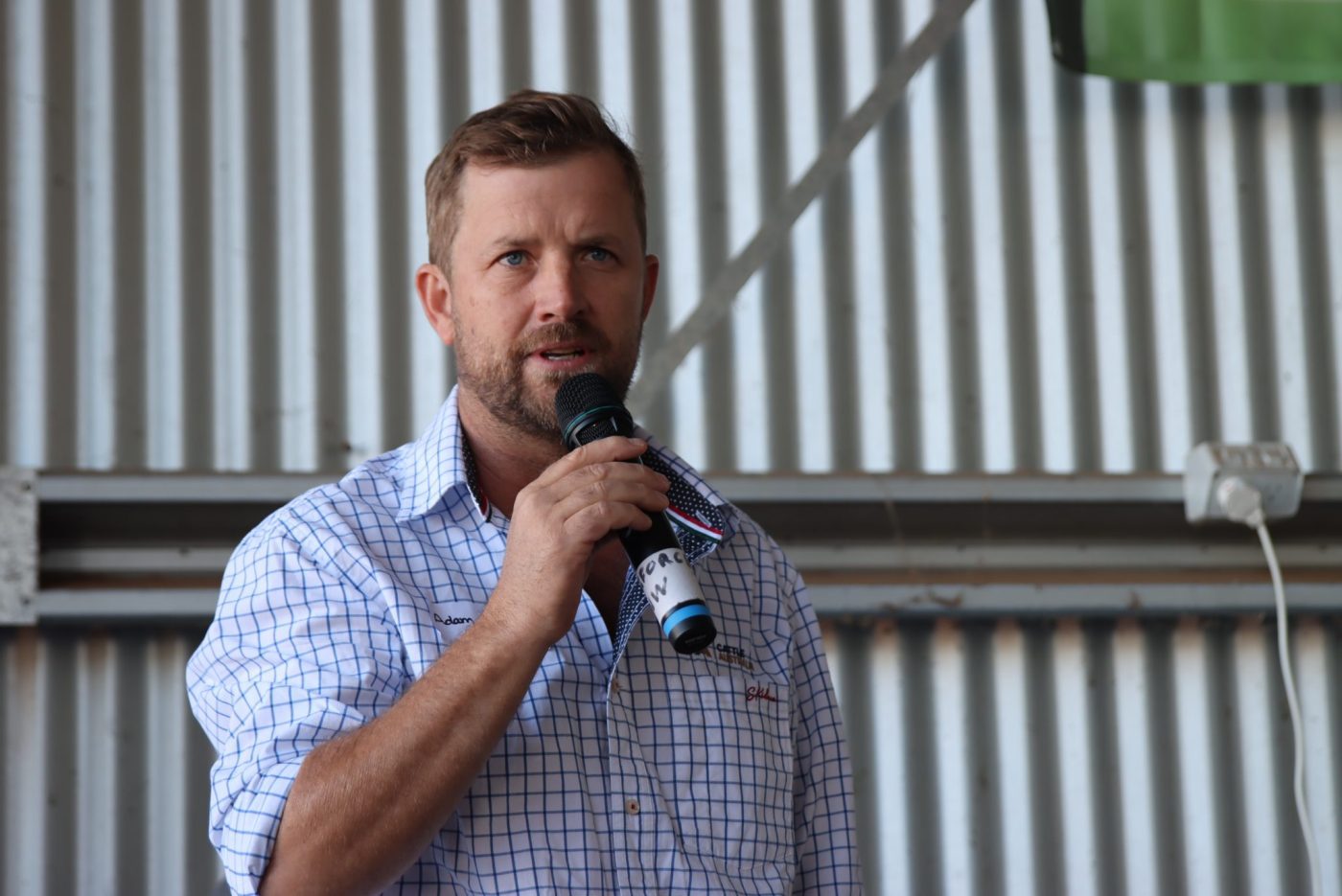
Cattle Australia deputy chair Adam Coffey addressing a field day at Champion Station near Blackall this week.
But Cattle Australia deputy chair Adam Coffey said the peak producer body had major concerns about the broader implications of the policy, particularly its impact on land values and productive capacity.
“We have serious concerns around the Federal Government artificially inflating land prices using taxpayer money under the guise of conservation, considering its track record of managing such land is not great,” Mr Coffey said.
Mr Coffey said the announcement also raised questions about how conservation was being defined, given the extensive environmental protections that already apply to privately owned agricultural land.
“Defining conservation is an interesting scenario when we have vast swathes of privately held agricultural land categorised as remnant vegetation and therefore inherently protected,” he said.
Carbon grab
He said the policy aligned with the Federal Government’s Agriculture and Land Sector Plan, which outlines the need for 100 million tonnes of CO2 equivalent abatement through reforestation and afforestation.
“This is a carbon grab in line with the Federal Government’s ag and land sector plan which requires 100mt CO2e to be sequestered through reforestation and afforestation,” Mr Coffey said.
He warned removing productive agricultural land from the food system would eventually affect supply and affordability.
“Have we not learnt anything during the fuel crisis regarding exporting out domestic capacity?” he said.
“If this is the path government wants to continue down then we can ultimately expect consumers to pay more for their food.”
Mr Coffey also pointed to Australian Bureau of Statistics data which he said showed threatened species habitat had remained stable – and in some cases recorded a net increase – since 2013, despite the number of threatened species continuing to rise.
He said that suggested invasive pests and weeds remained a more pressing driver of biodiversity decline.
“This points the finger squarely at introduced pests and weeds when the Federal Government stripped funding from several pest and weed programs in the recent budget,” he said.
State and Federal Governments can’t responsibly manage existing lands held as parks and forest areas and adding additional areas on the pretext of increasing habitat for native fauna and flora will increase damage from fire, hollow-out regional populations as seen in the MD Basin, reduce economic output from the agricultural sector and reduce food security. A very foolish proposal !
A bad decision made. Time to renege on it … for Australia is unlike other island/continents.
It’s the hottest, driest, inhabited Continent on planet Earth: anscestry we need our food security!
State and Federal governments are not the best neighbours, in my personal experience, and the Graziers that work on the arid-fringe do a very good job in the main, of protecting what’s there in Nature.
Oh, and do bring back the fire-stick … IMO
I am impatient for the next Federal election, and some common-sense to prevail.