
Image: Shutterstock
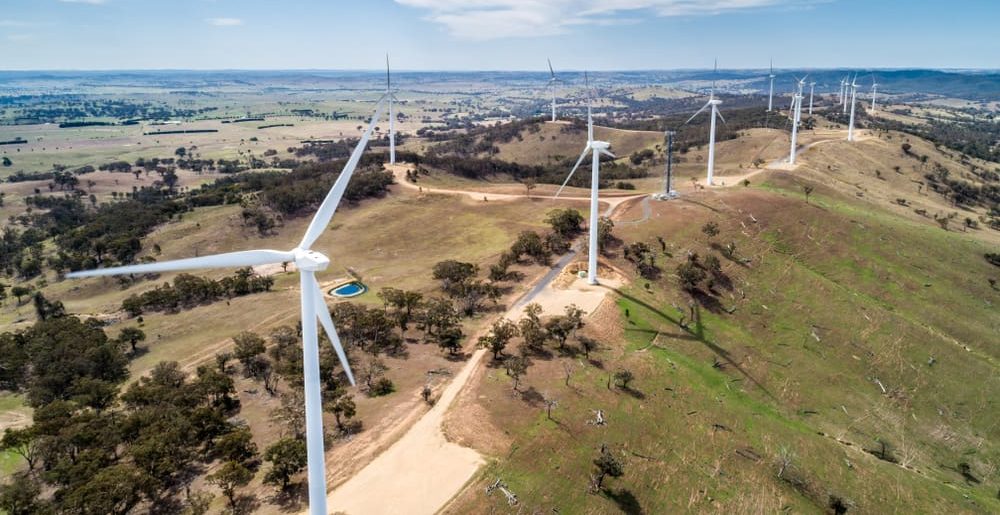
NATIONALS leader Matt Canavan is calling on the Labor Government to support Senator Ross Cadell’s motion today to investigate the impacts of large-scale renewables on agricultural landholders and rural, regional and First Nations communities.
It comes after the Prime Minister declared that when it comes to renewables, “you need a social licence in order to operate. There needs to be much better consultation and engagement on all of those issues”.
Senator Canavan said if the Prime Minister was fair dinkum’, the motion was his chance to prove it.
“The Prime Minister should be backing the need for an inquiry and urging his Labor colleagues to support it if he was being honest at the Bush Summit,” Senator Canavan said.
“We need to end Labor’s net zero obsession that is making Australians poorer.
“Labor’s net zero agenda is driving the reckless renewables rollout across Australia, with no regard for prime agricultural land and the rights of farmers and the community.”
 Senator Ross Cadell said the Rural and Regional Affairs and Transport References Committee into renewables would look at the social licence arrangements of renewables, including the consequences where genuine social licence has not been demonstrated.
It would also explore the impacts on productive agricultural land and farming operations, neighbouring landholders and residents, plus community cohesion.
“The Prime Minister has essentially called for this motion and for this inquiry by declaring that we need a social licence,” Senator Cadell said.
“The Nationals are giving the Prime Minister the chance to put his money where his mouth is.
“We must stop taxpayer money being used to help investment funds buy up Australian farmland and turned into so-called carbon-offset projects.
“Over 90 per cent of Australia’s emissions reductions to date have come from converting 7 million hectares of productive farmland to forest.
“Farming communities deserve to know the distribution of costs and benefits, including compensation for non-host landholders.
“They deserve to know the adequacy and enforceability of planning, approval, complaint handling and dispute resolution arrangements, including the implementation of the Australian Energy Infrastructure Commissioner’s Community Engagement Review.
“Affected communities should also be given information on the conditions of Commonwealth funding and support, who gets it, and why.”
The Committee would report back by 31 March, 2027.
Source: The Nationals
Solar and Wind Energy is not sustainable It is payed for by taxpayers There is a net flow of wealth from Australian taxpayers to overseas companies to put what amounts to toxic plastic all over your paddock. You can not run a first world economy on solar or wind They are not dense enough and cost too much in infrastructure per unit of energy produced. Humans have always developed denser energy because it had greater benefits If you rode your horse 500 miles you would need to have hay for it to get that far It is easy to drive 500 miles with petrol because it is dense. China which makes everything we consume bar food uses dense energy Coal gas nuclear And China is rich while we are going broke. Tells you something. Also that chap that said solar panels improve soil fertility is talking nonsense What are you measuring? How can sticking a plastic table in your paddock improve fertility ? Clap trap
Canavan is trying to make The Nats look relevent in an approaching election cycle.
I’ve been involved in a number of large renewable projects, and when done right, with the communities onboard, and in the right location they bring a significant benefits to agriculture communities.
Emerging Solar farm studies xarried out in Australia are proving they improve soil fertility, sheep productuon increases 20% AND providing hosting graziers secure additional income to survive droughts and market changes.
A wind turbine takes up no more land than a water tank, yet the additional infrustructure on the hosts farm is a big boom for the property. Plus they have the same commercial benefits to the hosts AND the local communities.
I know this will trigger many who are caught up in the anti new energy mania, but these ARE the facts, not propaganda!
Im a conservative voter, Labor is bloody useless, but MANY people in Australia already know what Ive just said is the truth. LNP and ON are placing themselves further fringe with ignorant grand statements like Canavan and Joyce keep harping on with.
Hi Bob, can you clarify your statement regarding wind turbines stating “ Plus they have the same commercial benefits to the hosts AND the local communities”?
This is far from the experience in the Upper Lachlan Shire where we are hosting 52% plus of turbines in NSW. The community benefits are chicken feed. I am not against renewables if done correctly and in complete consultation with the community, neighbours etc. with significant community benefits. However our experience (as a direct neighbour to 3 of these industrial estates) has been poor at best with absolutely no benefit to us and in fact turbines placed so close to our boundary and houses we have restrictions on development of our own land! With no compensation at all! These are facts. These are foreign owned companies having material impacts to us and our farming business with no regard. We have been farming the same land in our family for 147 years producing food for the nation. How do we get to a situation that industrial companies can set up shop next door and place restrictions to our business with no compensation!!
Governments whatever your flavour need to do significantly better as they are not caring about us in the regional areas. People sugar coating it any other way are not seeing the full picture.
we are currently fighting against Acciona’s wind farm west of Warwick. Qld ( Herries range) and have found after the state member, federal member social media and an stint on channel seven we have finally secured a general meeting with the company for all residents and neighbours.
This has taken 12 months.
So far they ( Acciona ) have told us nothing and have refused to meet in a group forum.
There is no trust or social standing for this company in our community. The enquiry should definitely go ahead as we know that our community is not the only ones being ignored by the renewal companies.