
BRAZIL has joined Australia in officially filling its 2026 China beef export quota, meaning the country’s shipments or the next three months face an additional, steep 55 percent tariff.
The new tariff on Brazilian imports applies from today, 1 October, until 1 January when the quota is re-set at zero. Australia filled its own China quota back in June, triggering a large swing into other markets as China trade became largely prohibitive under the weight of a 55pc tariff.
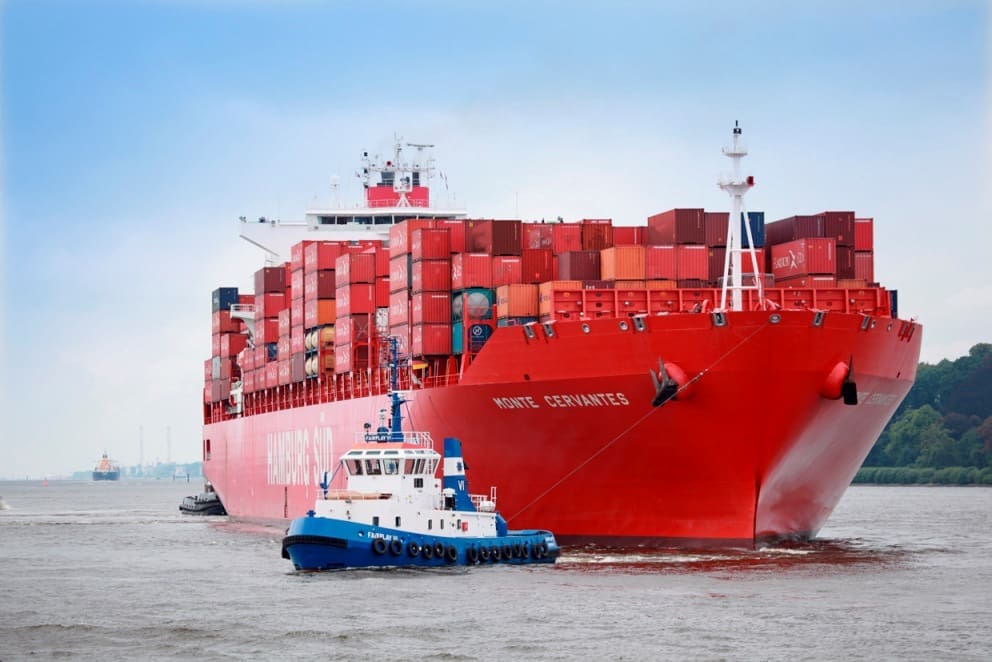 Brazilian beef entering China now faces not only the additional 55pc safeguard tariff (designed to protect the Chinese domestic beef industry) through the end of the year, but also a 12pc most favored nation tariff – meaning the total tariff bill will be a blistering 67pc.
There’s been an unusual delay in the timing of Brazil’s official triggering of its tariff this year. Some put that down in part to Brazil using some of Uruguay’s unused quota – however others believe that China has been ‘excusing’ Brazilian shipments tariff-free to get more product into the system.
For example it took Brazil only 20 days to move from 80pc to 90pc of its 2026 quota – yet it took a further 50 days to reach the full allocation of 1.106 million tonnes this week. Nobody has provided a clear explanation.
The danger for Australia now is that Brazil seeks to shift much greater export quantities into other customer countries – principally the United States and Canada, but potentially, also Japan and Korea – as trade into China dries up.
For the calendar year to date, Australia supplied 30.1pc of US beef trimmings imports, followed by Brazil at 21.7pc, New Zealand at 19.4pc and Uruguay at 8.8pc.
For Brazil, at least, the restricted access period into China is much less than for Australia, with early consignments for 2027 tariff-free trade likely to be shipped in as little as eight weeks’ time, scheduled to arrive after the annual tariff is lifted on 1 January.
On top of that, it’s widely anticipated that both Brazil and Australia will fill their tariff-free quotas in record time next year, as product is already building up in both countries in readiness for the new calendar year. January is likely to set all-time records for shipment volume into China for both countries, one Australian export trade source suggested.
Meanwhile, the US beef industry’s ability to export product to China remains heavily constrained by the lack of eligible establishments and high-risk, costly, 100pc border inspections – on top of the obvious low production volume.
Argentinean beef headed for Japan
Meanwhile Argentina yesterday announced that it been granted access for imported beef to Japan for the first time in 20 years.
Reuters reports that Argentina and Japan reached an agreement after sanitary requirements were set for beef imports to come from zones in Argentina free of Foot-and-Mouth Disease, where vaccinations are used.
Argentina’s economy minister Luis Caputo made the announcement on Wednesday, however from what Beef Central can determine, Japan is yet to officially acknowledge the development.
Both Argentina and Brazil have been in beef trade access talks with Japan and Korea recently, and it’s been widely anticipated that both exporters would receive approval at some time.
 For Brazil, Japan access would provide a pressure valve for beef exports now being diverted out of China (see below).
The Buenos Aires Times yesterday reported that Argentina’s government had confirmed that it had cleared the sanitary hurdles needed to begin re-exporting beef from its main cattle-producing regions to Japan, nearly two decades after first seeking access to one of the world’s most demanding and lucrative markets.
Negotiations on the agreement began two years ago in earnest, with a view to enabling the export of beef from the country’s main production areas in the centre and north, which are considered free from FMD, and subject to vaccination, the Times reported.
“This is a historic agreement,” Economy Minister Luis Caputo said on X, saying the opening would create new opportunities for Argentine production and exports.
Japan imports more than US$3 billion worth of beef a year from around the world, adding that the deal recognised the quality of Argentine beef and the strength of its sanitary controls.
The opportunity would be tempered, however, by Japan’s 38.5pc tariff on Argentinean beef imports, which limits the impact of the market opening. Australia under its FTA with Japan pays a lower tariff, around 24pc.
Argentina first sought access to the Japanese market in 2006.
Japan has permitted the importation of beef from Patagonia in southern Argentina, recognised as a FMD-free without vaccination, since 2018, although the area runs few cattle and trade has been virtually non-existent.
The agreement also covers beef tongue, a highly prized item in Japan.
Exports can begin once Japanese authorities carry out a planned audit of Argentina’s sanitary system and inspect and approve establishments seeking to export to Japan, the government said.
The opening comes as Argentina’s beef industry sits at a crossroads, the Times reported, with exports at record levels while slaughter and domestic consumption are falling. Average annual beef domestic consumption per person in Argentina fell to 46kg in the 12 months to August, 10pc down year-on-year.
Brazil’s restrictions into EU market heighten talks with Japan over access
Meanwhile, the European Union’s ban applied this month on beef imports from Brazil over concerns about Brazil’s lack of traceability over microbial use has heightened speculation that Brazil will continue to press for access to Japan and South Korea.
Neither have accepted beef from Brazil for at least the past 20 years, over FMD concerns.
For Australia, Brazilian access to Korea and Japan would be a terrible blow, a NSW export processor told Beef Central, as they are the last remaining customer countries where Australia’s only real imported beef rival has been the US.
In its latest Global Beef quarterly report, Rabobank discusses how trade restrictions are reshaping global beef trade flows, suggesting the EU’s recent ban on Brazilian beef, plus the China tariff situation, may focus more attention on opportunities in Japan and Korea.
“Achieving beef trade access to Japan and Korea would come at a favourable time for Brazil,” Rabo’s report said.
“Both markets resemble the EU in their preference for quality, food safety and higher-value cuts, creating the possibility of partially offsetting the impact of the European suspension.
“With the US beef exports constrained by historically low cattle supplies, a rare opportunity has emerged for alternative supplies – ie Brazil.”
“Japan is reportedly nearing completion of its final technical assessment over access. South Korea recently sent an audit mission to processing plants in three Brazilian states, one of the final steps towards market access.”
Although Japanese and South Korean consumer acceptance will be critical, Brazil is well positioned to supply both lean, competitively priced commodity beef, as well as premium beef from European breeds, whose production has expanded through feedlot systems.
“If successful, Japan and South Korea could become not only compensatory destinations (for Brazilian meat not entering the EU or China), but also strategic growth markets for higher-value beef exports,” Rabo’s report said.
Very interesting reading. I’ve been banging on about the threat of Brazil getting into our lucrative markets for years — and now here we have their neighbour, Argentina, doing the same.
What are these countries good at? Producing manufacturing type beef at highly competitive, affordable prices. And what’s the subject Aussies rarely talk about — especially in one of our most valuable markets, Japan? Manufacturing meat.
We love to highlight Japan’s premium grain fed beef segment, but what actually happens there? What do they really buy from us? Australia ships around 250,000 tonnes of beef to Japan each year, which is fantastic — but roughly 35% (about 87,000 tonnes) of that is manufacturing beef.
We talk endlessly about our beef being superior, clean, and that consumer acceptance will be a hurdle for other countries. But let’s be honest: consumers don’t care what country their burger comes from. Most of them assume it’s local meat anyway.
Watch out, folks — the South Americans are coming. In fact, they’re already here: nibbling at our US market, gaining access to Indonesia, being “favourited” by China, and now re entering Japan.
Yes, they still have tariffs and other trade barriers to navigate — but these countries are very good at climbing over hurdles. Meanwhile, we seem to be losing ground in negotiation and market defence.