
AUSTRALIA’s benchmark eastern young cattle indicator has yo-yo’d back to 1000c/kg carcase weight, rallying 30c in the past week.
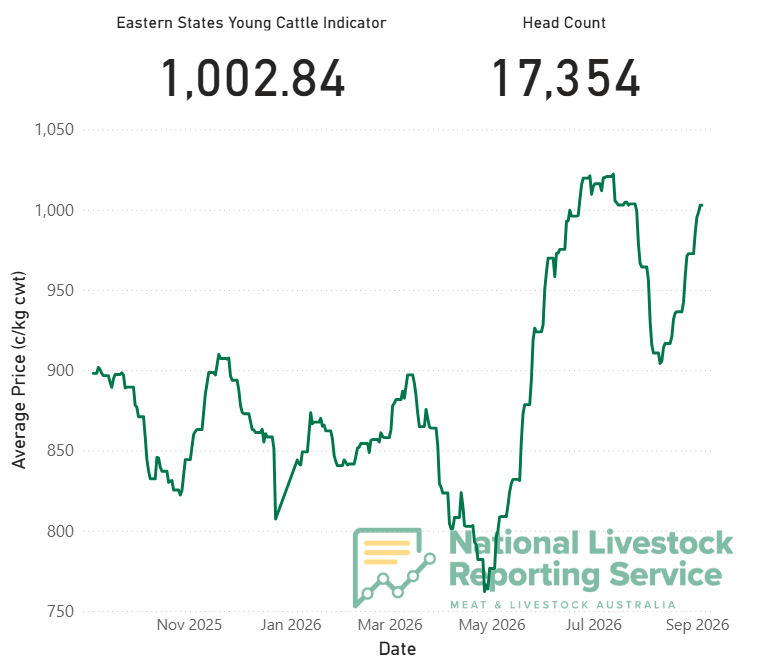
The Eastern Young Cattle Indicator on September 4. Click to Enlarge
The rolling average of saleyard prices has been bouncing around in recent months, dropping from 1000c in July, down to 905c in August and back to 1000c to start September.
Rain across large parts of Southern Australia has largely been attributed to the increase in prices in the past months, with feedlot buyers telling Beef Central earlier this week that trucks had been pulled up and buyers were going shopping at the saleyards.
The buying pool at the saleyards has also contracted in recent weeks, with Meat & Livestock Australia’s national yarding going from about 70,000 head at the start of August back to about 50,000 head for the past three weeks.
All price indicators have increased with the small yardings going up 8c to 384c/kg and feeder steer indicator going up 12c to 529c/kg this week.
As was addressed in yesterday’s episode of The Week in Beef podcast, rain continues to fall in Southern Australia while parts of Queensland are starting to dry out.
Higher prices in the south
Looking at the EYCI graph, southern saleyards have been contributing higher prices, with average prices all above 1000c at Tamworth, Forbes, Wagga and Dubbo – with Roma averaging 968c/kg and Dalby 952c/kg.
According to Wagga National Livestock Reporting Service reporter Leann Dax there was a strong demand for cattle in Northern NSW.
“Buyers seeking big frame types encountered challenges, often needing to purchase heavier stock than usual or drop their weight,” she said in her sale report.
“Restockers were notably active, acquiring most cattle under 300kg. There was significant demand for cattle from the Tamworth region, with buyers specifically looking for steers and heifers under 400kg. The presence of a large field of buyers, all holding extra orders, contributed to a particularly dynamic market.”
Is downward pressure coming?
With export beef prices continuing to drop in recent weeks and market access issues like China’s safeguard tariffs creating tough meat trading conditions, there is downward pressure on the cattle market.
The supply situation is interesting, with cattle numbers supressed at Roma and Dalby in recent weeks after a busy couple of months.
Numbers increased again at Dalby this week, which NLRS reporter Trevor Hess said was caused by dry weather.
“The disappointing rainfall event experienced the previous week combined with a dry short term forecast contributed to a 2193 head increase in cattle numbers at Dalby with the yarding rising to 6,400 head,” he said in his report.
“The yarding reflected producer responses to ongoing dry conditions and limited rainfall prospects across parts of the supply area. Included in the offering were 1,214 cows and 355 bulls. The buying panel was strengthened by additional representatives from New South Wales and Victoria, alongside the regular local operators.”
HAVE YOUR SAY