
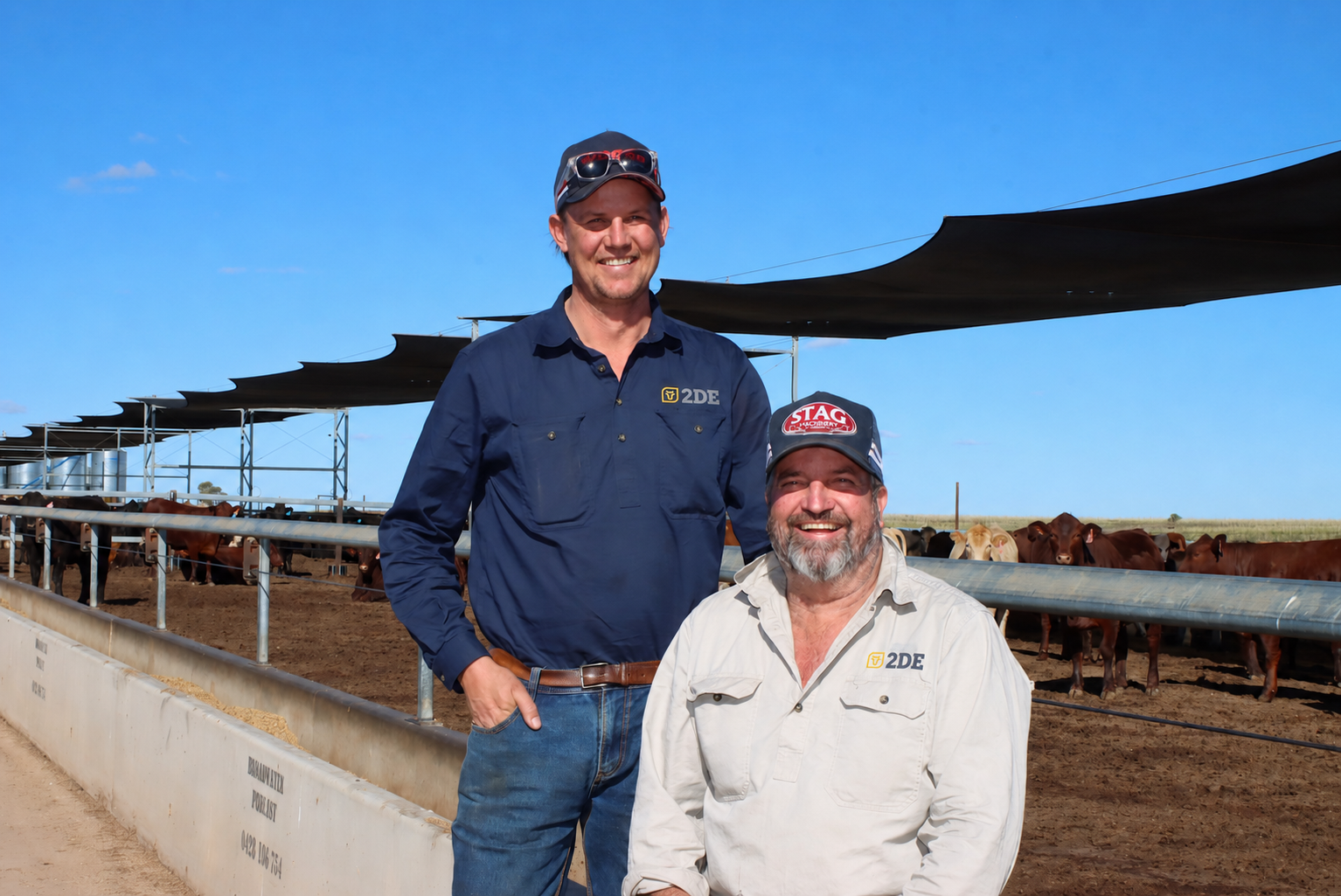
Jack and Peter Dearden at Bellevue Feedlot, Roma.
BECOMING a feedlot owner was not originally on Peter Dearden’s farming to-do list.
But as the family farming partnership he established with his brother-in-law Matthew Durack in 2020 under the “2DE” brand grew to significant scale, a move into lot feeding became a logical next step.
2DE today owns or leases eight cattle breeding and backgrounding properties around Roma, Condamine, Quilpie and Eromanga in south west Queensland. The operation also includes more than 10,000 acres of broadacre cropping.
As the business expanded, adding a feedlot emerged as a way to connect its cattle and cropping enterprises while capturing more value from the livestock and grain it was already producing.
The Deardens and Duracks had already moved some way down that path, constructing feed pens at one of their Condamine properties during some drier years.
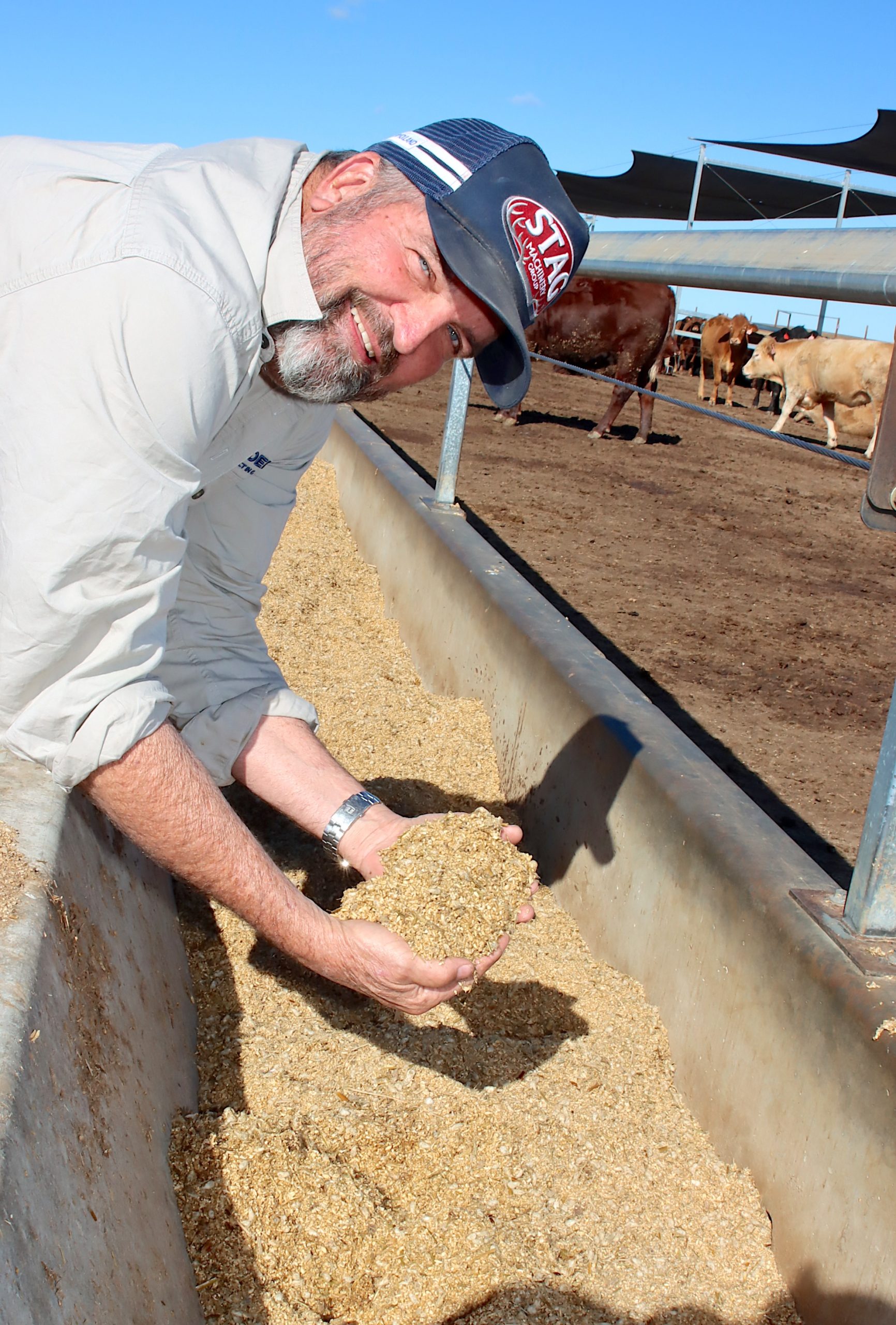 “We were looking to get that registered and upgrade it and were getting prices on doing that when the Bellevue Feedlot (near Roma) came onto the market,” Mr Dearden explained to Beef Central during a recent visit.
“And we looked at it and thought well it is turnkey. It was, and still is, a neat little feedlot.”
At the time of purchase from Justin and Sherill Stivano in 2022, Bellevue Feedlot was built to 1580 SCU (Standard Cattle Units), with development approval for 5000 SCU.
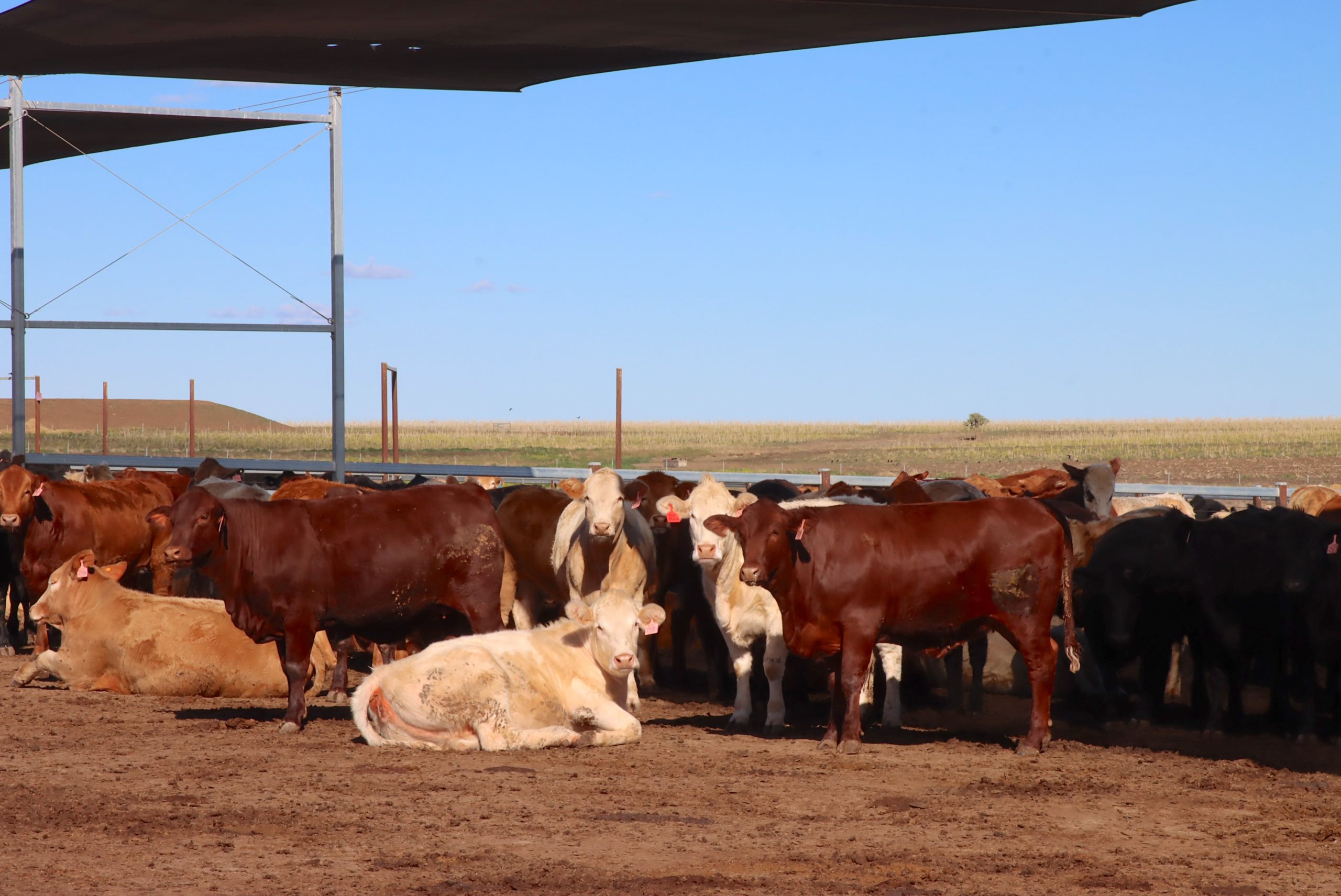
The 2DE partnership has developed a strategic plan to expand the feedlot to its fully approved capacity by 2028, and has since added new shaded pens to take current operating capacity to 3000 SCU.
Reducing volatility
Buying a feedlot was not an end in itself, but a means of smoothing out some of the volatility inherent in feeder cattle markets.
“We didn’t buy it because we wanted to own a feedlot, we bought it because we wanted to build an integrated beef business where we could control more of the production chain,” Mr Dearden said.
“Backgrounding and feeder markets are so volatile. If we’re taking those animals right through it just knocks the peaks and troughs out a bit, and flattens the curve.
“The heavier the animal it seems the less volatile it is, whereas the lighter ones, if you have a look at the EYCI and to try and pick that it is pretty challenging.”
A mill upgrade for the future
All decisions in the 2DE business are heavily backed by data. The Dearden and Durack families have made numerous capital investments across their network of properties to both improve land and maximise production from existing assets. Several examples of recent developments can be seen on the 2DE website (link here).
As relatively new feedlot owners, one of the major decisions they faced was what type of grain processing system would be needed to carry the operation well into the future.
 Investing in a larger dry-rolling mill was one option, while steam flaking was ruled out based on scale.
“Because we’re only a small feedlot we couldn’t really steam flake, that is 10,000 head plus territory there,” Mr Dearden said.
After considerable research, including talking to numerous other feedlots, many of which were generously prepared to share their own performance data, they ultimately settled on a tempering mill.
While more expensive than a dry-rolling mill, the technology offered a range of potential benefits, particularly around feed efficiency.
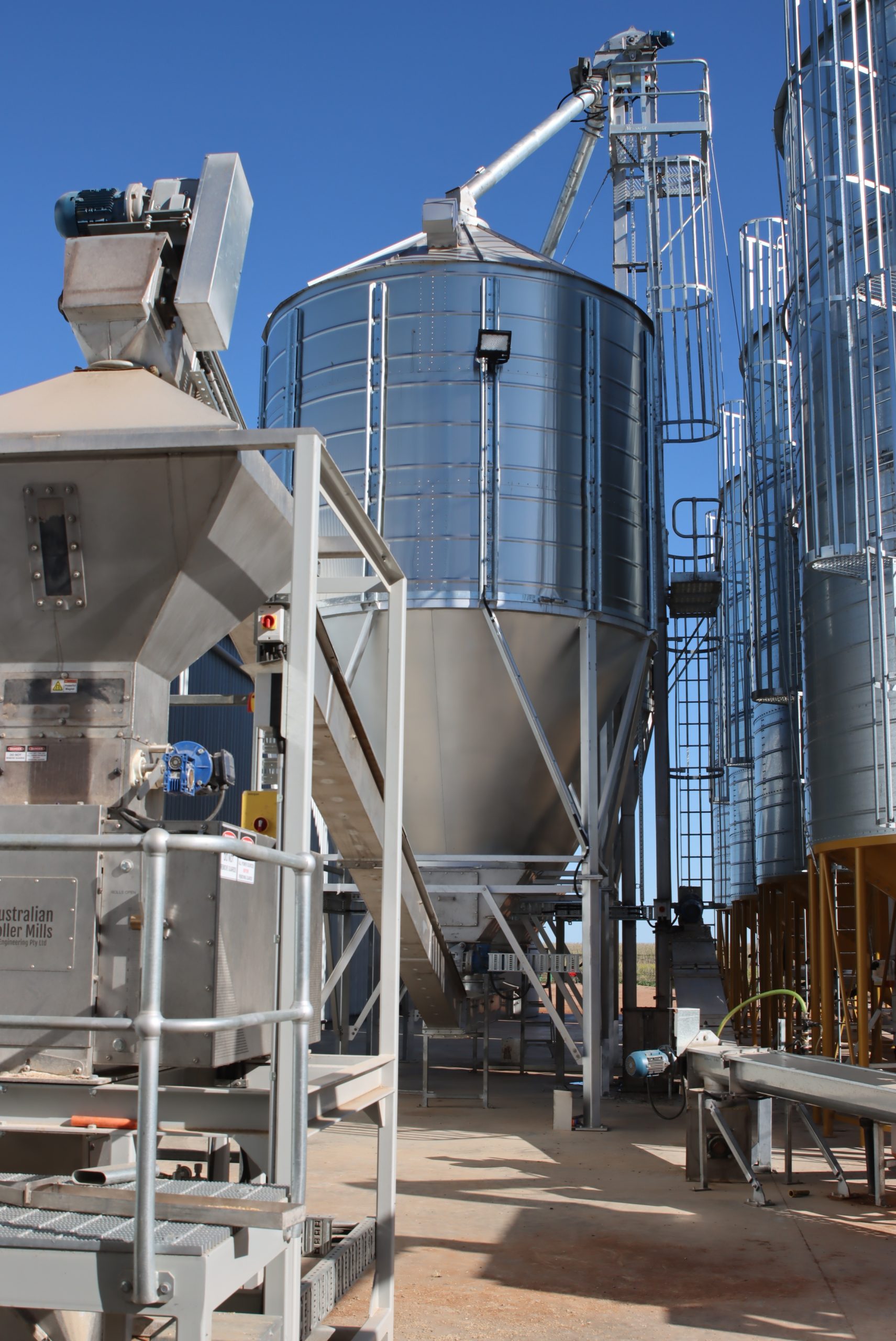
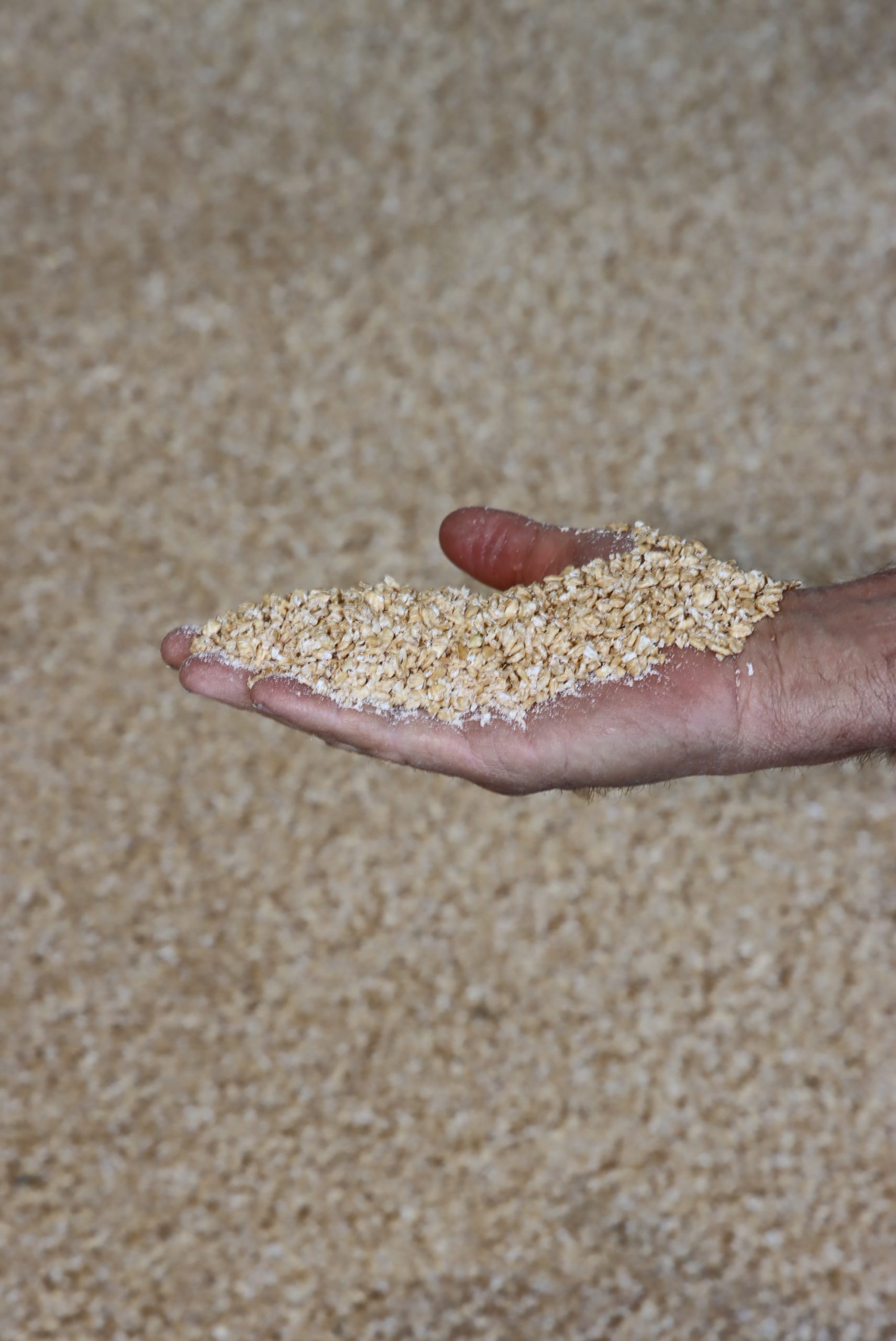
Tempering involves adding water to dry grain and allowing it to steep in a bin or silo for up to 24 hours so the moisture penetrates the kernel before it passes through the roller mill.
“Essentially you’re adding 10-12 percent water to the grain portion of your ration, which is 71 percent of a finisher ration, which improves your feed conversion ratio significantly, lowers dust, increases palatability and lowers risk of acidosis – there are all sorts of benefits,” Mr Dearden said.
“Because it was a significant investment, we wanted to make sure we were going to get a pay back on it, so we spoke to a lot of people who had similar mills and who were good enough to share their experience with us.”
They ultimately settled on a new tempering mill system from Australian Roller Mills and Cambooya Welding Works with capacity of about 30 tonnes an hour, supported by 1000-tonne aerated and sealed grain silos.
They also elected to use stainless steel throughout to maximise the working life of the investment.
“The tempering silos are stainless, all of the elevators and everything is stainless steel, we’re talking a 20 plus year life span.”
 Mr Dearden said one conversation with another lot feeder in particular helped to crystallise the decision to go with a tempering mill.
“He said to me ‘mate do you want to save 10 percent on your grain?’ I said yes, and he said ‘well put a tempering mill in’. That cut straight to the chase.
“But it is also more than just that. It is the feed conversion and it also has a big grain cleaning portion to it which takes out all of the dust and the dirt and the bits of husk, so the grain that is feeding your cattle, is clean, pure grain.”
Feeding program
Bellevue Feedlot is currently feeding for two specific customers, with an export program feeding crossbred steers for a large processor and a trade program feeding flatback Euro cattle for a supermarket customer.
2DE produces about half the cattle its feedlot requires from its own network of properties, and sources the balance through the nearby Roma Saleyards and a growing network of dedicated suppliers.
“It has taken a few years but we have some good contacts now that have become repeat suppliers,” Mr Dearden said.
“They have proven good performers and we’re prepared to pay a premium for those right cattle that we’ve got the good data on. It is another data driven decision.”
Keeping cattle happy
Four years into feedlot ownership, Mr Dearden said they they have learned a lot, but is quick to stress “we’re not experts by a long shot”.
 “We’ve made a lot of improvements but we’re still learning,” he said.
“Agriculture never stands still. Every year has been another opportunity to improve.
“Weather is a big one. There’s heat load events and there’s wet weather events and they all effect the performance of the cattle, so we have done all sorts of things to counteract that like putting shade up and cleaning pens at least once per rotation of cattle, so there’s no build up of manure. The manure is put on our cultivation, and that has been beneficial.
“That has been the biggest learning curve, identifying the one percenters and systematically working through them to enhance animal welfare and husbandry practices. These factors play a significant role in the performance and wellbeing of both our livestock and our staff.
“We’ve got pen riders on horseback that ride through the cattle daily to make sure that their health is right and treat them accordingly.”
Building for the next generation
Ultimately, the feedlot expansion is part of a much longer-term plan.
With multiple generations from both families involved in the enterprise, the aim is to create a sufficiently large, diverse and productive agricultural business to provide opportunities and career pathways for the next generation as well as non-family employees.
“This was not about ‘let’s just have a feedlot’, it was strategic fit into our whole business,” he said.
“We bought it and expanded for a reason, it is a part of the bigger picture. We wanted to build something for the next generation.”
Well done fellas, a great read on the early stages of what will no doubt be a successful business going forward.