
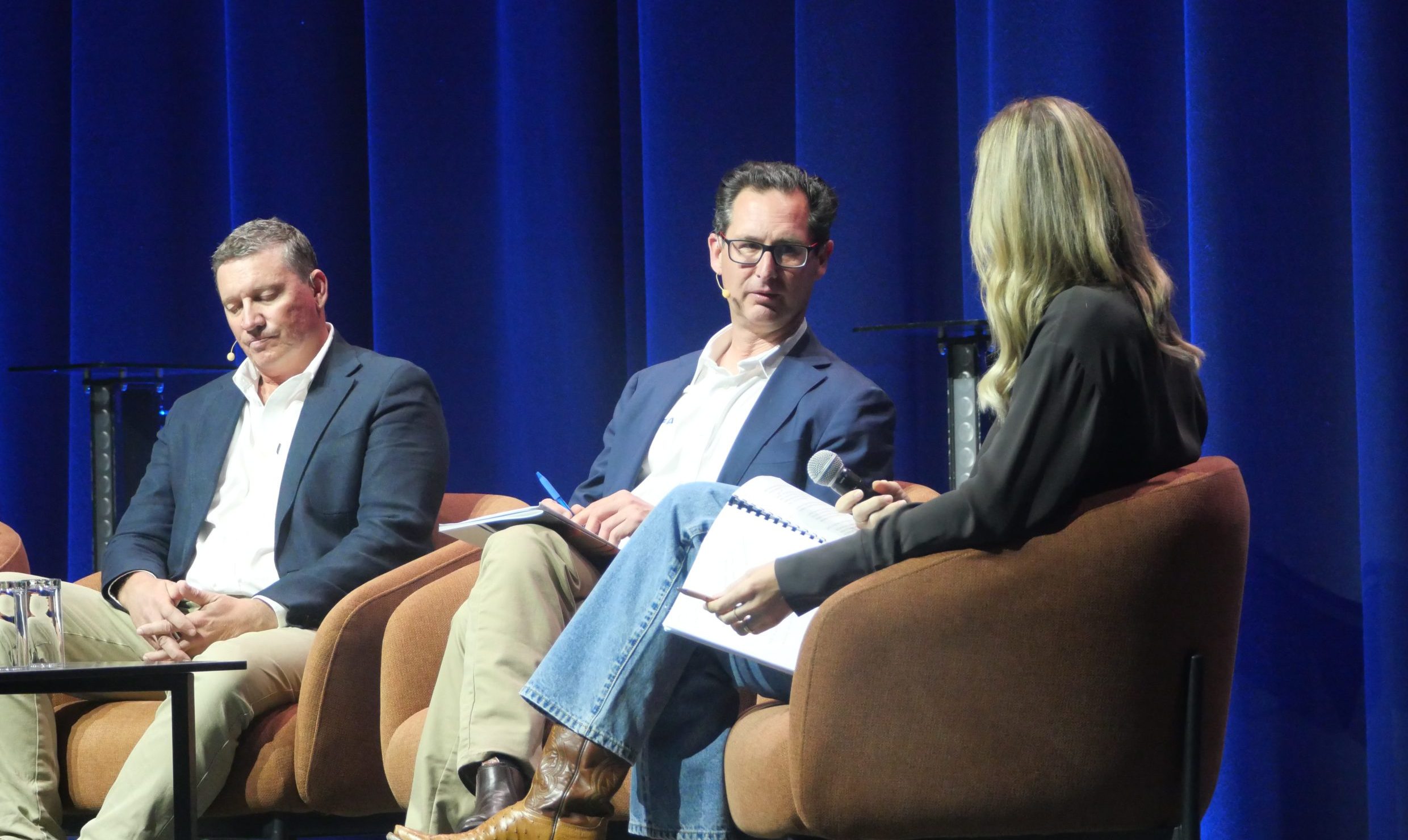
ALFA president Christian Mulders with Brendan Tatt and host Kimberley Busteed.
FEEDLOT operators received the shock their lives earlier this year, when the Strait of Hormuz was shut and fuel distributors told them they were unable to fill their tanks.
“I was at dinner with some of our Korean clients and I got a call to say one of our big fuel suppliers was telling us they were no longer going to deliver fuel into Riverina and Prime City,” said JBS Northern chief operating officer Brendan Tatt.
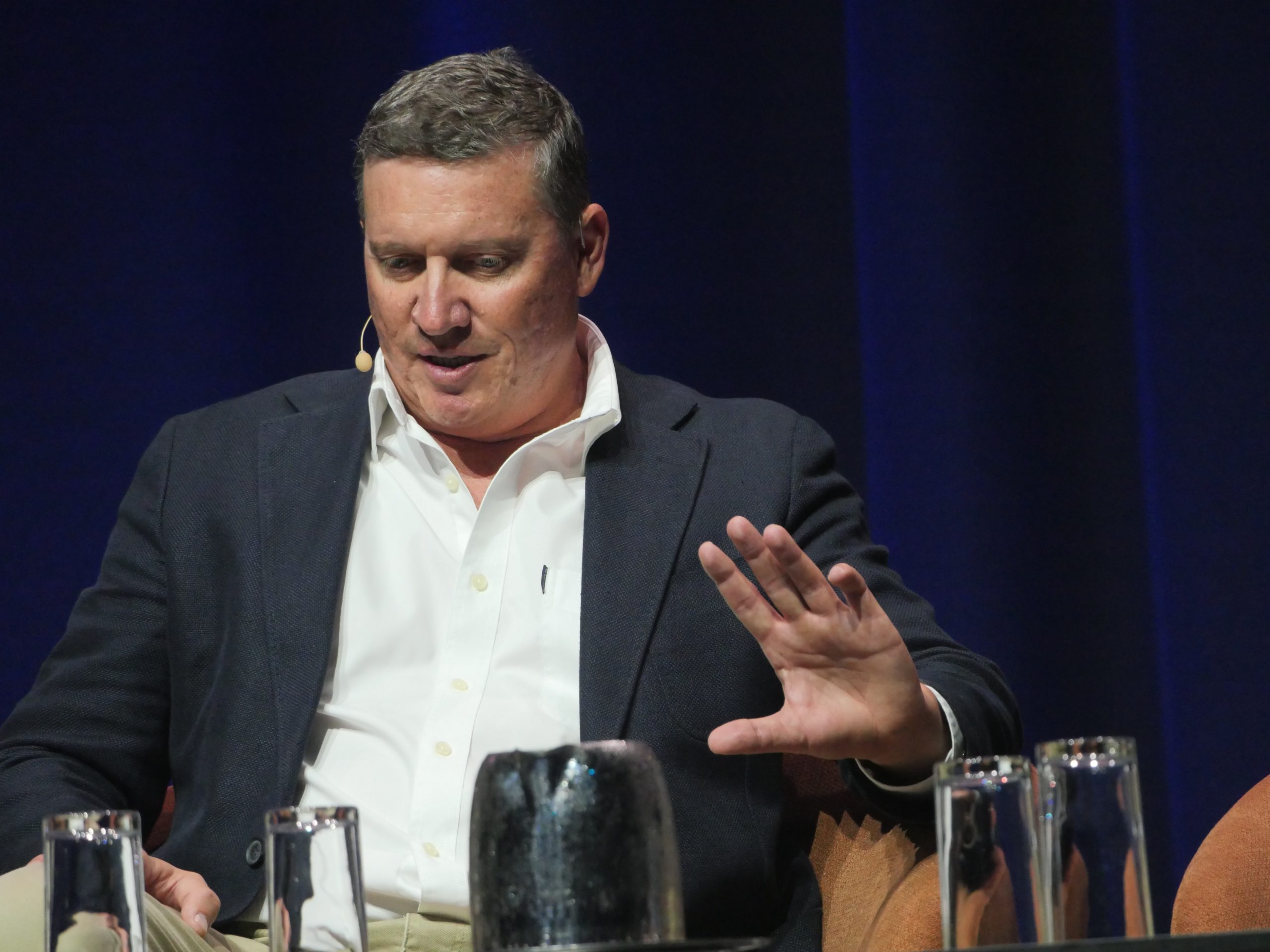
JBS Northern chief operating officer Brendan Tatt.
“That was a bit of an issue for us because we have about 80,000 cattle on feed there.”
With the stark reminder that events on the other side of the globe can leave the industry on the edge of disaster and limit access to critical proteins, making sure the lotfeeding sector was recognised for its role in Australia’s national security was a key focus of this year’s conference.
It was a vastly different conversation to previous BeefEx events over the past five years, where you would have heard speakers talk about the industry needing to work hard to maintain a “social license”.
Asked about the national security focus on a The Week in Beef podcast, Australian Lot Feeders’ Association president Grant Garey said recent shocks like the fuel crisis had shown that there is no work around in policy to make sure industry has access to key inputs.
“We need to have access to fuel and we think there is an opportunity to work collectively with Governments and other organisations to make sure we can put things in place during peace time, so we know what we are going to do when we need them,” Mr Garey said.
“Rather than having to wait until the middle of a crisis to work out what we are going to do.
“We don’t actually need a lot of fuel, but we need to have that fuel to be able to feed the cattle and there is no real work around for that. I think we have been successful in getting that information up the chain, but there is a lot more work to do.”
Don’t assume Canberra will understand
In a panel discussion, Australian Lot Feeders’ Association chief executive officer Christian Mulders told the crowd not to assume politicians and public servants have an understanding of the implication of feedlots running out of fuel.
Mr Tatt said JBS had received mixed messages from Government departments.
“When have what is potentially a massive animal welfare and food security issue, one department is probably not being as helpful as they can be,” he said.
“Then there is another department’s running companies like ours asking ‘are you going to be able to get food into the supermarkets next week, because we cannot have a food security problem’.
“We are having those conversations in parallel with different departments.”
Structural problems have not gone away
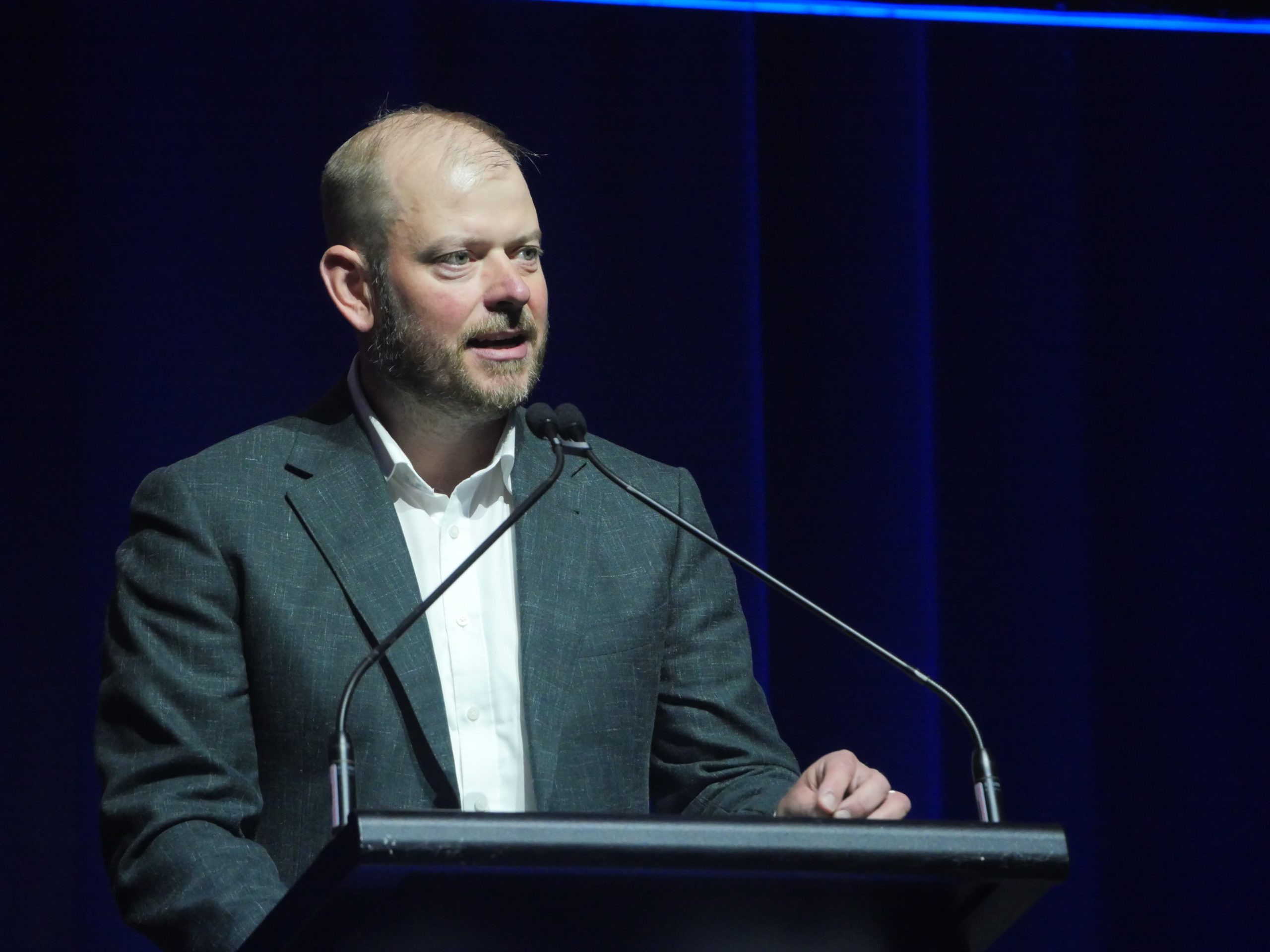
Andrew Henderson from AgSecure has been highlighting issues with Australia’s reliance on imports for years. He told the crowd in a speech that he was concerned about some recent moves from the Government.
“The government has just decided to wrap up the fuel supply task force. The fertilizer supply working group has move to a ‘meeting as needed’ format,” he said.
 “But I think those decisions risk giving us all the message that it is okay to move on when we still have not solved the structural vulnerabilities that exist in our food system and the things that made this such a serious problem in the first place.
“I don’t think that we can afford to send that signal out into the economy.”
The issue was also addressed by respected economist Saul Eastlake, who highlight that some big countries had drawn down reserves to keep fuel moving across the globe and that they will soon be looking replenish.
Mr Henderson said it was still important to be aware of these risks.
“The next disruption may give us less warning and fewer options than the last one,” he said.
“We still need to know where we are exposed, what we can do about it and how government and industry can work better together when the pressure returns.”
HAVE YOUR SAY