
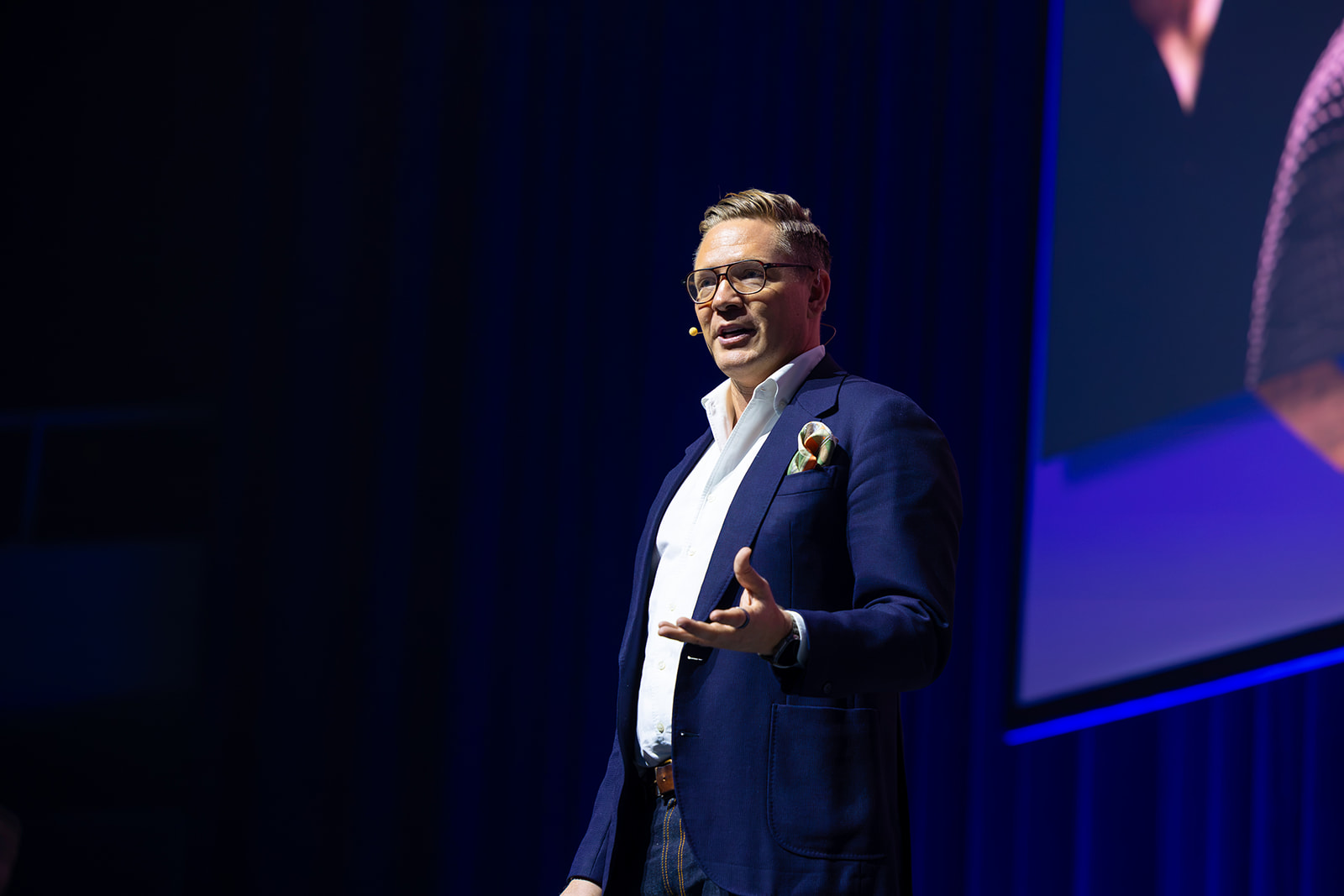
Futurist Ander Sörman-Nilsson presenting at BeefEx 2026.
WHAT will an Australian feedlot look like in 2040? That question was posed to attendees during a thought-provoking session during the grainfed industry’s BeefEx 2026 conference last week, where futurist Ander Sörman-Nilsson invited lotfeeders to look beyond today’s operational challenges and imagine a future shaped by artificial intelligence, renewable energy, advanced surveillance and a new generation of consumers demanding unprecedented levels of transparency.
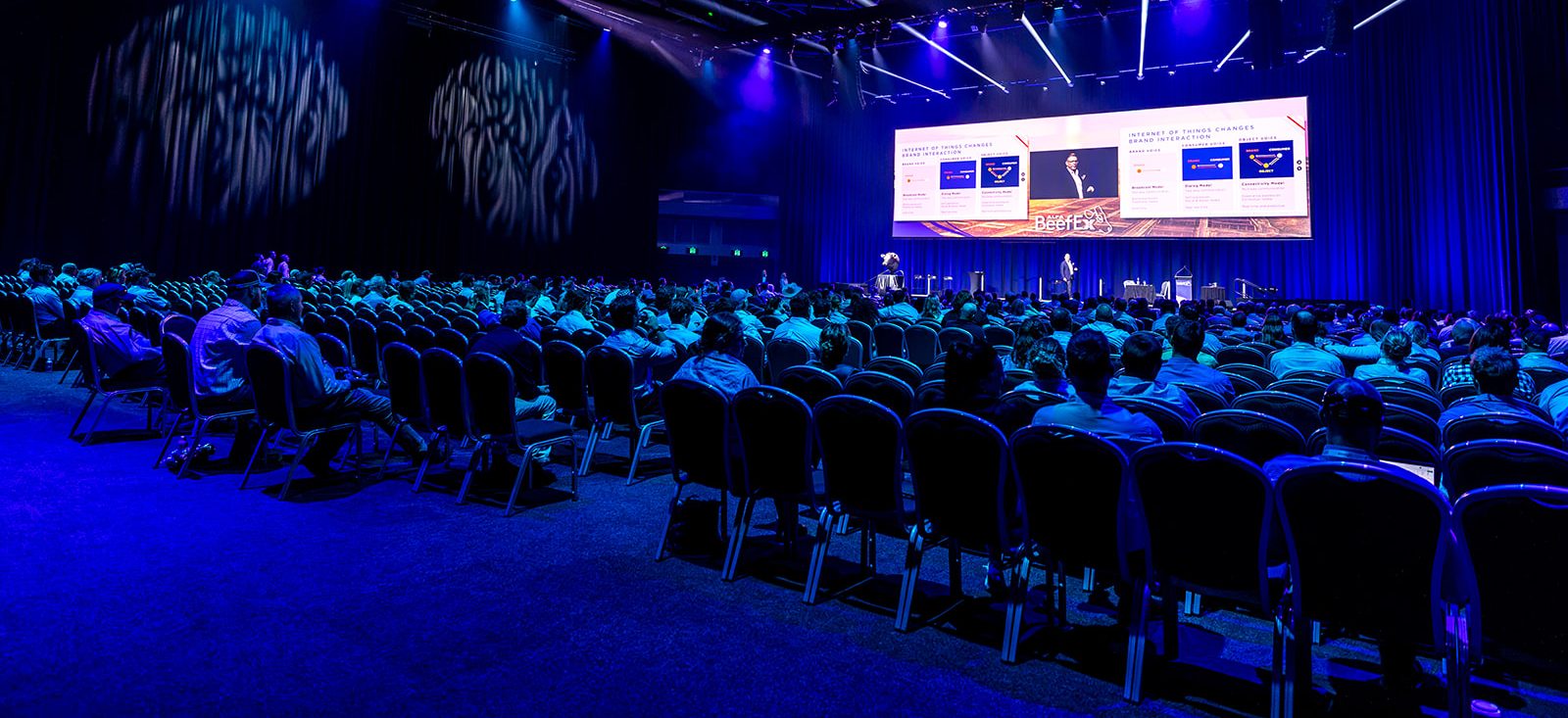
With more than 1200 delegates from across the grainfed beef industry in the room, the discussion painted a picture of an industry where technology is not simply used to improve efficiency, but to strengthen sustainability, animal welfare and consumer trust.
 Artificial intelligence featured prominently throughout the discussion, though Mr Sörman-Nilsson was quick to stress that even in today’s increasingly tech-based industry, some practical skills could not be replaced.
“We need stockmanship, we need the experience and we need the knowledge on the ground,” he said.
Nutritionist and Bovine Dynamics research project officer Sam Platts described how today’s automated bunk management systems rely on technology built around established nutritional principles.
The next evolution, he said, will involve “model data fusion”, combining information from behavioural cameras, feed delivery systems, weather data and real-time animal monitoring.
AI a tool that amplifies human expertise
Rather than replacing nutritionists or bunk callers, AI is increasingly being viewed as a tool that amplifies human expertise.
According to the speakers, a system that once required lengthy manual analysis can now produce recommendations within minutes, allowing staff to focus on higher-value decisions.
For Mort & Co’s Grassdale feedlot near Dalby, Scott Braund explained how automation has progressively been integrated into feeding decisions through a partnership that began in 2018.
Today, the system processes data for around 25,000 cattle each day and generates feed call recommendations directly within Feed Mark, an AI technology being developed with Bovine Dynamics.
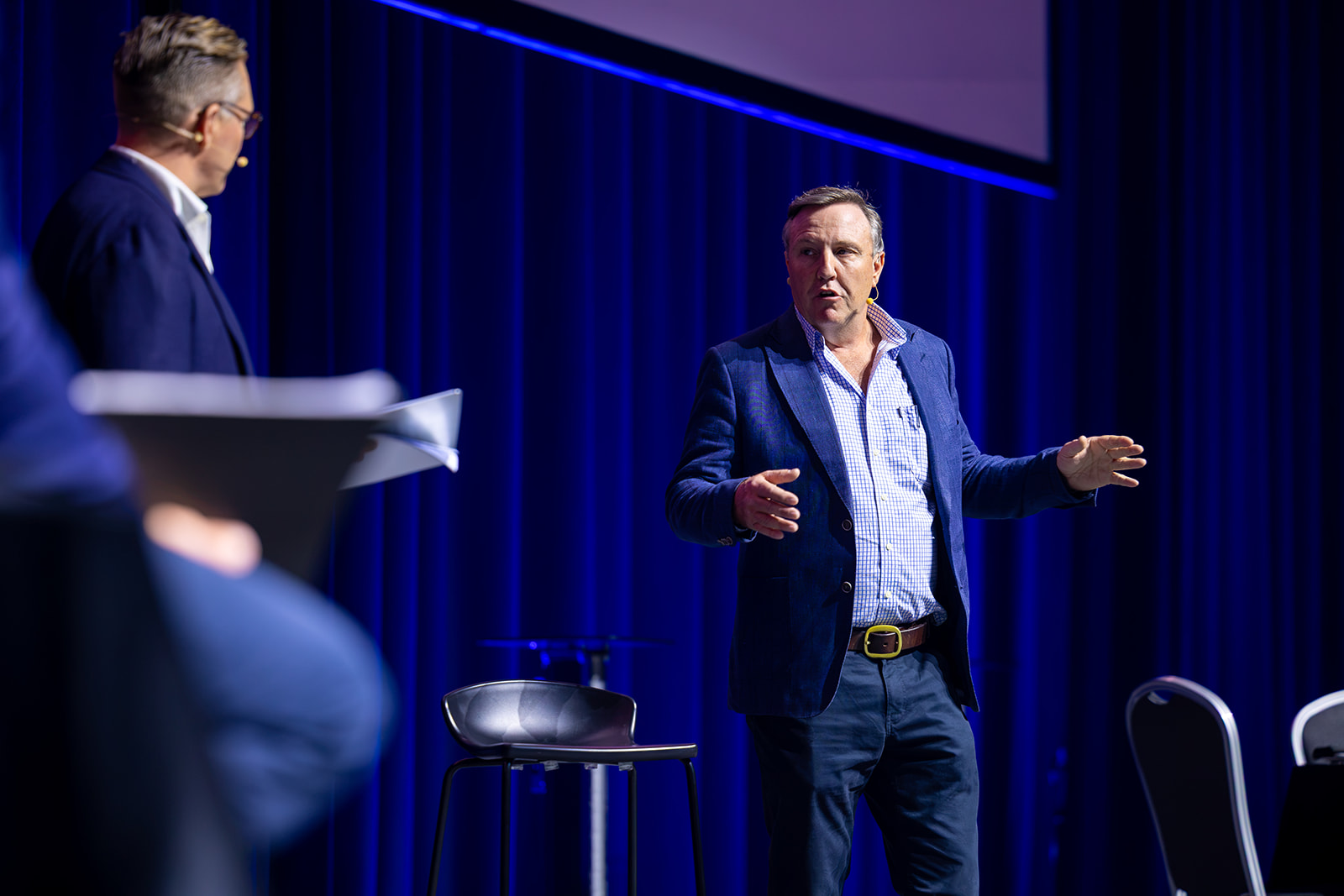
Mort & Co’s Scott Braund explains how automation has been integrated into feeding decisions at Grassdale.
Mr Braund described the technology as a “digital consistency coach”, helping reduce fatigue, cognitive load and variation between operators, however cautioned that automation is not without risk.
“I think, you know very broadly, sensors can go down, they can be out of calibration, so we need contingencies in place and still need to maintain a high level of skill with our people,” he said.
Maintaining transparency in how AI arrives at decisions was seen as critical to building confidence among feedlot managers and staff.
The solar feedlot vision
One of the more ambitious concepts discussed involved the future role of energy generation within feedlots.
 Bronte Modra, director of Specialised Solutions, outlined the potential for large-scale solar canopy structures that provide both livestock shelter and renewable energy production.
Designed as watertight roof systems capable of covering large feeding areas, the structures could provide shade, improve animal comfort and generate substantial amounts of electricity simultaneously.
“Costs of construction also go down, but the larger the structure, the more energy is created and we’re able to offset an entire farm’s yearly requirements,” Mr Modra explained.
“Over time, some feedlots may even evolve into energy hubs capable of operating microgrids or exporting surplus energy back into the network.”
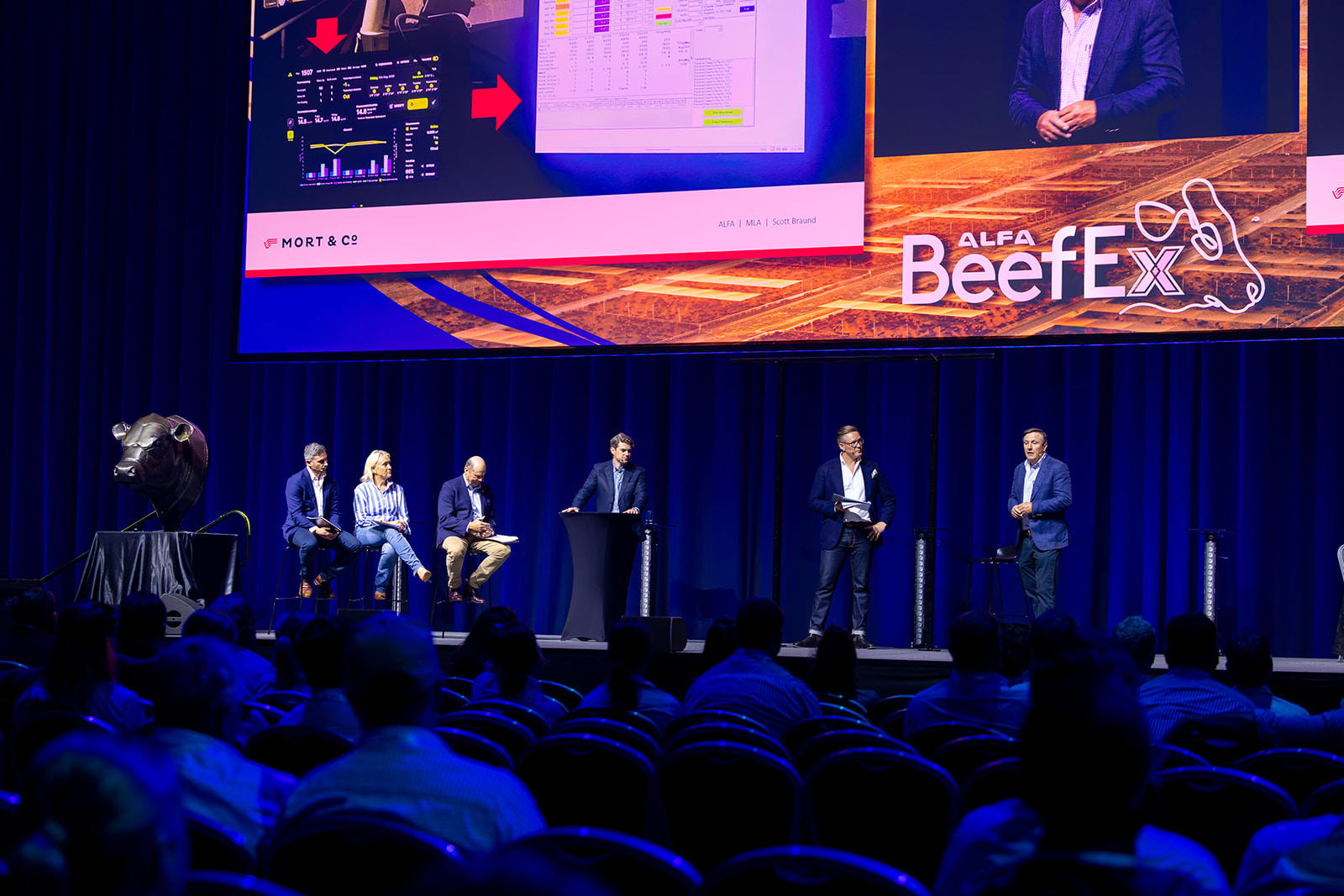
Building trust, one data-point at a time
While much of the discussion focused on what happens inside the feedlot, the final session explored how technology may transform the consumer experience.
MLA Brand Content Manager Mary-Jane Morse argued that future consumers will increasingly demand evidence rather than marketing claims and new technologies are being developed to enable that trust.
“It will create products whose value is communicated as much through its story as the taste of the product itself,” she said.
By 2040, she suggested, personal AI assistants may not only book restaurant tables but also filter menu options according to individual values, dietary preferences and sustainability expectations.
“A personal AI could understand the occasion, assess the options against our preferences and values and the restaurant may even have been chosen before we even think to search,” she said.
In this environment, broad descriptors such as ‘grainfed’ may no longer be sufficient.
Instead, diners could expect access to highly detailed information verifying a product’s provenance, welfare outcomes, environmental footprint and production history.
A future steak order might be accompanied by welfare ratings, carbon credentials, transport records and lifetime traceability data tied to an individual animal.
Mr Sörman-Nilsson emphasised that consumers are unlikely to pay a premium simply because technology exists.
Rather, they may reward producers who can use technology to provide confidence in outcomes they care about, including sustainability, animal welfare, quality and ethical production.
 A future built on trust
Despite discussions ranging from AI algorithms to solar-powered feedlots and personalised dining experiences, a consistent theme emerged throughout the session – technology was repeatedly described as an enabler rather than an end goal.
Whether through automated bunk management, renewable energy generation, heat stress monitoring or digital traceability, the industry’s future may depend less on adopting technology itself and more on how effectively those tools strengthen trust between the producers and the consumers.
If the vision presented at BeefEx 2026 becomes reality, the feedlot of 2040 may look very different from today’s operation.
But the industry’s fundamental objective will remain the same: producing beef efficiently, responsibly and in a way that continues to earn the confidence of customers at every link of the supply chain.
- Author Finn Pickering is a Year 12 student at Toowoomba Grammar School. He attended BeefEx on work experience with Beef Central.
Outstanding article Finn. Feedlot 40 was all about reimagining the R&D undertaken by MLA and others on the feedlot industry’s behalf and extending it in an exiting and practically relatable way. You’ve captured the essence of what we were aiming to achieve with this BeefEx session. And hats off to the Beef Central team for having you cover the session on Y12 work experience, how fantastic. Rural journalism is in good hands!