
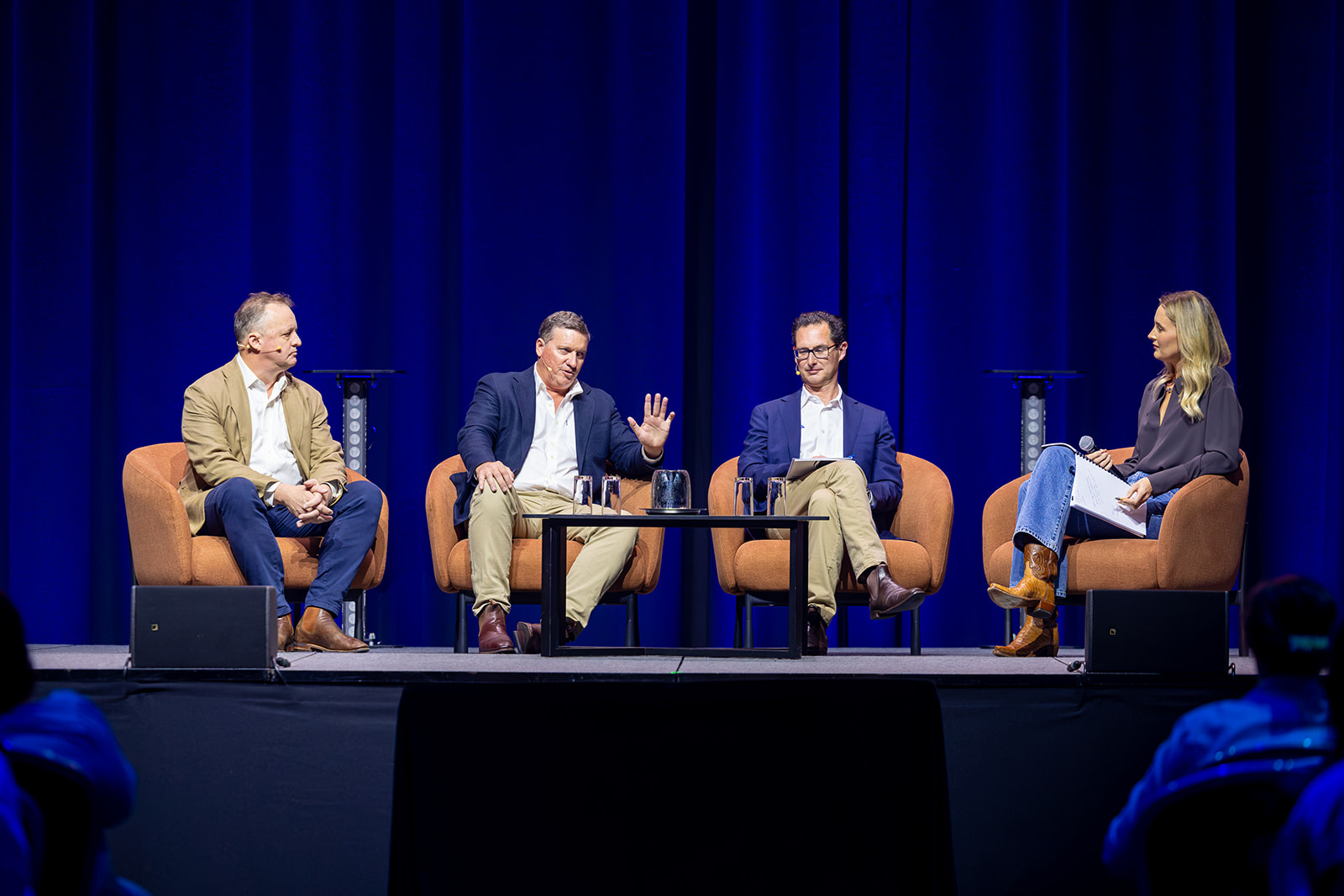
MLA international market manager Andrew Cox, JBS Northern chief operating officer Brendan Tatt and ALFA chief executive officer Christian Mulders with host Kimberley Busteed during BeefEx last week. Photo: ALFA
WITH protectionist measures being imposed and increased competition from big beef producing countries, there is no doubt some of Australia’s key export markets are under pressure.
While the quickly changing environment and uncertainty has been a big challenge for meat traders this year, a panel of industry leaders at last week’s BeefEx conference on the Gold Coast discussed how Australian beef can maintain its strong position in the challenging market. Including:
- JBS Northern chief operating officer Brendan Tatt
- Meat & Livestock Australia international market manager Andrew Cox
- Australian Lot Feeders’ Association chief executive officer Christian Mulders
Beef Central was in the crowd and summarised the key messages from the conversation.
Australia cannot out compete Brazil in commodity space
The rise of South American beef on the global meat market has been one of the biggest stories in the industry this year. Mr Tatt said it had left the Australian beef industry with two choices.
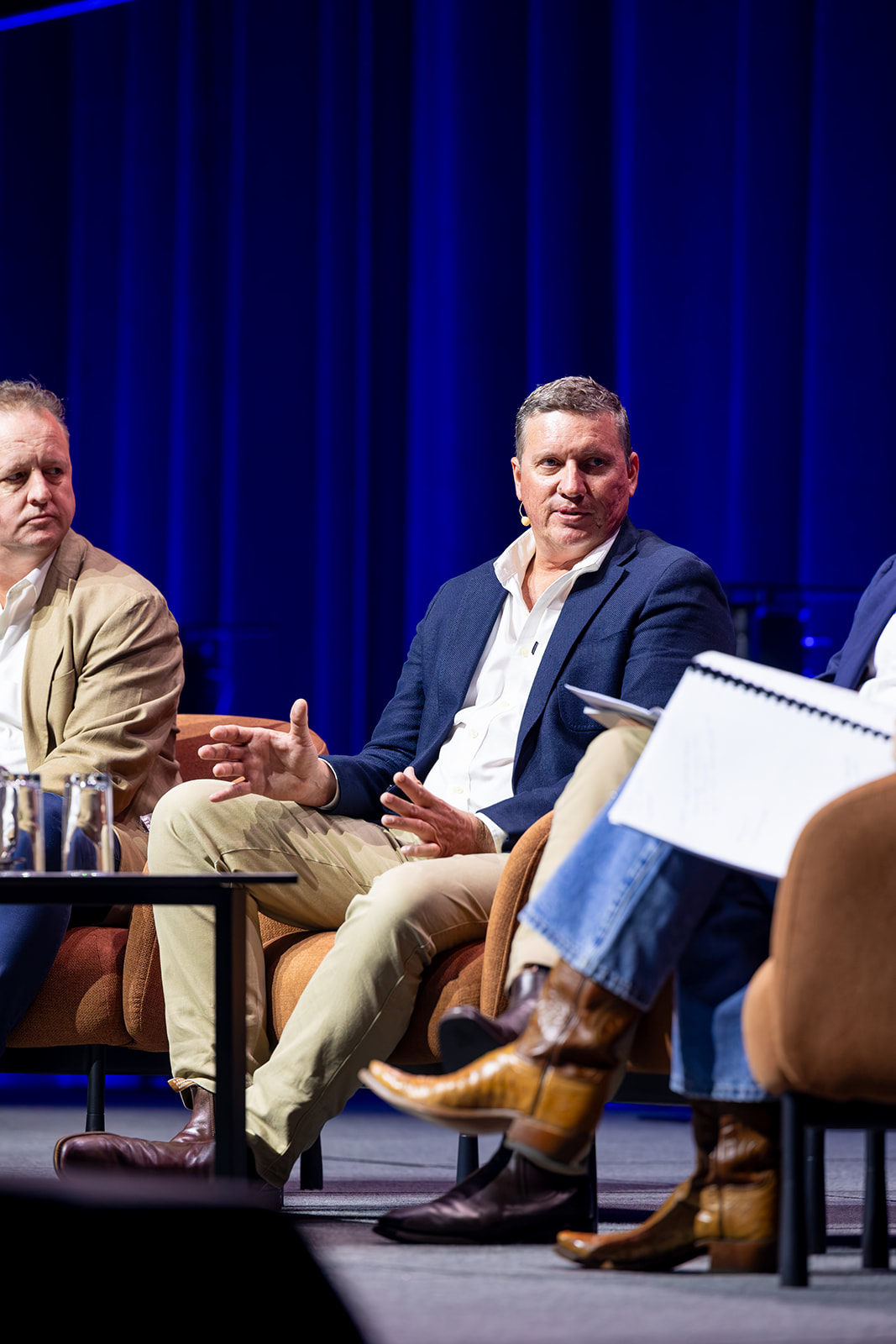
JBS Northern chief operating officer Brendan Tatt. Photo: ALFA
“We can be a low-cost commodity producer or we can be a premium operator,” he said.
“I have a fair bit of first-hand knowledge about what is coming out of Brazil and we are never going to beat them on low-cost commodity. If we want to try and compete with them head-on, we are going to struggle.”
A lot of potential growth in feedlots
A big part of staying away from the bare-knuckle commodity beef fight with Brazil is to keep growing Australia’s grained beef output, according to Mr Tatt.
“In the last 20 years, we have massively advanced from just feeding anything for 100-105 days and sending it,” he said.
“We are now on this journey of really analysing the cattle that are going in and putting them into specific programs. There is still more to do with our data and nutrition to be more efficient, but ultimately we have to feed cattle for less time and get more weight and marbling out of them.
“That is where you make money, selling quality product.”
Mr Tatt said another reason for growing feedlot capacity in Australia was to capture more markets in Southern Asia.
“We have great genetics in Australia and we have a really big paddock. It is unreliable, but we can run a lot of cows,” he said.
“To capitalise on the 800 million people on our doorstep in that arc from Indonesia to Thailand, we have to grow the herd and more reliably turn them off. And we can do that if we grow our feedlot capacity.”
Southern Asia/Middle Eastern markets emerging
Mr Cox, who is based in Singapore, agreed that Southern Asia presented big opportunities for Australian boxed beef. He said the industry was currently in the process of trying to win over hearts and minds in these countries.
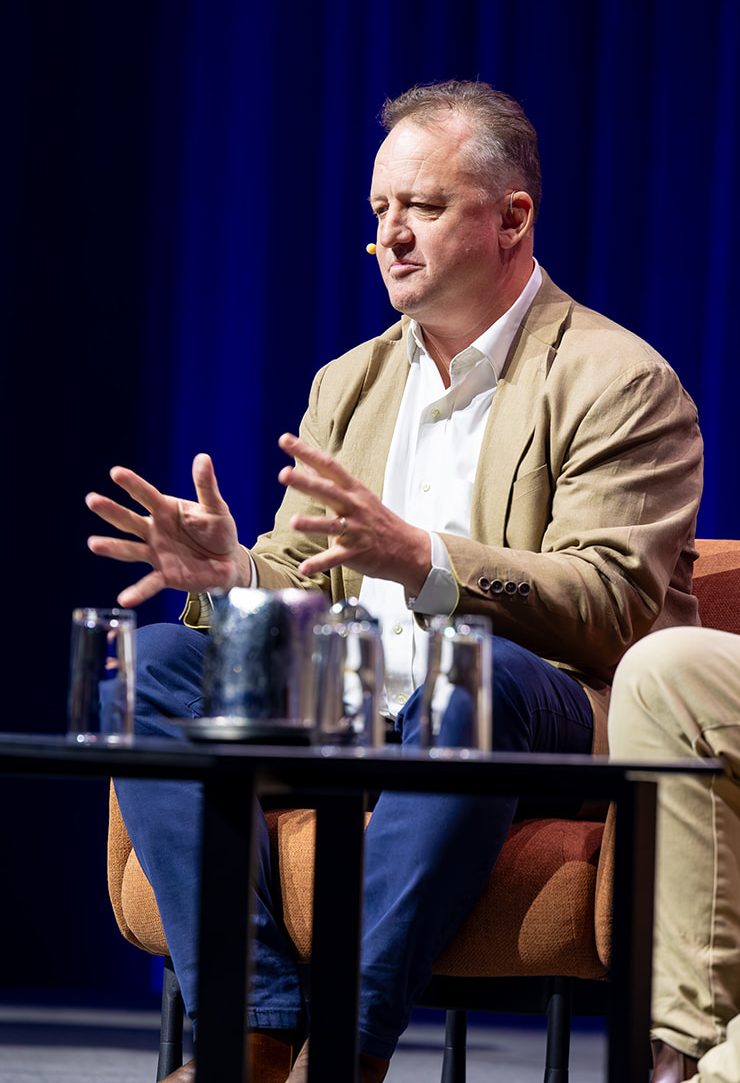
MLA interntional market manager Andrew Cox. Photo: ALFA
“We have done it in Korea, we have done it in Japan and those markets have matured to become wonderful assets for the industry.
“We are just on that journey in in Southeast Asia and don’t forget the Middle East – Saudi Arabia, United Arab Emirates and Jordan are all growing rapidly.”
Trust, Mr Cox said, was the biggest asset for Australian beef in these world markets.
“All of the work that we’ve done for generations on delivering that safe and consistent product is recognised by customers and that is eventually why they come back and pay top dollar,” he said.
“You look at big supply chains with 1000s of stores. If they have one problem in one store, it can result in a multi-100 million-dollar problem for them and potentially bankruptcy. That is how important it is that they get their big supply chains right.”
US presenting long-term opportunities
As the United States struggles to bring its herd back from historic lows, Australian beef has been exported across the Pacific in record quantities.
Mr Cox said while the current situation with the US will not stay around forever, it was giving Australian beef an opportunity to add new customers to the supply chain.
 “We need to impress them, we need to educate them, we need to make sure that when US beef comes back online, they are less inclined to switch straight back based on purely commercial and transactional reasons,” he said.
Mr Tatt said Australia’s grainfed beef industry was better positioned to go head-to-head with the US than it was with Brazil.
“They are still probably the benchmark for grain feeding,” he said.
“But as they continue to have long-term structural problemswith the size of their herd, there is a big opportunity for Australia.”
Trade access is causing the biggest headache
Perhaps one of the more obvious insights from the discussion was that the world and some of Australia’s key beef markets are becoming more protectionist.
“Out of all the things we are dealing with in our trade, access is probably the biggest issue we look at every day and it is the one we have the least control over,” Mr Tatt said.
 United States president Donald Trump was elected on a platform of clamping down on perceived unfairness in global trade and has spent a lot of his term trying to impose tariffs. (although all beef is currently without tariff)
China has put a 205,000t quota on Australian beef, with a 55pc tariff when it is triggered – which happened in June this year. Since then export volumes have declined drmatically.
And Korea has applied a24pc Safeguard tariff on Australian beef after record amounts were imported earlier this year. Mr Cox said Korea’s safeguard tariffs were voluntary and have been waived before.
“Despite intense lobbying from the importers and the Australian government, it obviously did not happen this time,” he said.
While the current wave of protectionist measures is causing uncertainty in global meat markets, Mr Cox said it was important to recognise the successes of recent years.
“Not too long ago we had a 40pc tariff in Korea and a 38pc tariff in Japan. Those two markets were still taking more than 400,000T of Australian beef,” he said.
“The majority of Australian beef is now sold to countries with which we have a free trade agreement. I think a great success over the past 20 years.”
Mr Tatt said it was important to remember that when beef was going into those markets with a tariff on top, a feeder steer cost 250c/kg, compared to the 500c/kg this year – which he said was evidence that the reductions in tariffs had gone back to the farm gate.
Europe is the most protectionist
While the world’s leap to protectionism has been associated the United States and China, the panellists agreed that Europe was the most protectionist of all.
The Australian Government signed a free trade agreement with the European Union earlier this year, which is now passing through both Australian and European parliamentary processes. It will phase in a beef quota of 30,600t over the next 10 years – which is an increase from the 3400t we currently send in under Europe’s Hilton quota.
As Mr Tatt put it: “Big whoop.”
“We are shipping 25,000t/month into the US at the moment.”
He said the deal was disappointing for a continent with large numbers of people and declining domestic production.
“They have a really good proportion of disposable income and they love our beef. We have brands up there, like plenty of other producers, and they love it. They just cannot make the extra tariff work.”
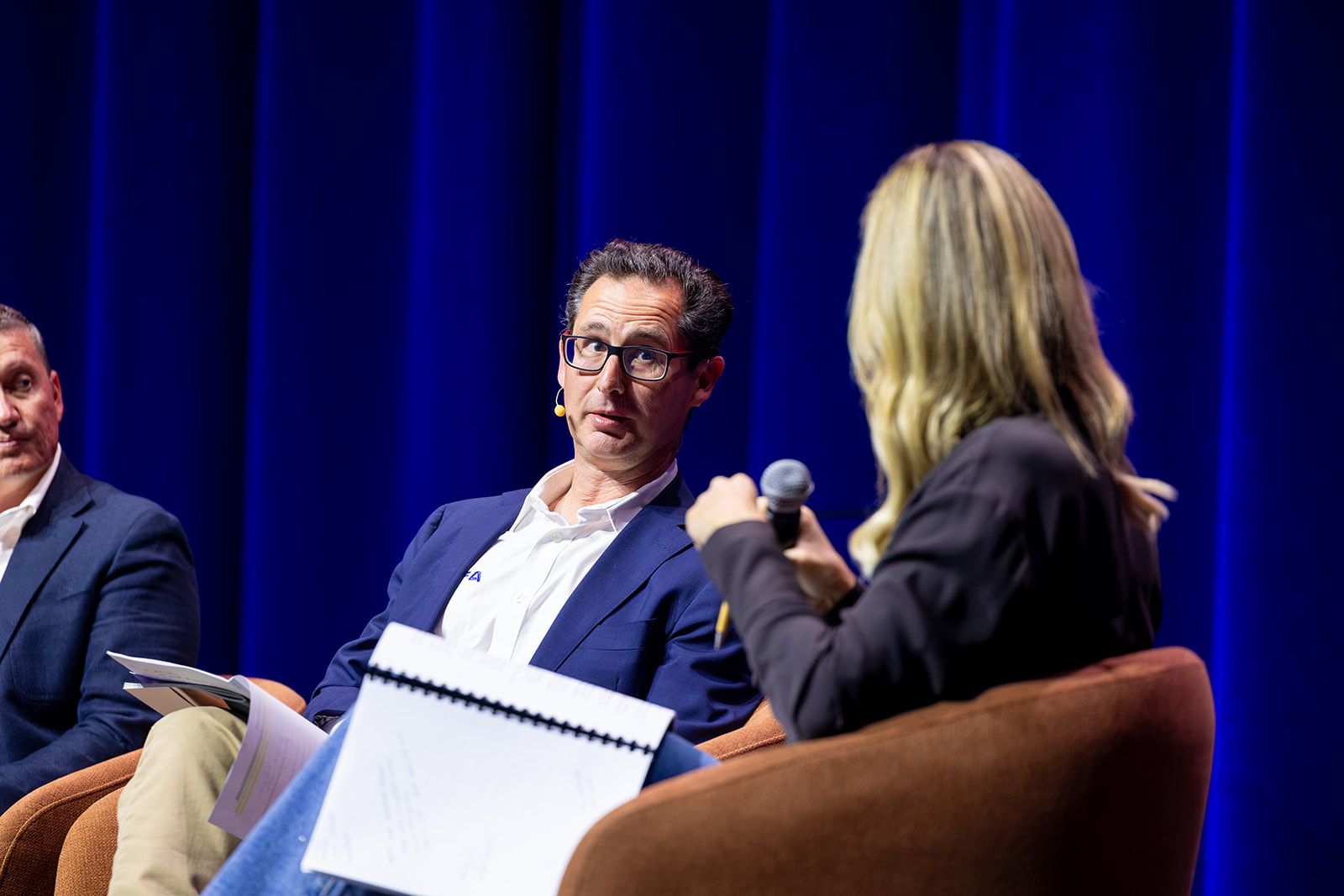
ALFA CEO Christian Mulders. Photo: ALFA
Mr Mulders said ALFA has been opposed to the deal, along with a range of other industry groups. However, he said there were some positives.
“20pc reduction in tariff on the Hilton quota (which is what Australian beef currently goes to Europe on) is a good thing, no fresh or frozen conditionality is a good thing and there will be a review hopefully in five years, which is a potentially good thing,” he said.
However, Mr Mulders said the most disappointing part was the way the negotiations were conducted.
“Back in 2023, the government spoke a good game in terms of objecting or wanting to get the best deal they could possibly get. Minister Don Farrell at the time walked away from a deal in Osaka because the deal wasn’t good enough, which was really positive,” he said.
“Where it ended up was probably about six weeks out of the deal being made, the government made a decision to close that deal and we were locked out of the room. In past FTAs where they have been very successful, it has been a genuine partnership approach and that just didn’t occur this time.
“The big loser there is the European consumer, my experience of having steak in Europe has not been that good. So yeah, they are missing out on some great product.”
HAVE YOUR SAY