Former stud cattle breeder Prue Bondfield reflects on six years as a non-executive director on the LiveCorp Board and the value of livestock exports to Australian cattle producers.
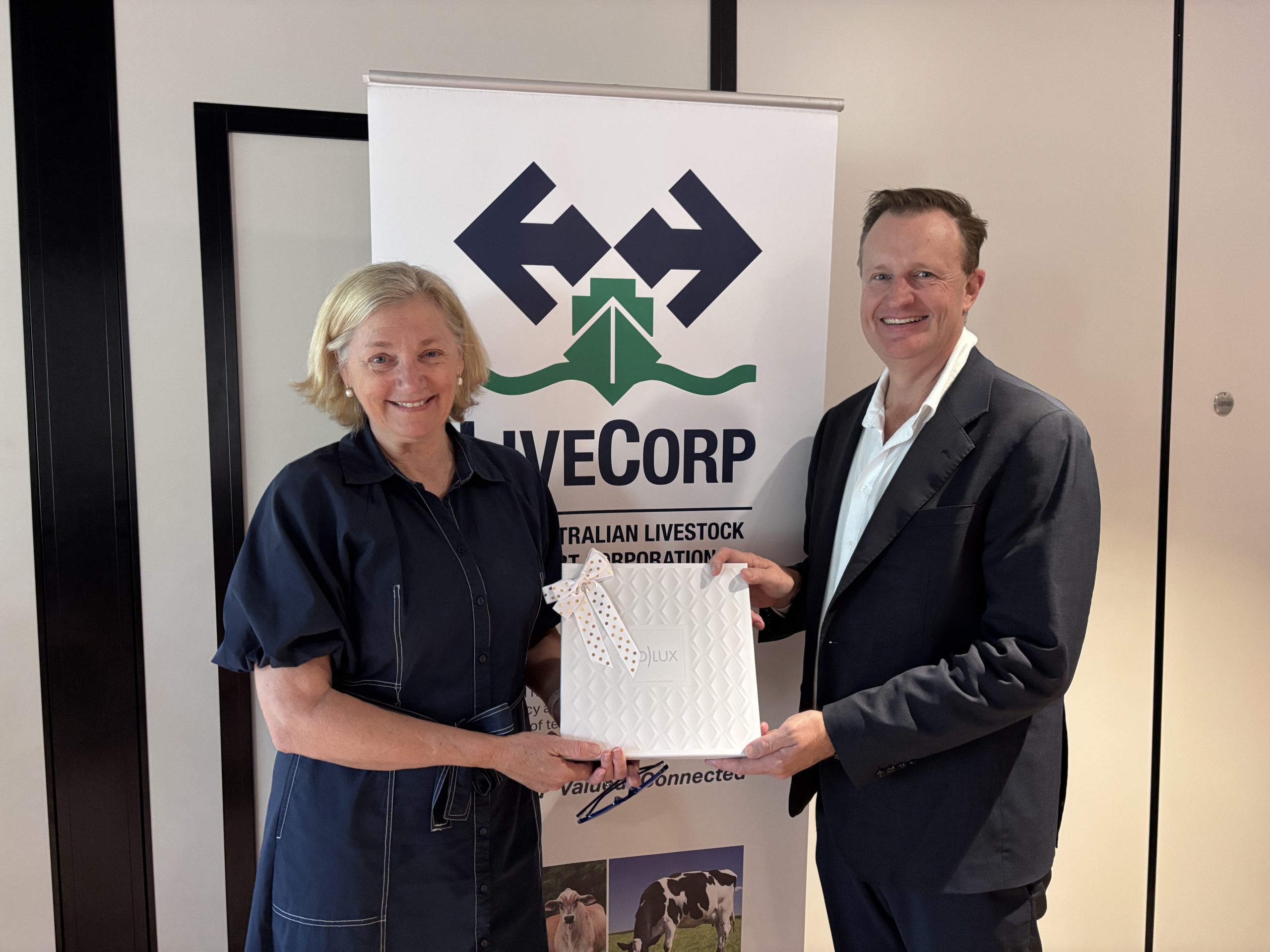
Prue Bondfield and LiveCorp chair Troy Setter
I still remember the disbelief when the live cattle trade was shut down in 2011. Initially, the whole industry was caught by surprise with little understanding that the impact would be felt across Australia’s whole livestock supply chain. As northern cattle poured into southern markets, and cattle prices dived across the board, producers gained a clearer understanding of the value of the live export sector.
Over many decades, our stud managed the demand volatility from our northern clients as the natural ebbs and flows of season and markets dictated our sales volume from year to year. Our business was closely linked to the live export trade for many years from both a production perspective as well as direct live export sales.
One thing that I didn’t fully understand until I joined LiveCorp in 2020 was the extent of the accountability and control that exporters maintain for their cattle right through the supply chain to processing in-market.
As producers, we say goodbye as the truck leaves the farm gate and receive feedback from buyers – job done. For exporters, it’s not just doing a deal over the phone and then putting an animal on a ship – they have regulatory and commercial responsibility every step of the way.
 Exporters are attuned to understand what their clients’ needs and challenges are at every point, managing additional layers such as currency or geo-political influences on their supply chain. As in all long-term, trusted relationships, there needs to be future value gains for their customers as well. There are a myriad of regulatory requirements, animal handling and welfare management and training and reporting in-market.
As the service provider and research body for Australian livestock exporters, LiveCorp supports this in-market training in collaboration with Meat & Livestock Australia. It also plays an important role in supporting market access, working with the industry and department of agriculture to link our government and those overseas.
After six years on the board, my farewell message to producers, exporters and industry organisations is to stay connected, communicate openly and recognise our shared interests, despite the competitive environment.
Northern cattle producers are flush with opportunities at the moment, but both beef and cattle markets are volatile, and that’s when the competition and flexibility provided by live exports become even more essential to our industry and to individual producers.
Maintaining that option long term requires an industry that remains viable, continues to improve and has the support of the producers who benefit from the opportunities created by access to those additional markets.
Understanding that relationship, and continuing to invest in it, will be important to the entire livestock industry’s future.
Prue Bondfield: Mrs Bondfield and her husband David owned and operated Palgrove seedstock (one of Australia’s largest herds) and commercial cattle enterprise for more than 30 years. Palgrove has been awarded numerous state and national business and industry awards, including the 2016 Coles/Weekly Times Australian Farmer of the Year.
Mrs Bondfield has a background as a solicitor and securities advisor and is an experienced board director as well as industry and government advisory committee member.
She is currently a Director of the Regional Investment Corporation, on the judging panel of the Zanda McDonald Award, and involved in numerous industry mentoring programs.
Mrs Bondfield was formerly a director at Black Box Co PL and Bush Heritage Australia, and the inaugural Chair of the Steering Group appointed to develop a Beef Sustainability Framework for the industry.
HAVE YOUR SAY