
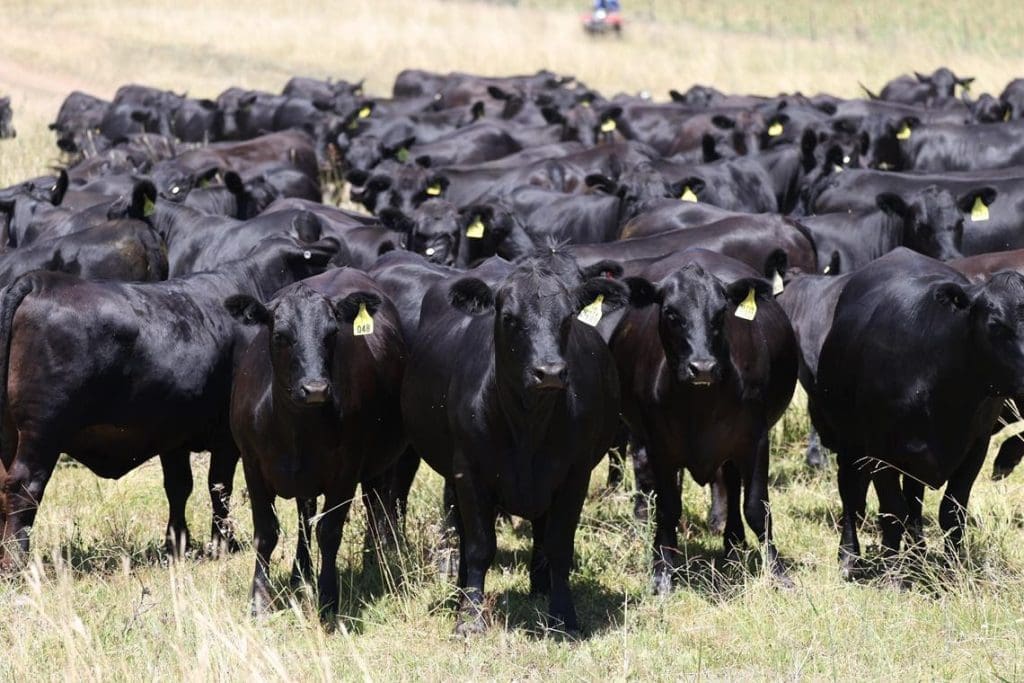
SELECTING replacement heifers is one of the most important decisions in a self-replacing beef herd.
The females retained each year influence which traits are carried forward and how quickly the herd moves towards its breeding objective. Despite these long-term consequences, selection in many herds still occurs in the yards at weaning, based largely on appearance, weight or a combination of the two.
There is sound logic behind considering weight. Heifers need to reach suitable joining weights, continue growing through mating and have sufficient body reserves to conceive and rebreed after their first calf. Structural soundness, temperament and suitability for the production environment are also important.
The difficulty is that weight at selection reflects more than genetic merit. It is influenced by the calf’s age, the age and milk production of its dam, seasonal conditions and the management group in which it was raised.
When replacement heifers are selected from the entire female cohort, the variation in age, weight and size generally draws attention to the larger and heavier calves. These are often older calves or daughters of mature cows.
Calves born to first-calving heifers are generally lighter and can be overlooked before their genetic merit is considered.
Genetic progress
This has implications for genetic progress. Retaining daughters of younger females can shorten the generation interval through the maternal side of the herd. If these daughters are routinely overlooked in favour of calves from mature cows, genetic gain can still enter through purchased sires, but progress through the female side will be slower.
Bull selection is a major contributor to herd improvement, but the replacements retained each year determine how quickly those gains are carried forward.
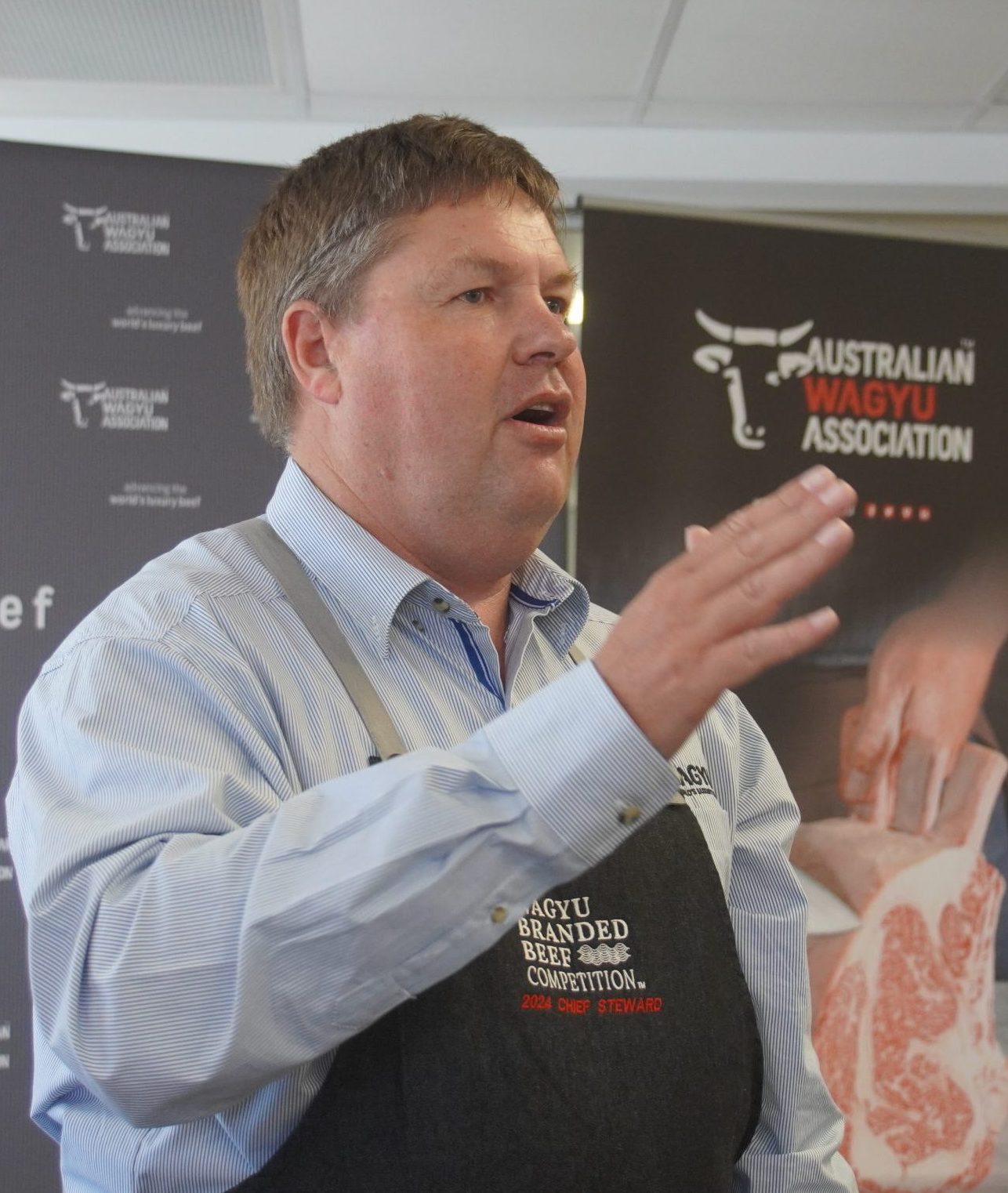
Dr Alex Ball
Speaking at the National Herd Improvement Association of Australia’s Beef and Dairy Reproduction Seminar in Mudgee last week, Dr Alex Ball presented findings from a report he authored, called Accelerating breeding herd capacity during periods of climatic variation.
The Rapid Herd Recovery project was hosted by the Armidale Node of the SQNNSW Innovation Hub, with events and activities supported by NSW Local Land Services and Rural Aid. The SQNNSW Innovation Hub received funding from the Australian Government’s Future Drought Fund.
The project examined whether genomic selection, fixed-time artificial insemination and female-sexed semen could help self-replacing herds rebuild breeder numbers and genetic merit more rapidly after drought.
Four commercial Angus herds from the New England region of NSW were involved in the project. All had a strong history of genetic improvement and selecting bulls using breeding values.
Two had also used the Angus HeiferSelect genomic selection tool for several years, while genomic profiling was new to the other two.
Within the project, each herd contributed about 200 structurally-sound yearling heifers from their 2022 drop, all weighing at least 350kg.
All 800 heifers were genomically profiled using HeiferSelect. The results helped select about 100 heifers from each herd for fixed-time AI using female-sexed semen, while the remaining heifers were naturally mated.
Genetic progress also depends on which daughters are retained
Despite the selection pressure already applied through bull purchases, the genetic variation within each herd was considerable.
Every herd contained heifers ranging from the bottom 20pc to the top 10pc of the wider HeiferSelect population. Even in herds that had selected strongly for calving ease or marbling, more heifers were below the population average for those traits than the breeders expected.
This did not mean that investment in better bulls had failed. Rather, it showed that genetic progress also depends on which daughters are retained.
Dr Ball suggested that part of the variation can persist because lighter daughters of young females are often overlooked during replacement selection, despite representing a more recent generation of maternal genetics.
The reproductive results also demonstrated the limitations of using weight as the main selection measure. In one herd, all heifers were about 400kg or heavier at joining, yet some weighing more than 500kg still failed to conceive.
Across the four herds and two joining years, empty rates after fixed-time AI and a six-to-eight-week backup joining averaged approximately 20pc.
Pregnancy outcomes also varied considerably between sire groups. In one herd, daughters of some sires achieved 100pc pregnancy to AI, while daughters of others recorded less than 20pc, and high empty rates after backup joining.
Some sire groups were too small to support firm conclusions about individual bulls, but the variation highlights the value of recording which sires produce daughters that conceive early, calve successfully and return to calf after their first pregnancy.
Heifer calf impact, FTAI+sexed semen
Dr Ball also reported that a first-calving female rearing a heifer calf was 40pc more likely to conceive in the first cycle of her next joining than one rearing a steer or bull calf. This suggests that producing female calves from heifers may provide an additional reproductive benefit, alongside the lower birthweights and reduced dystocia risk generally associated with female calves.
The project’s cost-benefit analysis estimated that fixed-time AI using female-sexed semen could increase the number of heifer calves available from 40 to 60 per 100 heifers joined. This represented 50pc more females from which to select, at an estimated additional cost of $53.59 per calf produced through the AI and backup program.
Conception rates with female-sexed semen varied considerably, so this result will not be achieved consistently. Producing more heifers only creates value when the larger pool is used to increase selection pressure or rebuild breeder numbers.
The analysis showed that replacement outcomes depend on both how heifers are assessed and how many suitable females are available for selection.
Heifer management changes?
The findings also point to some practical changes in heifer management. One of the easiest is to join maiden heifers ahead of the mature cow herd. This allows joining and calving to be monitored separately and provides more opportunity to supervise heifers during calving.
Starting heifer joining two to three weeks before the main cow herd is commonly recommended. First-calvers generally take longer to resume cycling after calving, so the additional recovery time can improve their opportunity to conceive at the next joining.
A longer interval may suit some businesses where the earlier calving period can be matched to feed availability and management capacity.
Earlier joining also means calves from heifers are older and therefore heavier at a common weaning or selection date. It doesn’t change their birthweight or growth genetics, but it reduces some of the age and weight disadvantage that can cause genetically valuable calves from young dams to be overlooked.
Joining more heifers than ultimately required and retaining those that conceive is already common. While this practice applies useful selection pressure for fertility, this pressure is really placed only on the heifers allowed to enter the joining group.
If those candidates were initially chosen mainly on weight and appearance, genetically valuable daughters may already have been excluded.
Consider the wider heifer cohort
The initial assessment therefore needs to consider the wider heifer cohort. Birth date, dam age, sire and weights adjusted for calf and dam age can help identify females that best fit the breeding objective.
Genomic profiling can provide additional information that weight and appearance cannot reveal. Structure, temperament, health and pregnancy status then remain important filters in the final selection.
The main question is whether replacement selection is identifying the females most capable of advancing the herd or simply retaining the biggest animals on selection day.
Weight and appearance remain useful. Without age, dam, sire, reproductive and genetic information, however, they can conceal as much as they reveal. Repeated over several generations, overlooking the right females can slow genetic progress through the entire maternal side of the herd.
Click here to read Dr Ball’s full report.
 Alastair Rayner is the Strategic Account Manager for Southern Australia with Vytelle and Principal of RaynerAg. He has over 30 years’ experience advising beef producers and graziers across Australia. Alastair can be contacted here or through his website: www.raynerag.com.au
Good points and a chance to learn ideas to improve my herd, thanks .
Not enough study has been done on vasectomised bulls to help get heifers cycling, for AI / bull which can then be immediately used again weeks later to help get first calvers cycling !!
Industry has accepted that it’s not used as it appears it dosnt work , what from minimal trials done 40 years ago by veterinarian Mike Blockey?
Some years it may have no affect but unless you do it every year will it be proved beneficial! That is my belief and in two months we will join 450 hfs culling 240 on genomic results .
Half will be a control and half will have 5 vasectomised boys in approximately 30/32 days prior to Ai program , all hfs will get get a detector patch applied & only patches ridden will have drugs and cidrs, this will be interesting !!!
Tom Lasater, in the USA and founder of the Beefmaster breed of cattle was famously quoted as saying “cattle ranching is mostly a simple endeavour, but keeping it simple is the difficult part”
Selection of heifers is also simple if we let it be.
Join all your heifers (except obvious dinks) when they should be joined in line with their mothers regardless of weight and let Mother Nature work it out.
If the goal is to breed a profitable herd adapted to your own particular environment then this is a critical first step.
All the fancy analysis is secondary.