
FIXED Time Artificial Insemination offers producers an opportunity to introduce higher-merit genetics across more females than would generally be possible through a small natural-service bull team.
By concentrating conception early in the joining period, it can also produce a shorter and more defined calving period, create a more even-aged calf crop and provide management benefits when progeny are processed, compared or selected later in life.
 However, not every FTAI program delivers the result producers expect. Success depends on a sequence of connected events beginning with female readiness, followed by an appropriate and accurately delivered synchronisation program, effective insemination and management that supports the establishment and maintenance of pregnancy.
A problem at any point of this process results in an empty female, which is why semen should not automatically be blamed as the cause.
Speaking recently at a producer gathering near Scone, Megan Brown of Minitube Australia highlighted that meeting a target joining weight does not necessarily mean every heifer is pubertal or reproductively ready for FTAI.
Weight remains a useful indicator of development, but heifers of similar weight may differ in ovarian activity, uterine development and whether they have begun cycling.
Northern Australian research demonstrates how much reproductive maturity can vary within apparently well-grown groups of heifers. In the Repronomics project, 2438 Brahman, Droughtmaster and Santa Gertrudis heifers were weighed and ovarian-scanned every four to six weeks to identify when they first developed a corpus luteum, indicating that puberty had occurred.
The study found that sires whose daughters reached puberty later tended to have daughters that were heavier when they eventually reached puberty. However there was no observed relationship between sire EBVs for 600-day weight and age at puberty, and some sires combined earlier puberty with above-average 600-day growth.
Subsequent Northern Repronomics analysis produced research EBVs for heifer age at puberty ranging from -103 days to +173 days among Brahman and NT Tropical Composite sires, representing a 276-day genetic spread.
These results show that growth and sexual maturity are related, but are not interchangeable. Reaching a target joining weight increases the likelihood that a heifer is pubertal, but it doesn’t confirm that the heifer has begun cycling.
Two heifers of similar weight may therefore differ substantially in their readiness to respond to an FTAI program.
Dr Alex Ball’s Accelerating breeding herd capacity during periods of climatic variation project made a similar practical observation. The project involved four commercial Angus herds in northern NSW, with all heifers required to weigh at least 350kg before entering the program. Most were around 400kg or heavier at joining, yet some heifers weighing more than 500kg still failed to conceive.
Pregnancy rates to FTAI using female-sexed semen ranged from 33.3pc to 51.5pc in the first year and from 22pc to 42pc in the following year. The project also recorded large differences between daughter groups: daughters of some sires achieved 100pc pregnancy to AI, while daughters of others recorded less than 20pc conception and high empty rates following backup joining.
Variation shows
These results don’t establish that puberty or reproductive maturity caused every failure. However, they do demonstrate that apparently adequate weight and condition didn’t create a uniform group of females, and that variation associated with the sire of the heifer may also influence FTAI outcomes.
Nutrition remains central to preparing females, although increasing energy intake immediately before joining cannot necessarily compensate for earlier limitations in development.
Megan Brown highlighted research in which additional feeding before AI increased weight without consistently improving pregnancy rates, while seasonal and environmental conditions explained more of the variation between years.
The aim should therefore be to develop heifers over time, so they reach joining with adequate weight and condition and a high likelihood of being pubertal, rather than relying on last-minute feeding to prepare them.
Once suitable females have been selected, the synchronisation program needs to control luteal regression, follicular development and ovulation closely enough for insemination to occur at an effective time.
The timing of each treatment, the products and doses used, injection technique and CIDR insertion and removal all contribute to the proportion of females that respond as intended.
Response to synchronisation
A University of Florida conference abstract published in the Journal of Animal Science in October 2025 highlights how strongly the response to synchronisation can influence FTAI results, even when females are managed through the same protocol and inseminated with the same type of semen.
Among 41 Brangus heifers and 148 non-lactating cows, pregnancy per AI reached 64.1pc in females that activated their heat-detection patches, compared with 35.1pc in those that did not express detected oestrus.
Females that achieved complete luteolysis, indicated by low progesterone at insemination, recorded a 66.1pc pregnancy rate, compared with 44.9pc among those with incomplete luteolysis.
When luteal regression and ovulation were considered together, females classified as fully synchronised achieved 68.3pc pregnancy per AI, compared with 44.2pc among those that were not fully synchronised.
An additional GnRH treatment seven days after AI did not improve pregnancy rates across the treatment groups, indicating that simply adding another intervention after insemination did not improve the overall result.
The study wasn’t designed to evaluate missed treatments, incorrect timing or other errors in delivering the protocol, so it neither identifies nor rules out operator error as a cause of poorer results.
Instead, it shows that females can vary substantially in their biological response to synchronisation, even when managed through the same scheduled program.
Semen quality and insemination technique are still important factors to manage in an FTAI program.
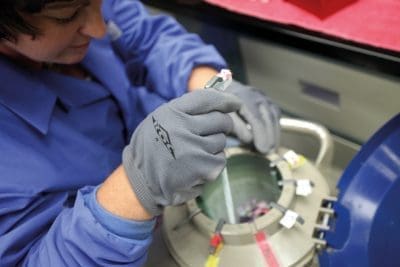
Fertility can differ among semen sires, while poor tank management, incorrect thawing, delays between thawing and insemination, contamination or incorrect semen placement can reduce the number of viable sperm reaching the site of fertilisation.
Producers who are looking to analyse the results of their FTAI program should focus on semen sire, batch, technician and insemination order rather than relying only on the overall mob average.
Pregnancy is also not secure once insemination has occurred. Early embryo loss in cattle is concentrated in the weeks before the first pregnancy diagnosis, particularly while the embryo is developing and maternal recognition of pregnancy is being established.
Heat stress, disease, inadequate nutrition and severe or prolonged handling and transport stress can contribute to pregnancy failure, although their effects depend on timing and severity and not every management event will result in loss.
Post-insemination management should focus on maintaining consistent access to feed and water, limiting unnecessary stress and avoiding abrupt nutritional or environmental changes where possible. The purpose is not to leave females completely undisturbed, but to avoid preventable challenges during a biologically vulnerable period.
When an FTAI result disappoints, the most useful approach is to work backwards through the program.
Female maturity and cycling status, nutrition, heat-patch response, treatment timing, semen sire and batch, technician performance and post-insemination events are all areas that need to be investigated.
It may well be that the semen used in the program did contribute to the result, but pregnancy rate alone cannot establish that.
Before blaming the straw, producers need to determine whether the females were ready, whether the synchronisation program worked as intended and whether the resulting pregnancies were given the best opportunity to survive.
 Alastair Rayner is the Strategic Account Manager for Southern Australia with Vytelle and Principal of RaynerAg. He has over 30 years’ experience advising beef producers and graziers across Australia. Alastair can be contacted here or through his website: www.raynerag.com.au
I think we need to think about the implications of the increasing use of AI and embryo transfer in commercial and stud herds.
We know that age of puberty is a critical heritable trait in Bos indicus cross cattle and that the ability to re-conceive as a wet first calf cow is heritable and a critical trait for Bos indicus cross cattle.
When artificial breeding technologies are used with maiden heifers, we can no longer assess their ability to conceive as a maiden heifer and a wet first calf cow in the real world.
Given fertility is a key trait for beef enterprises running breeders, losing the ability to identify the most fertile replacement females is likely to out weigh the advantages of using artificial breeding technologies.