
Tonight’s article marks the return of genetics editor Alister Rayner’s weekly columns for Beef Central on topics related to bull breeding and selection, bull buying, genetics and genomics. These weekly contributions will continue throughout the spring bull selling season until November, before going into annual recess.
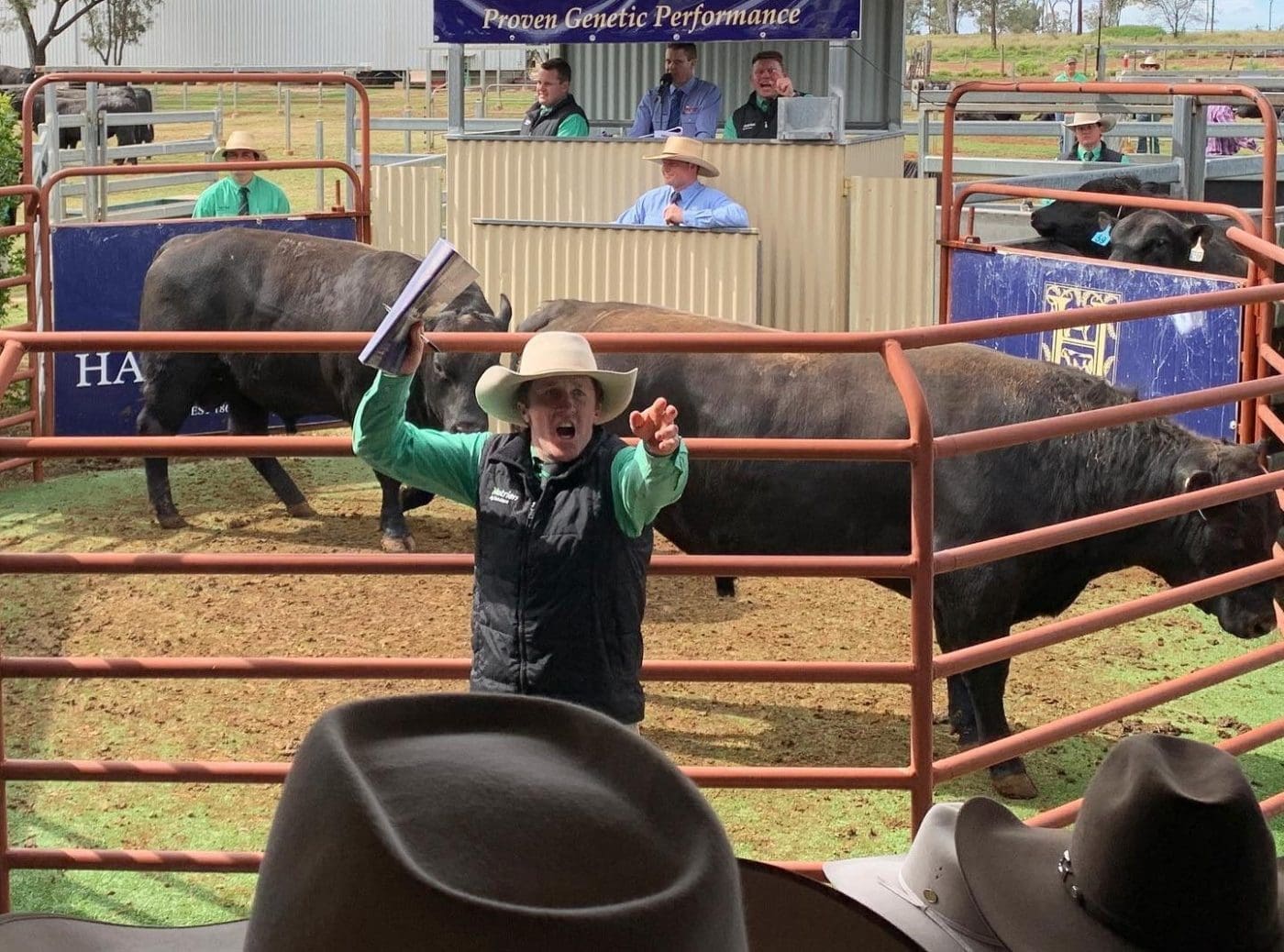
IN theory the start of winter makes little sense when talking about the spring bull sale season. In practice, seasonal bull sales these days appear to be stretching well outside the quarterly seasons.
Historically, the bulk of the autumn bull sales tended to have been held by the end of April, and most spring sales did not start until later in July and August.
While most spring sales still fall in the July/August/September period, it does appear that more fixtures are now being scheduled in May and June. This is a trend that has been a feature in recent years and has been previously highlighted in Beef Central.
These early sales have tended to follow the trends set by the autumn sales. In the last few weeks, several sales, predominately held in southern Australia and featuring mainly Angus genetics, have seen the average clearance sit close to 89pc and the average per head price at $10,570, slightly up on the average in autumn for Angus of $10,500.
Cautious optimism
It is more difficult to forecast where the averages and clearance rates will progress as the ‘spring’ season starts to pick up momentum.
John Settree
Nutrien’s New South Wales stud stock manager John Settree describes the sentiment among his client base and contacts this year as “cautiously optimistic.”
He said northern NSW had experienced a significantly challenging drought that had seen huge numbers of breeding cattle sold from the New England and northwest.
“We heard at a recent industry field day that estimates of up to 80,000 breeding cows and 150,000 weaners have been sold out of the region in recent months. The number of females moving from the region will no doubt have an impact on many producers, who may need less bulls this year as a result,” he said.
Mr Settree also noted that many commercial beef producers had invested in bulls in the past two to three years, so “they have really good teams genetically, and some of these have still to make a contribution to the programs. Some people aren’t keen on cashing these bulls or replacing them before they get used properly,” he said.
The suggestion is that herds where breeder reductions have taken place will be less likely to be seeking new sires to join bull teams this year.
However, the cautious optimism has been increased with producers in some previously dry areas receiving useful rain since May to support some grazing crops and more significantly underpinned by a strong cattle market.
Different story further north
It is also very clear that while NSW and southern Queensland have experienced significant drought conditions, central and northern Queensland are experiencing a very strong start to spring.

Andrew Meara
Andrew Meara of Elders Stud Stock describes it as a “tale of two springs.” His producer client base remains very positive, with the combination of a strong market and sufficient pasture for several months as key factors.
This confidence can be seen with the results of the recent Ponderosa Brahman sale in the Northern Territory where a complete clearance of 145 bulls was recorded, averaging $4991. This was seen as a bellwether for producer confidence in the live trade and cattle program in the north.
Other strong early season sales in other parts of the country recently have included the Tennysonvale Simmental sale near Illabo, NSW on 29 May, clearing all 42 bulls offered for an average of $11,083 and Greg Chappell’s Dulverton Angus in northern NSW averaging $14,333 for 69 bulls a week earlier. The Herefords Australia National Sale in Wodonga sold 93 bulls averaging $13,213 in mid-May.
Looking ahead, it will be more than likely that commercial demand for bulls will be driven from Queensland and for parts of southern Australia that have seen seasonal conditions improve over autumn.
Andrew Meara noted that some sales, particularly in northern NSW that rely on a local client base, will probably have greater challenges than those operations with a more geographically-spread client base and a strong client following. He noted that for bull breeders selling back locally it could be a challenge with both the season and lack of females to join.
 Both John Settree and Andrew Meara noted that a number of their seedstock clients have also been reconsidering the number of bulls they catalogue this year. While there is no widespread reduction in sale numbers, both agents have noted clients talking about reducing their offerings by 10pc to 20pc in some cases, to try to align with lower breeder numbers.
Last year, spring sale numbers had generally increased, according to our records, for example Angus numbers had lifted by 8pc and Santa Gertrudis by 10pc. More sales, and more bulls within sales, combined to produce last year’s larger offering.
Based on the comments of both agents above, it is unlikely that this upward trend in numbers will be repeated in 2026.
While there is a fair degree of caution evident among many seedstock breeders this year, the optimism and confidence many commercial producers do have in the beef industry will be a major contributor to this season’s sales outcome. Current cattle prices will certainly reinforce that.
Added to that, the depth of the Queensland cattle industry, the strong northern season and the seasonal conditions in southern NSW will be positive factors behind commercial producers purchasing decisions.
 Alastair Rayner is the Strategic Account Manager for Southern Australia with Vytelle and Principal of RaynerAg. He has over 30 years’ experience advising beef producers and graziers across Australia. Alastair can be contacted here or through his website: www.raynerag.com.au