
AT any bull sale this spring, most producers are likely to price a bull off what is visible in the yards or the sale ring, plus BreedPlan data appearing in the catalogue.
One common approach is to set a budget against the saleyard value of steers. The NLRS heavy steer indicator over the past six weeks has averaged 446c/kg liveweight, while the feeder steer indicator has averaged 495c/kg.
At 446c/kg, a 600kg grassfed steer is worth $2676, and a 450kg feeder $2227. So an average bull at (let’s say) $10,500 works out to about 3.9 heavy steers, or 4.7 feeder steers in value.
The other way producers may value a bull is cost-per-calf, where the purchase price would be spread across the calves he sires in his working life. Both are sound approaches and can help to set a clear benchmark to take to a sale.
 However, there are a few considerations associated with both of these approaches. A clear message in using the cost-per-calf method is that the more cows a bull is joined to, reduces the cost of each calf, because the same purchase price is spread further. More matings also bank more value. So, using a good bull as widely as soundness and management allow lowers his cost per calf and lifts his total contribution at the same time.
The catch is that both the cost per calf, or the number of steers sold, to equal the purchase price of the bull, places a value only on the calves a bull produces. In these methods, the greater contribution of the bull is the genetic merit he contributes and is carried on by the daughters retained in the herd.
Those daughters don’t begin to contribute until they calve themselves, and they then keep producing for the rest of their time in the herd. The merit a bull adds is not a one-off return at sale. His genetics become part of the herd and continue to add value well after his working life ends.
Selection Indexes
A bull with a better combination of traits will lift profit right along the value chain – not just in the breeding herd. That starts with growth and carcase traits that impact his direct progeny through to the traits that impact fertility and longevity in the daughters that are retained. The tool that puts a dollar figure on that combination is the selection index.
An index is built through BreedObject by weighting a breed’s estimated breeding values against the economics of a target market, and reports the result as net profit per cow joined, across the whole production chain.
Every significant breed has its own set of indexes reflecting production environments and most common market destinations. As with individual EBVs, an index can only be read within its own breed, not across breeds.
There are producers who underestimate the value of indexes. The Index can be used to both determine the price that a bull is worth at sale, and to estimate his ongoing value to the breeding herd.
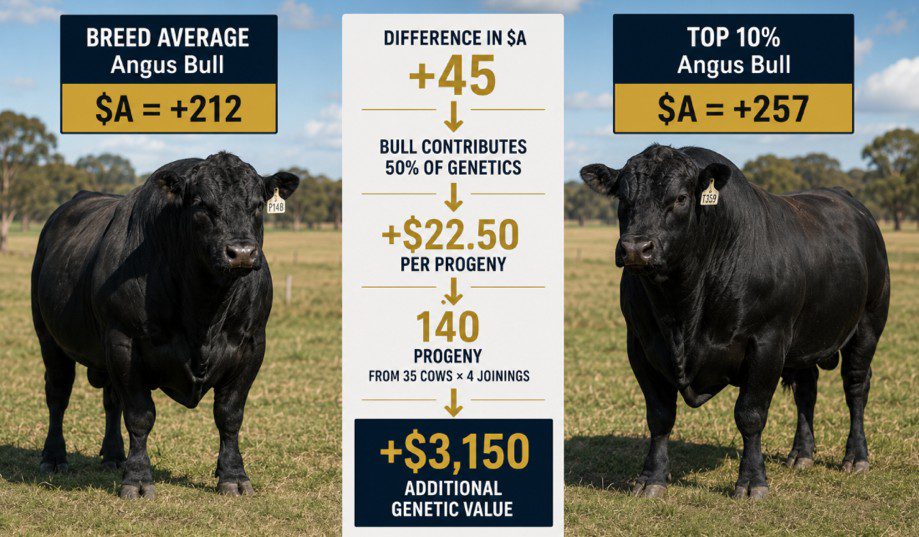
As an example using the Angus Breeding Index ($A), a bull that falls in the Top 10pc decile for the breed has a Index value of +257. The breed average for this index is +212. This is a difference of +45.
However, because the bull passes only half of his genetics to the progeny, the advantage given to his progeny is $22.50. If that higher ranked bull was mated to 35 cows across four joining seasons, around 140 matings, the genetics he adds over an average bull are worth in the order of $3150.
While there is a definite increase in value because of greater genetic merit, the reality is that these returns are cumulative and are slow to show in a herd.
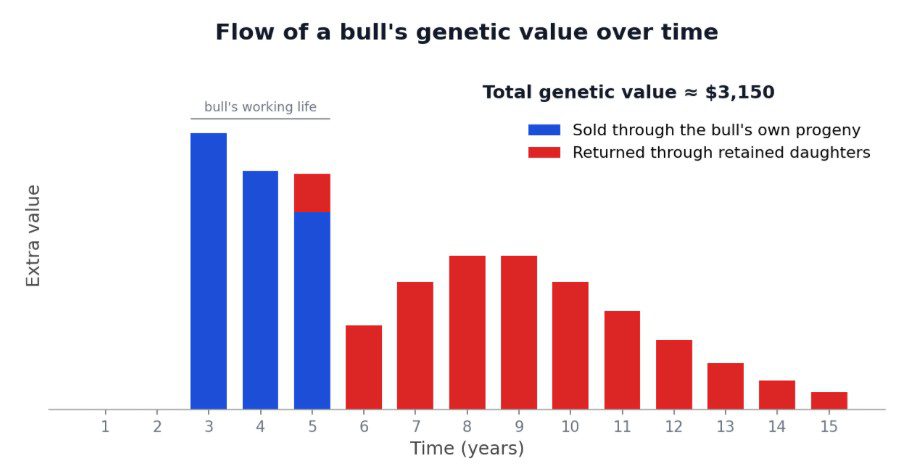
As shown in the graph below, these returns generally commence around three years from a bull’s first use in the herd, and gradually increase to when a large portion of his daughters are in the breeding herd, before declining out of the herd by around fifteen years.
This is often well over three times the length of time a bull was used within a herd.
Click on graph for a larger view
When it pays
The challenge with this slow and cumulative return is to truly appreciate where value is earned across the entire span of a bull’s influence on a herd.
A sound bull pays for himself within the first three years of his time on farm through the calves he sires.
Click on graph for a larger view
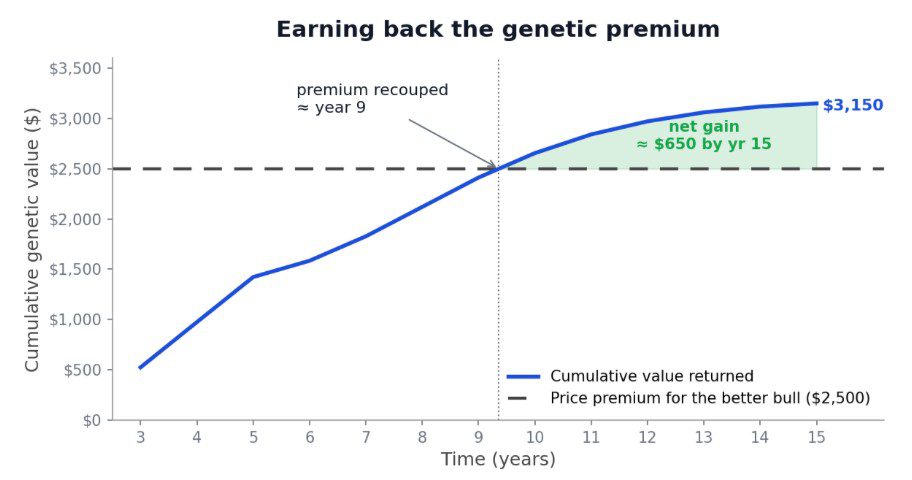
However, there is a longer period to recoup the additional price paid for those superior genetics. In the previous example, a top 10pc decile bull bought for, say, $2500 more than an average one would not have retuned that premium through his progeny and daughters until around nine years after his purchase.
For the progeny that remain in the herd this would see an increase in value by about $650 over the six years where his progeny continue contributing to the breeding herd. It is important to note that the $2500 is an example. What a highly ranked bull costs over an average one is a matter for the sale, and it is rarely tied closely to his index.
There are two factors that can move the cross-over point between cumulative value and the price paid for a better bull.
Firstly, the larger the genetic gain over the premium paid, the sooner it is reached. Secondly, the more cows the bull covers, the faster the value accumulates. So, a bull used widely within a herd will earn his premium back years earlier than the same bull used on a handful of cows.
The key message for producers purchasing bulls this spring is to place a price on what he contributes over time to the herd, and not only on what progeny are sold.
While the steer equivalent and the cost-per-calf are fair starting points in pricing, the larger return is the genetic merit that stays in the herd and compounds through his daughters.
Best practice is to focus on and purchase bulls with higher index merit and then seek to join them to as many cows as you sensibly can.
The premium for better genetics earns itself back well inside his daughters’ working lives.
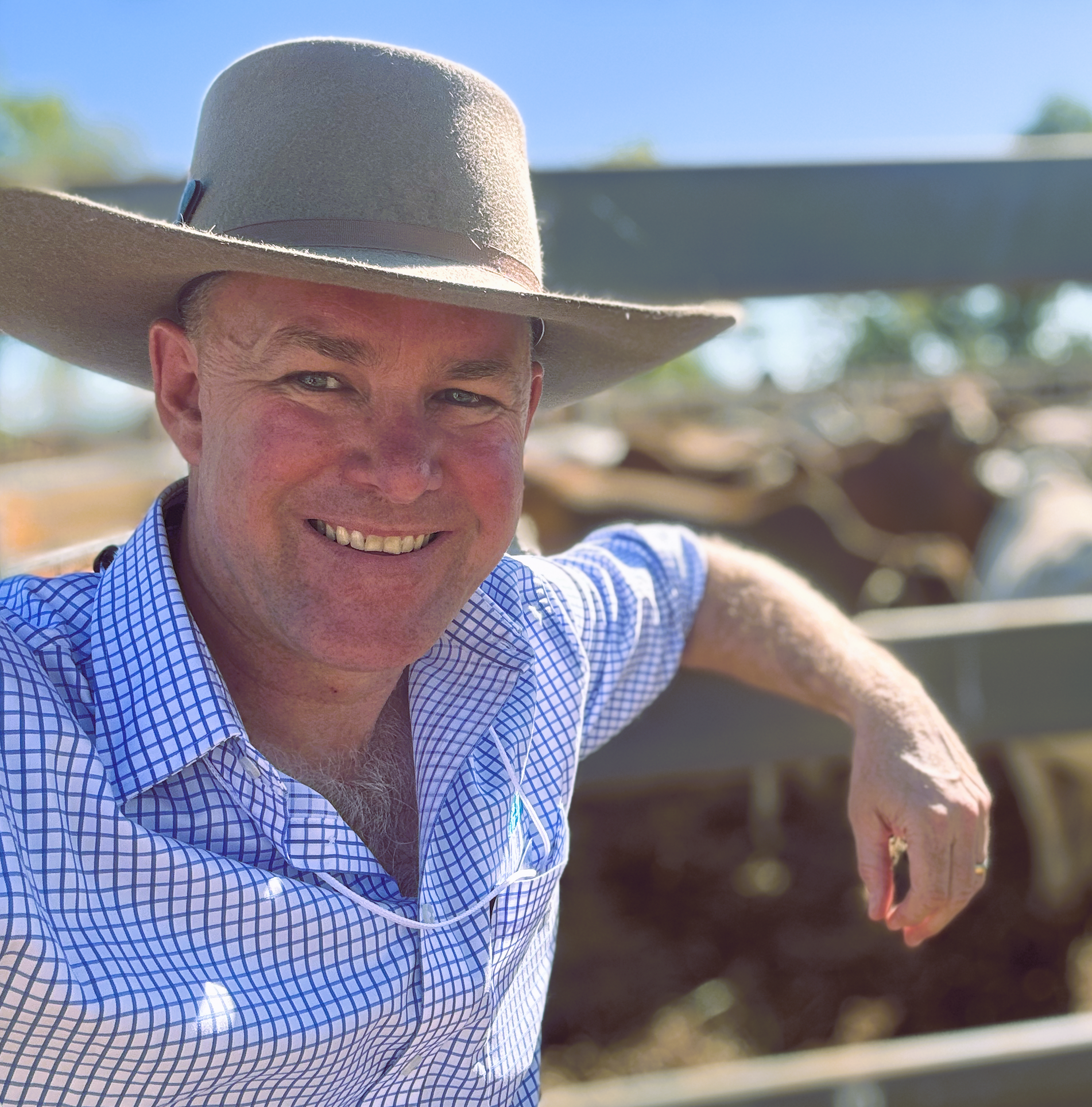 Alastair Rayner is the Strategic Account Manager for Southern Australia with Vytelle and Principal of RaynerAg. He has over 30 years’ experience advising beef producers and graziers across Australia. Alastair can be contacted here or through his website: www.raynerag.com.au