
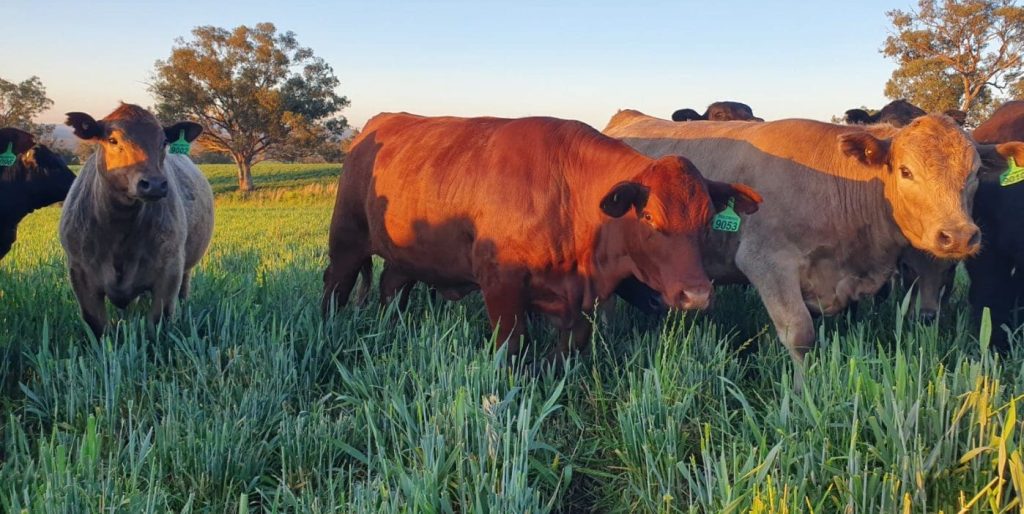
BREEDING objectives set ahead of bull buying season generally reflect the target market and the changes required in the current herd.
Growth, fertility, mature size and carcase performance are common priorities. However the feedbase also needs to be included, because it determines how much of that genetic potential can be supported and, in turn, how many breeders the business can carry.
Matching cattle to country is commonly considered in relation to heat, parasites and other environmental challenges. The same principle applies to pasture supply and the nutritional demands of the cow herd.
Selection for greater production may also increase the feed required to maintain body condition and reproductive performance.
The ‘Sweet Spot’ project
The Sweet Spot project demonstrated the importance of this relationship in northern production systems. Although it did not test EBVs or compare sires, it examined how pasture utilisation affected breeder performance, land condition and long-term profitability.
The project considered three connected areas. Dr Robyn Cowley led the pasture-utilisation research, Dr Kieren McCosker led the reproductive analysis, and Dr Lester Pahl led the bioeconomic modelling.
Together, these analyses drew on information from 60 sites on 22 commercial and research stations, covering 350 site-years across northern Australia.
Sweet Spot found that as pasture utilisation increased, pregnancy, rebreeding and weaning performance declined, while land condition was also affected.
Bioeconomic modelling estimated that the most profitable median annual utilisation was 18–23 percent on the Barkly Tableland, and 18–20pc in the Burdekin region of North Queensland. In the Burdekin, the profitable range was below the 25pc utilisation rate used in the modelling as the safe regional benchmark.
The optimum will vary with country type, land condition, rainfall, costs and management. While this is already understood, Sweet Spot quantified these relationships across a wide range of northern environments.
Importantly, the project showed that a utilisation rate considered safe for maintaining land condition was not necessarily the most profitable target once breeder performance and long-term business outcomes were included.
Breed composition
The project also examined whether breed composition changed the response to increasing utilisation. Reproductive performance declined more sharply in herds with lower Bos indicus content, while herds with more than 75pc Bos indicus content appeared less sensitive.
However, breed content was closely associated with region, pasture type and management, making these influences difficult to separate. Even the high Bos indicus herds recorded better pregnancy and weaning performance at lower utilisation.
Greater adaptation may help cattle cope with periods of nutritional or environmental pressure, however changing breed type doesn’t remove the need to match grazing pressure with the feed available.
Breed and genetic selection can improve how cattle perform within an environment, but they cannot support a level of pasture utilisation that the country cannot sustain.
The results from the Sweet Spot project are valuable in the broader grazing context.
Results from the earlier large-scale CashCow project add several cow-level findings that can help shape breeding objectives for northern herds. Led by Professor Michael McGowan, CashCow followed about 78,000 cows in 142 breeding mobs on 72 commercial properties between 2008 and 2011.
Its findings showed the relationship between cow phenotype, body condition and reproductive performance under commercial northern Australian conditions.
After accounting for breed and the other factors included in the analysis, cows taller than 140cm at the hip had a 4.8-percentage-point lower rate of pregnancy within four months of calving than cows shorter than 125cm. Foetal and calf loss was also 3.7 percentage points higher in the taller cows.
CashCow measured hip height rather than Mature Cow Weight EBV, so the result cannot predict the response from selecting directly on that EBV.
However, it shows that cow type was associated with reproductive performance. The project also identified body condition as a major influence on rebreeding, particularly where cows had to maintain or recover condition through periods of declining pasture quality while supporting lactation and preparing for their next pregnancy.
The importance of body condition also extends to feed efficiency. In the Beef CRC Maternal Productivity research, Dr Michelle Hebart and her colleagues found that Low-RFI cows consumed 7pc less feed and produced weaner calves more efficiently per unit of feed.
However, they were leaner, had a 6.3pc lower weaning rate and calved an average of 5.4 days later than High-RFI cows. While these results came from particular Angus selection lines, they show why feed intake, body condition and reproduction need to be considered together.
What does it mean for bull buyers?
For bull buyers, these findings can be brought together by considering the nutritional buffer within the cow herd. This buffer is the capacity of cows to maintain sufficient condition to cycle and rebreed when pasture quality declines or lactation increases demand.
The performance of the current herd is a starting point, particularly in setting breeding objectives that will help define selection decisions. Where cows are maintaining condition and achieving the desired rebreeding rate at a sustainable level of pasture utilisation, there may be scope to select for additional production.
However, where cows already struggle to reach target condition at calving or joining, selection that increases their nutritional requirements may narrow that buffer further.
In self-replacing herds, the available production, mature-cow and fertility EBVs need to be considered as a group. The Repronomics work led by Dr David Johnston has improved the accuracy and availability of female-reproduction EBVs for young Brahman, Droughtmaster and Santa Gertrudis bulls, giving northern buyers better information about the likely reproductive performance of future daughters.
A maternal or self-replacing selection index developed for a comparable production system may provide a useful starting point, particularly where feed and mature-cow maintenance costs are included.
Buyers still need to check the index assumptions and component EBVs. The balance will be different for terminal sires where no daughters are retained.
The objective is not simply to select cows that eat less. It is to select cows that can produce and rebreed from the feed available while carrying enough condition to manage the seasonal variation expected on the property.
That nutritional buffer belongs alongside adaptation, market suitability and genetic merit when breeding objectives are set and bulls are selected.
 Alastair Rayner is the Strategic Account Manager for Southern Australia with Vytelle and Principal of RaynerAg. He has over 30 years’ experience advising beef producers and graziers across Australia. Alastair can be contacted here or through his website: www.raynerag.com.au
HAVE YOUR SAY