
RUNNING a successful commercial breeding enterprise requires producers to retain resilient, productive and, above all, profitable animals. To achieve this, it’s important to select not only the right bulls for joining but also the right females.
While many producers already use genetic information to help select bulls, genomic tools remain underutilised in commercial heifer selection. When used alongside phenotypic assessment and performance records, genomics can help identify the females with superior genetic potential, improve selection accuracy and accelerate genetic gain.
An MLA Producer Demonstration Site project is exploring how genomic tools used alongside phenotypic assessment can optimise heifer selection and maximise long-term genetic gains, while also demonstrating the value of investing in genomics in a commercial setting.
The power of adding genomics to the selection toolkit
Genomics provides an objective way to identify genetic differences between heifers that may look similar phenotypically, particularly for traits that are difficult to observe early in life, such as fertility, maternal performance and carcase merit.
Genomics can also help producers make earlier and more confident replacement decisions, accelerating genetic gain and improving long-term herd productivity and profitability. The primary benefit of combining genomic and phenotypic information rather than using either alone is to increase selection accuracy, leading to faster genetic progress, better fertility outcomes and more reliable retention of the best females
Best practice heifer selection in five steps:
Define your breeding objective
Before you start the process of selecting the best heifers to retain in your breeding herd, make sure you have a clear breeding objective written down with the main traits you want to focus on, target market(s) and your 5–10-year goals to keep you on the right track. The best heifers are the animals that best align with your breeding objective.
Collect and assess phenotypic information
An animal’s performance (phenotype) is influenced by both its genetics (inherited from its sire and dam and passed on to future generations) and environmental factors such as age, birth type, health, nutrition, climate, and management conditions.
Phenotype (P) = Genotype (G) + Environment (E)
Genomics complements but does not replace phenotypic assessment and data collected on heifers. Breeders also need to consider an animal’s structure and physical appearance. Phenotypic data is vital in showing how particular animals perform in a given environment.
Phenotypic assessment can range from crush-side assessment and making a keep/cull decision there, through to recording and tracking key traits that align with a breeding objective. The type of production system run and each business’s breeding objective will influence what information is viable and useful to collect.
While collecting more data can help improve decision-making, the key is to focus on traits that are relevant to the breeding objective. For example, if improving growth is a priority, regularly recording liveweight can provide valuable information with minimal additional effort. The traits chosen to measure will ultimately depend on the breeding objective.
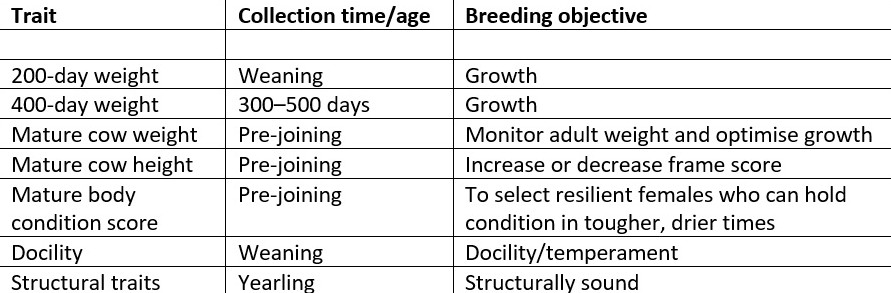
Table 1 provides an overview of some common phenotypic traits that can be measured and tracked to place additional selection pressure on specific areas of performance.
Choose a genomic tool
Several genomic profiling tools are now available to commercial beef producers. Deciding on which genomics tool to use will come down to personal preference, what cattle are being produced and the breeding objective. This space is constantly evolving, so its important to do your own research before choosing.
Outlined below are some of the genomic profiling services currently available for commercial heifer producers. Each product provides genomic predictions covering key production, health and carcase traits for commercial animals.
All it takes to get started with genomics is a simple Tissue Sampling Unit or ‘TSU’ sample, which allows the producer to go straight from DNA to genetic predictions without having to collect any additional information. Differences between the products are due to the use of different analyses, SNP chips and reporting metrics. Hence, each product’s results cannot be compared to each other or compared to Estimated Breeding Values (EBVs) available for stud registered animals.
neXtPredict Heifer
This service is provided by neXtgen Agri in partnership with Weatherbys Scientific and is powered by Angus Australia’s GentiQ analysis. This collaboration returns not only accurate genomic prediction results but also has an added layer of analysis and support from neXtgen Agri in replacement heifer decisions. Hence, this product would be best suited to those producers who want to delve into genomics but also get hands-on guidance for the interpretation of the results. neXtPredict Heifer is currently only available to Angus commercial producers, with the possibility of this also becoming available to other breeds in the future.
The product provides the following results:
- base genomic breeding values (GBVs) – presented as within-herd percentiles
- parentage
- neXtPredict Heifer Index or the use of a customised index
- a herd profile.
Angus HeiferSelect
A genomic selection tool provided by Angus Australia in collaboration with Zoetis and Neogen. It targets commercial Angus producers and provides genomic predictions reported as percentile bands relative to the current reference population. You need to be an Angus Australia member to access this tool.
GenSELECT Heifer
The first genomic tool designed specifically for commercial Hereford producers to make more informed choices about their breeding females or commercial heifers. Designed for precise genomic insight into an individual female’s genetic potential. This option delivers results across 11 maternal, growth and carcase traits relevant to the commercial supply chain.
Neogen Igenity Beef
This product is available to commercial producers who run Bos Taurus crossbred and composite cattle and provides genomic predictions using the Igenity scoring system of 1-10 relating to Molecular Breeding Values (MBVs). The analysis is powered by the International Genetic Solutions (IGS) database and is the only genomic profiling tool available to non-Angus and non-Hereford breeds.
Collect DNA samples and submit for processing
Once a genomic selection tool is chosen, users can then collect DNA samples for heifers, following the instructions supplied with the TSU kit to collect tissue samples for genomic testing. The ideal time to collect DNA samples is at weaning, while the animals in the yards, and it also allows for enough time to get back genomics results to make earlier selection decisions. For those who are keen and want to make decisions even earlier, samples can be taken at calf marking.
The main equipment required for DNA sampling is quite simple:
- TSU applicator gun
- Individual TSU samples for each animal you want to test
- TSU sample storage rack
- Recording system.
The recording system doesn’t need to be overly complicated, and users don’t even need to have an eID scanning wand or monitor. However, for those going down the genomics and data recording route, investing in a solid eID system would be ideal for long-term data management of the herd.
All that’s needed to record is the animal’s individual visual ID alongside the TSU sample ID taken for that animal. Once samples have been taken and recorded, they can be posted to the selected provider for testing and analysis. Store them in a cool, dry, dark place or in the fridge before posting. Results can take up to 10 weeks, depending on the provider.
In the genomic profile results, there will be a range of production, health and carcase traits along with selection indexes. The selection index(es) available will depend upon the provider; there will always be one available that helps to identify females that are best suited for a replacement breeder herd. If the selection index available isn’t aligned with the user’s breeding objective, neXtgen Agri or other service providers can help to develop a customised index.
Interpreting results and making selection decisions using phenotypic and genomic data
Now is the time to use genomics alongside phenotypic data to identify top-performing heifers for retention.
The greatest value of genomics is often in helping separate the large group of heifers that appear similar phenotypically but differ in their underlying genetic merit. Users should start by applying “hard” phenotypic must-haves or cut-offs, like culling the heifers with bad feet or other structural defects, poor temperament, or any other animal “type” preferences to suit the local environment and breeding objective.
Next, apply the genomic selection index. When interpreting a genomic index, a higher index value indicates higher (more ideal) predicted genetic merit for the traits included in the index. Sort remaining heifers from highest to lowest using the selection index value.
The “Keep” List: Select upper-middle-tier ranking heifers based on the index. Ensure they also meet your minimum thresholds for critical individual traits (e.g., low birth weight).
The “Cull” List: Identify the bottom 10–20pc on the index. Sell these commercial heifers early to save on feed costs, or target them for terminal matings. The most important thing is to stay focused on keeping heifers that fit your breeding objective and production system.
HAVE YOUR SAY