
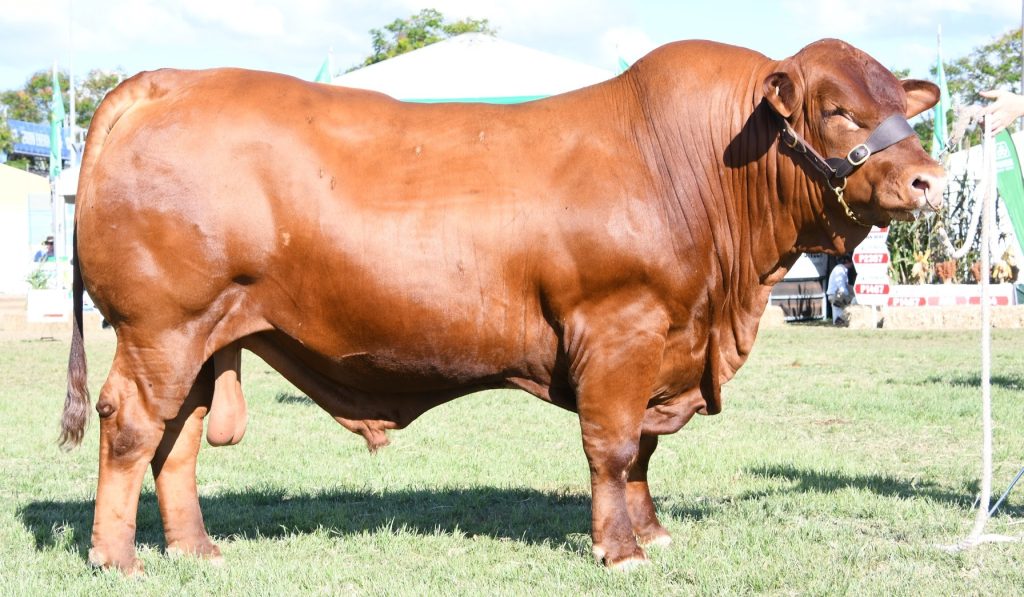
THE Maynard family has been breeding adapted Bos Taurus cattle for the past 57 years, with Pat Maynard first doing trials with the CSIRO and the Queensland DPI in 1969.
Pat and Estelle Maynard were running a Brahman herd at Mount Eugene, Jambin in Central Queensland, with the herd achieving an average 75pc pregnancy rate.
They embarked on doing a research trial with two Central Queensland researchers, Tom Rudder and George Siefert, through a five-breed rotational crossbreeding project. The project utilised five breeds – Brahman, Hereford, Droughtmaster, Santa Gertrudis and Belmont Red.
After eight years, the Belmont Red cattle proved to have a superior pregnancy rate each year. Pat Maynard then switched to Belmont Reds to maximise his pregnancy percentages.
The Mount Eugene Belmont Red herd was formed in the late 1970s. The Maynard family took bulls to the annual Belmont Red sale in Gracemere, Rockhampton for the next 20 years.
Pat and Estelle Maynard gained multiple national successes in winning the 1994 and 1996 National Ausmeat trials, as well as gaining a second place in the 1989 national Ausmeat trial.
The Belmont Red breed excelled in all of the national Ausmeat trials conducted from 1988 to 1996, held as part of the Beef Australia Expos in Rockhampton.
In 1996 the Maynard family exported 50,000 straws of Belmont red semen to Brazil via the Leachman Cattle Co.
It was in 1996 and 1998 that Geoff Maynard, Bruce Burrows and Ian McCauley all from the Australian Belmont Red Association, along with Don Nicol, toured properties in Brazil with the Leachman Cattle Co, to view the adapted Bos Taurus progeny being utilised in their program.
The Leachmans were using various adapted Bos Taurus breeds such as the Belmont Red, Senepol, Tuli and Bonsmara, as well as some local South American adapted Bos Taurus breeds such as the Caracu and Romo Sinuana.
Transition into Senepol
It was here that Geoff Maynard first saw the Senepol cattle. With the appeal of the polledness and tropical animals carrying a slick coat as well as being an excellent outcross to the Belmont Reds, the Maynards decided to import 500 embryos from the United States to Australia. This was some of the first Senepol genetics to be imported in the country.
It was believed that the Belmont Red in the mid to late 90s was needing an outcross of genetics, and the Senepol, being half African and half British Bos Taurus composite, seemed like an ideal candidate. When Pat Maynard passed away in 1993, his wife Estelle and son, Geoff, carried on the Mount Eugene stud.
BIA Seedstock Producer award
In 1998, Estelle and Geoff entered the BIA or Beef Improvement Association Seedstock producer of the year competition. They were fortunate enough to win the Central Queensland region, then moved on and won the state title for Queensland.
Following this success, they went on to win the national title of Beef Improvement Association’s National Seedstock Producer of the Year 1998 – something that Estelle was extremely proud of.
First Senepol sale
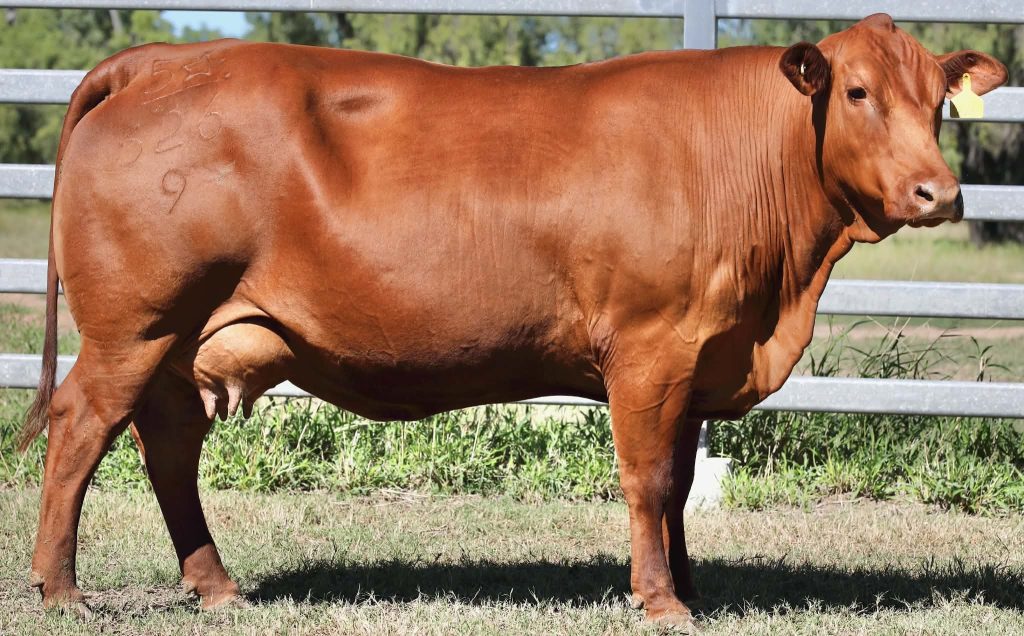
In 2003, the Maynards conducted the first Senepol sale in Australia. The Five Star Senepol sale was conducted with great success having 100pc clearance and averaging $12,000 back in 2003, with a top of $18,000. Since 2003 the Maynard’s have been conducting their annual Five Star Senepol sale with good results.
In 2012, the Maynard family embarked on getting a Breedplan analysis done specifically for their Senepol herd. The breed society had not moved to start up a performance recording database. So the Maynard family decided to go on their own and have 1200 breeding female herd completely on the Tropical Composite register where they now have over 50,000 records on 15,000 head that have been analysed in that time.
During this time, the Maynard family have exported Senepol genetics to Paraguay, Brazil, the United States, Papua New Guinea, Vietnam, the Philippines, New Caledonia, Vanuatu and South Africa. In 2016, following a strong tradition of being involved in research, the family joined the Northern genomic project with Professor Ben Hayes and Shannon Speight (nee Landmark), where 35,000 females have been analysed for early puberty and quicker rebreeding.
Comprehensive EBVs and GBVs
The Five Star Senepol operation and the Maynard family, are the only Senepol operation in Australia that offer comprehensive EBVs and GBVs, genomic breeding values on all their stock.
The Maynards are proud to recognise many herds around the tropics and subtropics utilising their genetics. Many large pastoral companies today have the Maynard family’s adapted Bos Taurus genetics utilised in their genetic programs.
To name a few, the AA Company, NAPCo, Hancock Ag, Kidman, and Cunningham Cattle Co. There are multiple herds internationally also using the Five Star or Maynard family adapted Bos Taurus genetics. Namely, Leachman Cattle Co in Brazil, Paraguay, the New Britain palm oil company in PNG, multiple Senepol studs in South Africa and New Caledonia.
Just last week, representatives of the Philippines government visited Mount Eugene purchasing Senepol breeding females to start a Senepol stud in the Philippines.
Consistent and repeated Callide Dawson Carcase Competition success
To benchmark their genetics, the Maynard family have been entering Australia’s largest carcase competition, the Callide Dawson Carcass Competition, for the past 18 years.
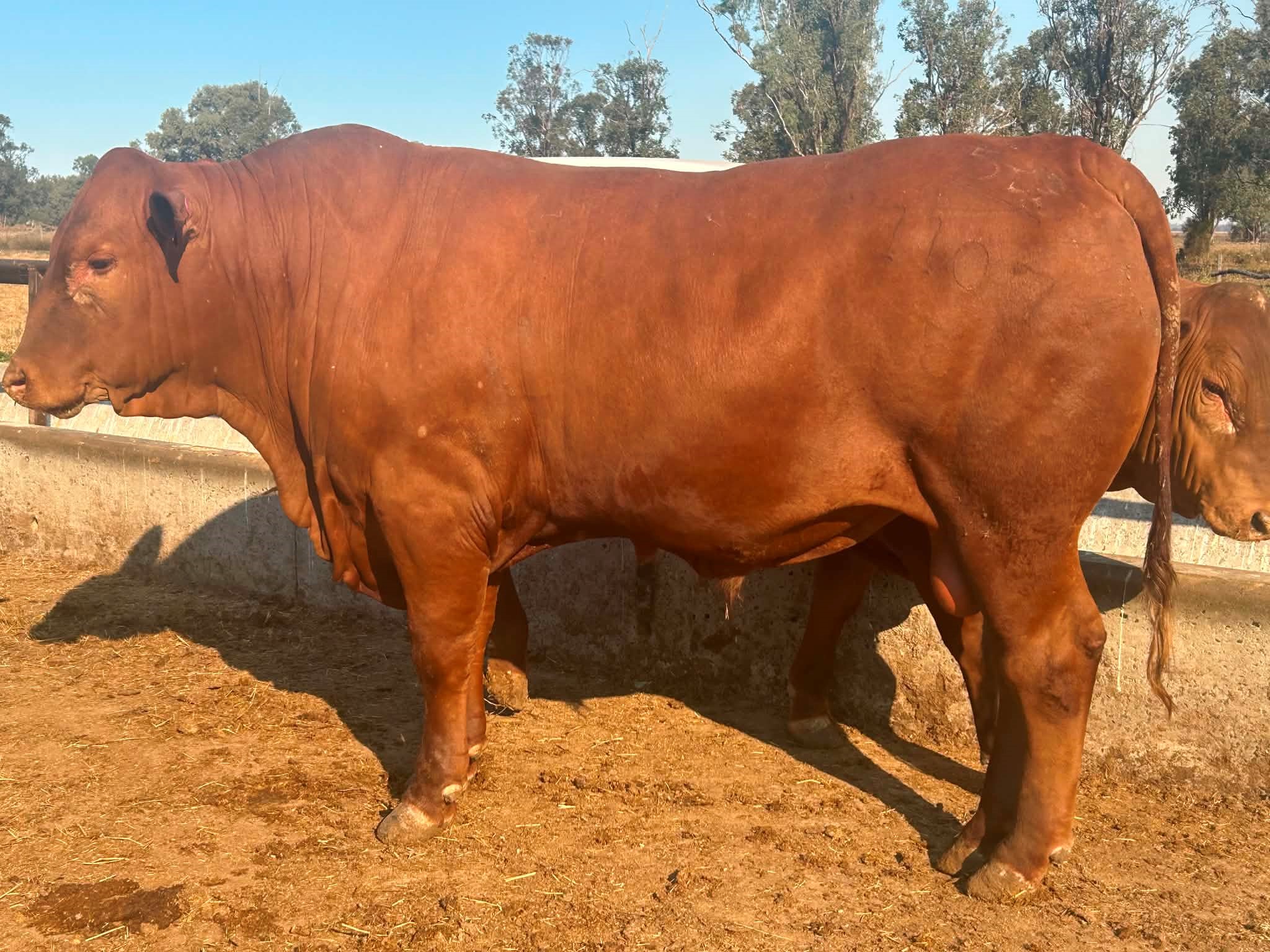
The Five Star operation has successfully been competing during that time. Their entries have won the feedlot growth rate section for bullocks or for heifers (or both), 16 out of the last 18 years. Another achievement the family is proud of is every year for those 18 years they have successfully won a blue ribbon, either in the classes or championship sections.
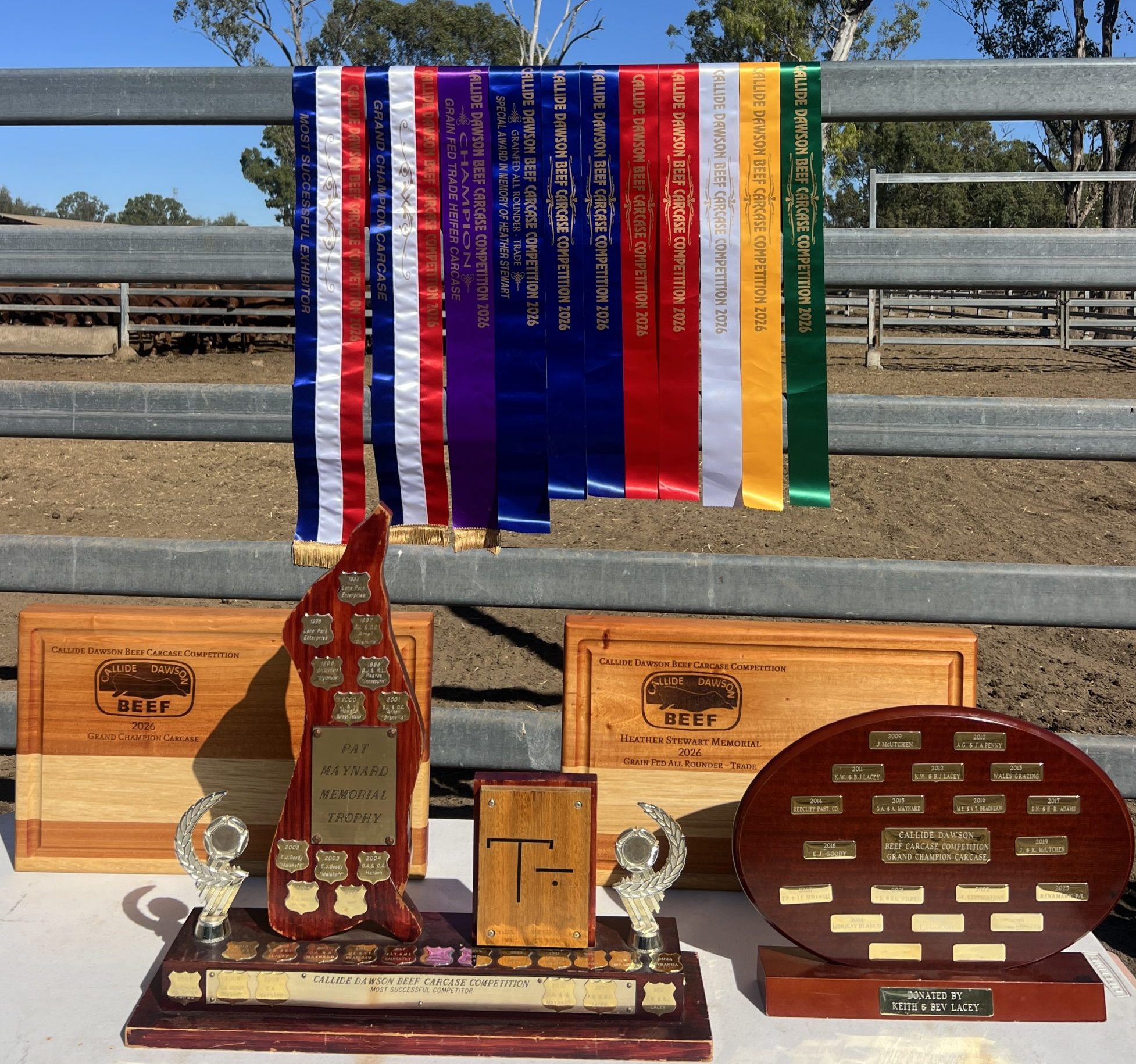
This year in 2026, the Maynard family exhibited grand champion carcase, out of 872 carcases entered, along with most successful exhibitor, best all-round entry and champion grainfed heifer carcase, as well as several class placings.
In the Bullock section, the Maynard entries were awarded first, second and third in the growth rate section out of 164 bullock entries. In the domestic steer class, the Maynard entry won the growth rate section.
The Callide Dawson Carcase Competition Growth Rate – 5 Star Wins 16 out of 18 years
2026:
- 1st ,2nd,3rd growth rate in the Bullocks, 3.21 kg/day (165 entries).
- 1st in the Trade steers, 2.79 kg/day (126 entries).
2025:
- 2nd & 3rd in the Heifers (From 120 entries).
2024
- 1st weight gain: 100-day bullocks, 3.63 kg/day (148 entries).
- 2nd HIGHEST ON RECORD IN 36 YEARS.
- 1st & 2nd weight gain in trade heifers (120 entries).
2023:
- 1st weight gain: for 100-Day bullocks, 3.16 kg/day (155 entries).
- 3rd weight gain: 100-Day bullocks.
- 3rd weight gain: 70-Day heifers.
2022:
- 1st liveweight gain: 100-day bullocks, 2.76kg/day (143 entries).
- 3rd in the 100-day bullocks.
- 3rd in the domestic heifer (82 entries).
2021:
- 1st & 2nd in the domestic heifer weight gain.
- 2nd in the 100-day bullock weight gain, 2.76kg/day.
2020:
- 1st liveweight gain: 100-day bullocks, 3.58 kg/day (122 entries).
- 2nd liveweight gain in the domestic heifers.
2019:
- Only a 2nd placing in the heifers. Mass sackings.
2018:
- 1st ,2nd, & 3rd liveweight gain bullocks, 3.71 kg/day (118 entries). A Current record for the 36 years the comp has been operating.
- 1st weight gain for the domestic heifer.
2017:
- 1st and 2nd liveweight gain: domestic heifers.
- 2nd liveweight gain: 100-day bullocks, 2.76 kg/day (over 300 entries).
2016:
- 1st liveweight gain: 100-day bullocks, 2.82kg/day.
- 2nd in the heifers, 3.00 kg/day.
2015:
- 1st, 2nd & 3rd liveweight gain: domestic heifers, 2.80kg/day.
2014:
- 1st & 3rd liveweight gain: 100-day bullocks, 2.91kg/day.
- 3rd liveweight gain: domestic heifers.
2013:
- 1st liveweight gain: 100-day bullocks, 2.85kg/day.
2012:
- 1st liveweight gain: heifer, 2.81kg/day.
- 3rd liveweight gain: 100-day bullocks, 2.75kg/day.
2011:
- 1st, 2nd & 3rd liveweight gain: domestic heifer.
- 1st & 3rd liveweight gain: 100-day bullocks, 2.87kg/day.
2010:
- 1st, 2nd, 3rd, 4th, 5th, 6th & 8th liveweight gain: 100-day bullocks, 2.95kg/day.
2009:
- 1st live weight gain: 100-day bullocks, 2.94kg/day.
2026 Five Star Senepol Sale
Since 2003, the Maynards have had their own bull sale at the Gracemere saleyards every September. To this day, the family is very lucky to have fourth-generation family members working within the business. Daughters, Bonnie and Faith and son, Guthrie, all work within the seedstock operation.
Also, Geoff and Alison Maynard’s nephew, Clayton and his partner, Sarah Maynard also breed Senepol and Senepol Angus cattle and the entire family market the progeny in unison.
This year’s annual Five Star Senepol Bull sale will present 55 Senepol bulls and 12 Senegus bulls at the CQLX Gracemere saleyards from 11am on Monday 21 September.
For further information or to contact the team, click here.
HAVE YOUR SAY