
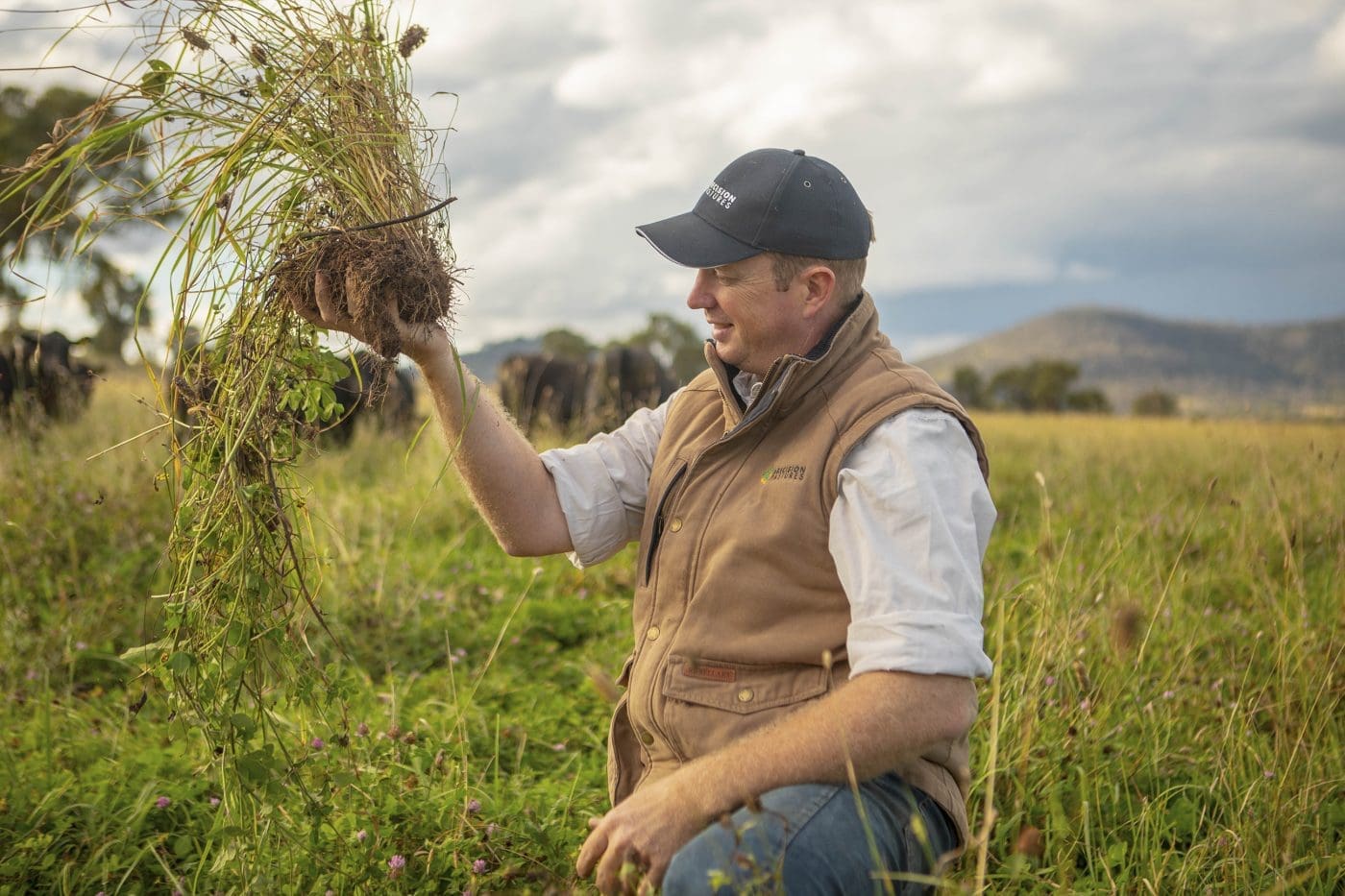
Precision Pasutres’ Hamish Webb explains some of the ins and outs of soil carbon farming. Photo: Mike Terry
A PERIODIC review of Australia’s soil carbon methodology has been handed down this week, with a few minor changes recommended.
The Emissions Reduction Assurance Committee, which provides recommendations to the climate change minister, has been working on the review for the past 18 months – a process that took a lot longer than many expected.
It came back with four main recommendations:
- Implement a cap of three (3) tonnes of soil organic carbon (tC) per hectare per year (after method prescribed discounts) – equivalent to approximately 11 ACCUs
- Strengthen sampling and stratification protocols that underpin measurement, project design and assurance.
- Restrict registration of multiple projects on the same landholding
- Report and publish annually on collective project performance to improve data transparency across the industry.
Several soil carbon developers have said they are already likely to be complying with recommendations of this week’s report.
“This review provides an opportunity for us to build on lessons learned, strengthen confidence in the Method, and ensure soil carbon projects can continue to deliver environmental, economic and productivity benefits for Australian landholders,” Soil Carbon Industry Group co-chair Chris McCosker said.
A similar message was put out by AgriProve, which has the largest number of projects.
“For our landholders, the practical message is straightforward: projects continue, issued ACCUs remain unaffected and our early analysis indicates our portfolio will not experience any material changes,” said AgriProve general manager Kieren Whittock.
“Also, because the cap accumulates annually, gains that are maintained can be recognised over the project life.”
- The Week in Beef podcast has done an interview with Precision Pastures chief executive officer Hamish Webb, which we are planning to air tomorrow. ERAC is taking feedback from its findings.
HAVE YOUR SAY