
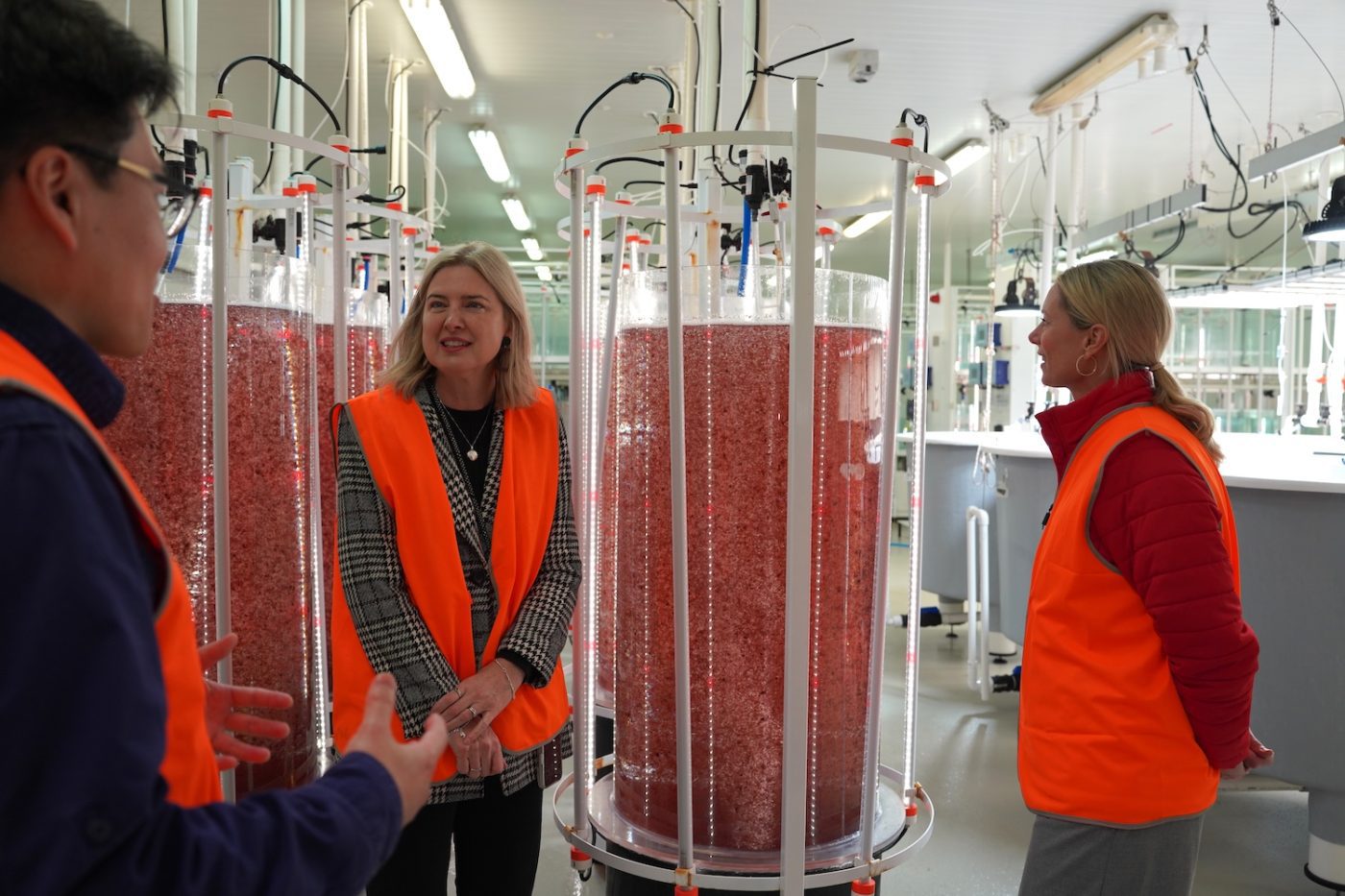
Sea Forest Head of Research, Dr Masa Tatsumi speaking with Federal Agriculture Minister Julie Collins and Federal Member for Lyons Rebecca White.
WORK has started on a new livestock sector method to replace the terminated Beef Cettle Herd Magement scheme and allow producers to earn Australian Carbon Credit Units (ACCUs) for herd management practices that reduce methane emissions.
The Beef Cattle Herd Management method which ran for 10 years until it was closed in September last year previously allowed beef producers to earn ACCUs by reducing the emissions intensity of beef production through improved herd management, rather than by reducing total cattle numbers.
That scheme was terminated by the Federal Government last year which contended it did not meet integrity standards relating to measurable, verifiable and conservative abatement, had low uptake and high administration costs, and had been overtaken by advances in methane science.
The new framework is expected to place greater emphasis on direct methane abatement rather than productivity-linked emissions intensity.
Speaking during a tour of the Tasmanian headquarters of livestock feed additive manufacturer Sea Forest last week, Federal Minister for Agriculture, Fisheries Julie Collins and Assistant Minister for Climate Change and Energy Josh Wilson annonuced that Meat & Livestock Australia has now commenced work on developing the new ACCU livestock method in conjunction with the Federal Goverment.
According to their statements the new method will build on the previous method to include the latest science on methane reducing feed additives and expand beyond pasture-based cattle to include feedlot cattle, dairy cattle and sheep.
Herd management practices used to reduce methane include improving the digestibility of feed, enhancing herd fertility, pasture and manure management, and exploring the use of methane inhibiting feed additives for livestock such as asparagopsis seaweed and 3-NOP.
 The proposed new ACCU method will apply across pasture-based beef cattle, feedlot-based beef cattle, sheep and dairy, covering the full spectrum of Australia’s ruminant livestock sectors.
Once developed, the new method will be assessed by the Emissions Reduction Assurance Committee against the legislated Offsets Integrity Standards, Minister Collins said.
She said the new methodology was part of a $29 million Federal investment through the Methane Emissions Reduction in Livestock program to drive innovation and develop the evidence base for methane reducing feed additive technologies, like asparagopsis seaweed.
An additional $6.9 million had also been spent through the Developing Australia’s Seaweed Farming grant program, to support the Australian Sustainable Seaweed Alliance-led efforts to scale up commercial production of asparagopsis seaweed.
“I’m pleased work is underway on a new livestock method to support farm practices that lower Australia’s emissions while providing opportunities to improve productivity and diversify on-farm income,” Minister Collins said.
Assistant Minister for Climate Change and Energy Josh Wilson said the government was working with industry to design “a next-generation livestock ACCU method” that supported emissions reduction, while safeguarding ACCU market integrity and public confidence.
“We want to make sure there’s greater emphasis on direct methane abatement, with clearer and verifiable causal links between actions taken on the farm and emissions reduced based on enhanced monitoring and reporting,” he said.
“The new method delivers on this goal, advancing the government’s commitment to reforms towards a high-integrity carbon trading system in keeping with the Chubb Review recommendations.”
MLA Managing Director of Meat & Livestock Australia, Michael Crowley said the next-generation ACCU livestock method would reflect the latest science and on-farm innovation.
“This work is focused on creating practical pathways for red meat producers to improve productivity while unlocking new financial incentives alongside methane reduction, helping ensure the long-term resilience and competitiveness of the sector.”
Sea Forest CEO Sam Elsom said the new method was expected to accelerate the adoption of methane-reducing feed additives by providing producers with an additional revenue stream that strengthened the commercial case for uptake.
He said the new ACCU method would be a “game changer” for Australian farmers and producers.
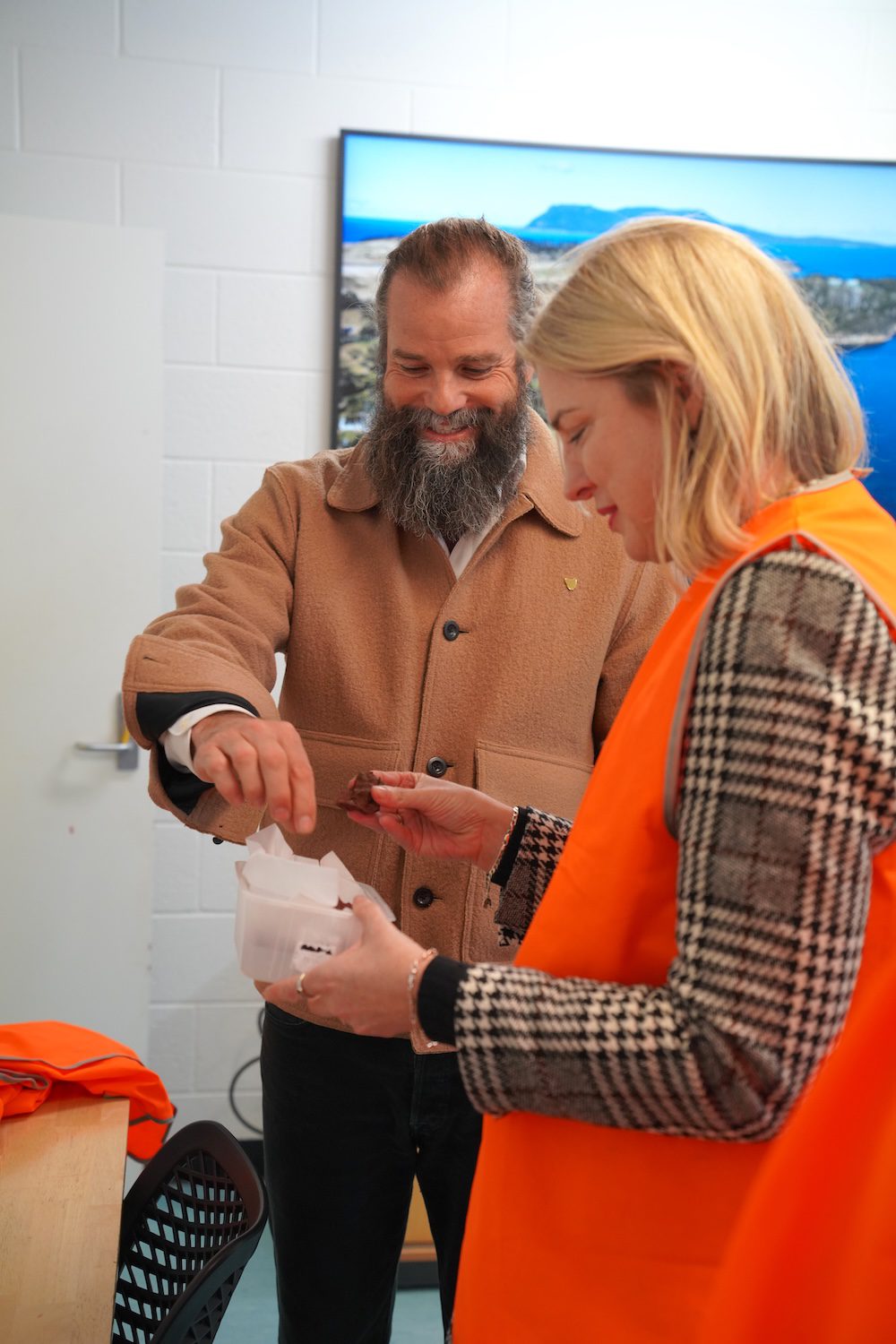
Sea Forest CEO Sam Elsom and Federal Agriculture Minister Julie Collins.
“It acknowledges the significant contribution Australia’s livestock industry can make towards the country’s climate goals, while rewarding those who support innovation.”
He said research had shown that methane-abating additives such as Sea Forest’s SeaFeed can not only reduce emissions but can also benefit production outcomes.
“With 131,000 head of cattle currently under agreement, the proposed new ACCU method materially strengthens the commercial pathway for broader adoption, making Australia’s multimillion-head cattle, sheep and dairy markets even more attainable for Sea Forest and SeaFeed.”
“Sea Forest is confident that from this initial start, the industry will grow to abate over 1 million tonnes of emissions in the first year the ACCU method is available to the sector.”
How long until new ACCU scheme is in place?
Under questioning from Senators during the most recent round of Budget Estimates hearings in Canberra, MLA managing director Michael Crowley said developing the new ACCU is going to take a lot of work and estimated it could be 18 to 24 months away.
In response to Beef Central’s questions about likely time frames to implementation, Sea Forest SEO Sam Elsom pointed to a sharper time-frame.
“Given there are existing functioning methodologies under internationally recognised frameworks such as VERRA and Gold Standard and there has been a working group of 200 industry stakeholders who have previously provided a draft to the Emissions Reduction Assurance Committee within DCCEEW, were not starting from a zero base.”
“Historically methods have been held to a 12 month process from drafting to legislation and believe this is an achievable timeframe MLA should be working toward, to support its levy payers and the industry more broadly.”
A spokeswoman for Assistant Minister for Climate Change and Energy, Josh Wilson, said a time frame was still being established.
“Method development is a complex process, involving development of a project plan, multiple rounds of public consultation, assessment by the Emissions Reduction Assurance Committee, and legal drafting requirements. The department is currently establishing timeframes with the proponent.”