
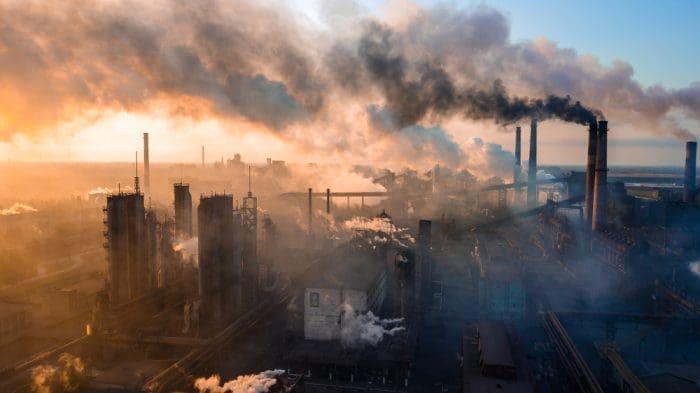
Image: Shutterstock
WITH the Federal Government reviewing the main policy underpinning demand for carbon credits, the National Farmers Federation says it needs to make sure food production is protected.
The safeguard mechanism is the main policy that drives demand for Australian Carbon Credit Units, by putting a limit on big emitting companies and making them purchase ACCUs if they exceed that limit.
While it was a policy before Labor was elected, the current Government has made significant changes to reduce the limits and put more pressure on the emitting companies.
In a submission to a review of the policy, the NFF says a recent sale of one of Tasmania’s largest farms, Rushy Lagoon, was an example of the distortionary impacts Government intervention can have. The sale was partly funded by the Federal Government’s Clean Energy Finance Corporation and comes with plans to convert the property into a pine plantation.
“NFF does not accept the proposition that increasing Safeguard demand for land-sector offsets necessarily translates into beneficial investment for regional communities,” the submission said.
“While individual carbon projects may provide income diversification and other benefits for participating landholders those benefits are more often than not concentrated among project participants and should not be assumed to flow through evenly across the wider regional economy.
“Where agricultural land is identified or mapped by a jurisdiction as important to production or as contributing materially to a local or regional economy, that information should also form part of any assessment of the impacts of its conversion to carbon sequestration.
Concern ag could become part of the safeguard mechanism
Part of the safeguard mechanism review is to canvass whether the Government should lower the emissions limits.
The NFF submission said it did not support any moves that might put mean agricultural companies are covered by the safeguard mechanism.
 “Doing so would impose an additional layer of regulatory burden on a sector that is already responding to increasing emissions-accounting expectations, while the methodologies and practical tools required to measure our predominantly biological emissions continue to develop,” it said.
Even if agriculture is carved out of the mechanism, the NFF said it had concerns that lowering the limits could mean agriculture is indirectly caught up in it.
“The Discussion Paper does not provide sufficient detail to determine which agricultural supply-chain facilities would be captured under the alternative threshold options,” the submission said.
“Lowering the threshold could capture a broader range of facilities involved in activities such as grain storage, handling, processing, fertiliser production and distribution, and port operations.
“NFF recommends that, before any change to the threshold is contemplated, the Commonwealth publish detailed analysis identifying the sectors and facility types that would be captured under each threshold option, together with the likely compliance and economic implications. Such information is necessary to allow affected stakeholders to properly assess the costs, benefits, and potential unintended consequences of any expansion in Safeguard coverage.”
Supporting more agricultural methodologies
The NFF said it would like to see the Federal Government support more carbon farming methodologies that work with food production. It noted some like the soil carbon methodology and animal effluent management are directly integrated with production.
“Nevertheless, where land is committed toward a carbon project, its productive use in most cases is constrained or prohibited entirely, and this has the effect of taking land out from production and economic activity,” the submission said.
“There is considerable, and to some extent untapped, opportunity for agriculture to be supported to reduce its own emissions in ways that make commercial sense for farm businesses while also contributing to the broader supply of high-integrity ACCUs available to the Safeguard Mechanism.”
- To read the full submission click here
HAVE YOUR SAY