
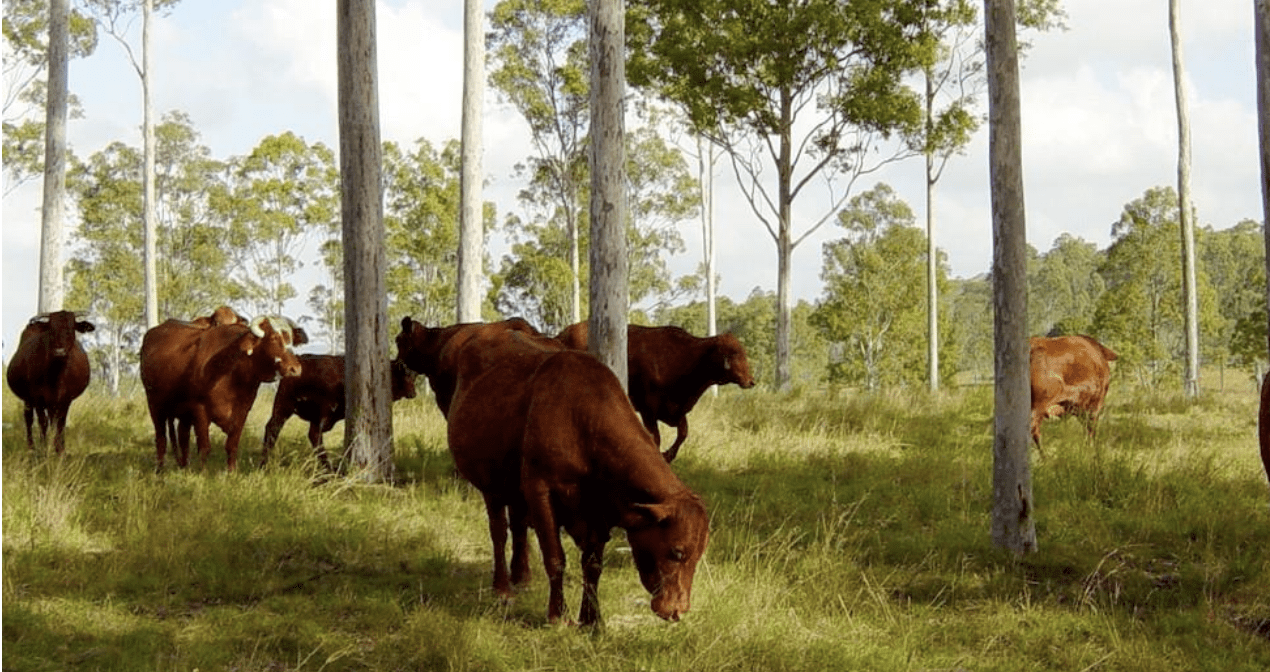
COULD introducing goats to a property to browse woody vegetation count as land clearing?
That is one of the many questions being asked by landholders in response to the Federal Government’s recently amended Environment Protection and Biodiversity Conservation Act (EPBC).
In Senate Estimates earlier this month, Leader of The Nationals Matt Canavan questioned if introducing grazing to a property or paddock could be considered a clearing event.
His question was based on the EPA’s Agriculture and the EPBC Act guide which defines a clearing event to include removing native or non-native vegetation from land that changes any of its use, structure or ecological function, including non-woody vegetation like ground cover, including grasses.
The EPA has been invited to join The Week in Beef podcast to clarify the rules but instead provided written responses to the following questions:
Q. We are seeking clarification around the inclusion of non-woody groundcover like grasses. Does that mean grazing grasses could now be considered a clearing event?
“Routine grazing within an existing footprint does not constitute land clearing as it is the ongoing use of vegetation, not its permanent removal,” the EPA statement said.
Q. If country had been locked up for carbon project or renewable energy development and excluded livestock from grazing for 15 years, would introducing livestock trigger a breach of the EPBC laws? Another example was introducing goats. Would these need approval under the EPBC?
“Producers considering clearing new areas of trees or native grasses to introduce grazing should self-assess whether their new activities will have a significant impact on anything that’s nationally protected, using the self-assessment guidance available,” the EPA statement said.
 “If it does, they are required to have it assessed under the EPBC Act. Taking the time to check upfront can provide greater certainty for producers while protecting some of Australia’s most important environmental assets, including threatened species and ecological communities, Ramsar wetlands, listed migratory species and the Great Barrier Reef.
“National EPA staff are available to discuss with producers their own specific scenario.”
The EPBC Act has 2223 species on its Threatened Species List which can be found here. And the EPA states its Protected Matters Search Tool has been designed to help landholders work out if a referral is needed for the area they intend to manage.
Q. Cattle Australia has asked the EPA to have a clear statement that grazing is not a land clearing event. Will that be included in the guide?
“The guide currently recognises that routine grazing in an existing footprint is a low-risk activity that need not involve the removal of native vegetation,” the EPA statement said.
What is the problem we are trying to address?
Qld rural lobby group, AgForce has hosted EPBC Reform Roadshow events across the state to give landholders the opportunity to ask the EPA questions about the laws and voice concerns.
At each of the nine events landholders have expressed their frustration and concern with the ambiguity of the laws and the contradiction with state laws.
“Strict vegetation laws that are black and white would be easier to manage than what we currently have,” one landholder told Beef Central.
AgForce CEO Niki Ford acknowledged the EPA’s willingness to engage with Qld producers through the EPBC Roadshows and said her organisation remained committed to working constructively with the EPA on practical solutions.
“Producers need clear, practical exemptions for routine agricultural activities, and long term, certainty that they can maintain their current tree to grass ratio of productive agricultural land without unnecessary duplication, costs or regulatory risk,” she said.
Grant Maudsley, a landholder and former President of AgForce, has worked closely with farmers and governments on vegetation management for more than a decade.
“Policy should be created to address a problem. But what is the problem we are trying to address with these EPBC reforms?” Mr Maudsley asked.
“Qld’s remnant vegetation is getting thicker and that is not reflective of what the natural landscape was.
“I was once told – ‘the presence of a tree is not a surrogate for biodiversity’ and I think we need to remember that. Not every tree is a good tree.”
In western Qld prickly acacia was introduced as a way to provide shade and fodder for livestock on the open downs, but it is now a weed of national significance because of its invasiveness and impact to the environment.
Landholders want certainty Mr Maudsley told Beef Central. Planning certainty to manage their land is something he has been calling for from governments for over a decade.
“Landholders manage land for long periods of times, often for generations. What they need is certainty so they can plan and care for their environment,” he said.
“But these EPBC reforms are very complex and poor policy causes problems. At the moment the only way for a producer to get certainty is to do a full referral which is a very complex and expensive undertaking.”
Mr Maudsley joined the call for grazing to be exempt from the continuous use provision.
“It should not be grey if grazing is or is not considered land clearing. It is a basic practice – a way to manage a healthy landscape and it should not need a referral.”
HAVE YOUR SAY