
AUSTRALIA’S world-leading trade in tallow is unlikely to be threatened by clashes in the Gulf, and could even be boosted by the conflict, according to a rendering industry leader.
Australian Renderers Association executive officer Jess Bloomfield said the Middle Eastern conflict had not really impacted the tallow trade.
“If anything, the biofuels market has probably pushed up the demand in the US. There’s strong demand there, and that hasn’t changed in the last six months,” Ms Bloomfield said.
She was speaking ahead of the ARA’s 18th international symposium which started in Melbourne on Tuesday.

Jess Bloomfield
Almost 400 registrants from across Australia as well as NZ, the US and south-east Asian and EU countries make this the highest-attended symposium held by the rendering industry-leading group. Nearly half of this year’s attendees are first-timers.
Australia is the world’s largest exporter of tallow, and in 2025 exported around 1.01 million tonnes of rendered products extracted as by-products from the meat processing industry, as well as used cooking oil, worth about $1.54 billion. That included around 360,000t of animal protein meals and 650,000t of tallow and used cooking oil.
Year-on-year export value of Australia’s rendered products rose 26.5pc in 2025, while volumes lifted 6.2pc, with US our leading market.
“It’s the policy settings in the US that drive the demand,” Ms Bloomfield said. “They have renewable volume obligations for a specific amount of low-carbon feedstock and this has driven up their demand for tallow.”
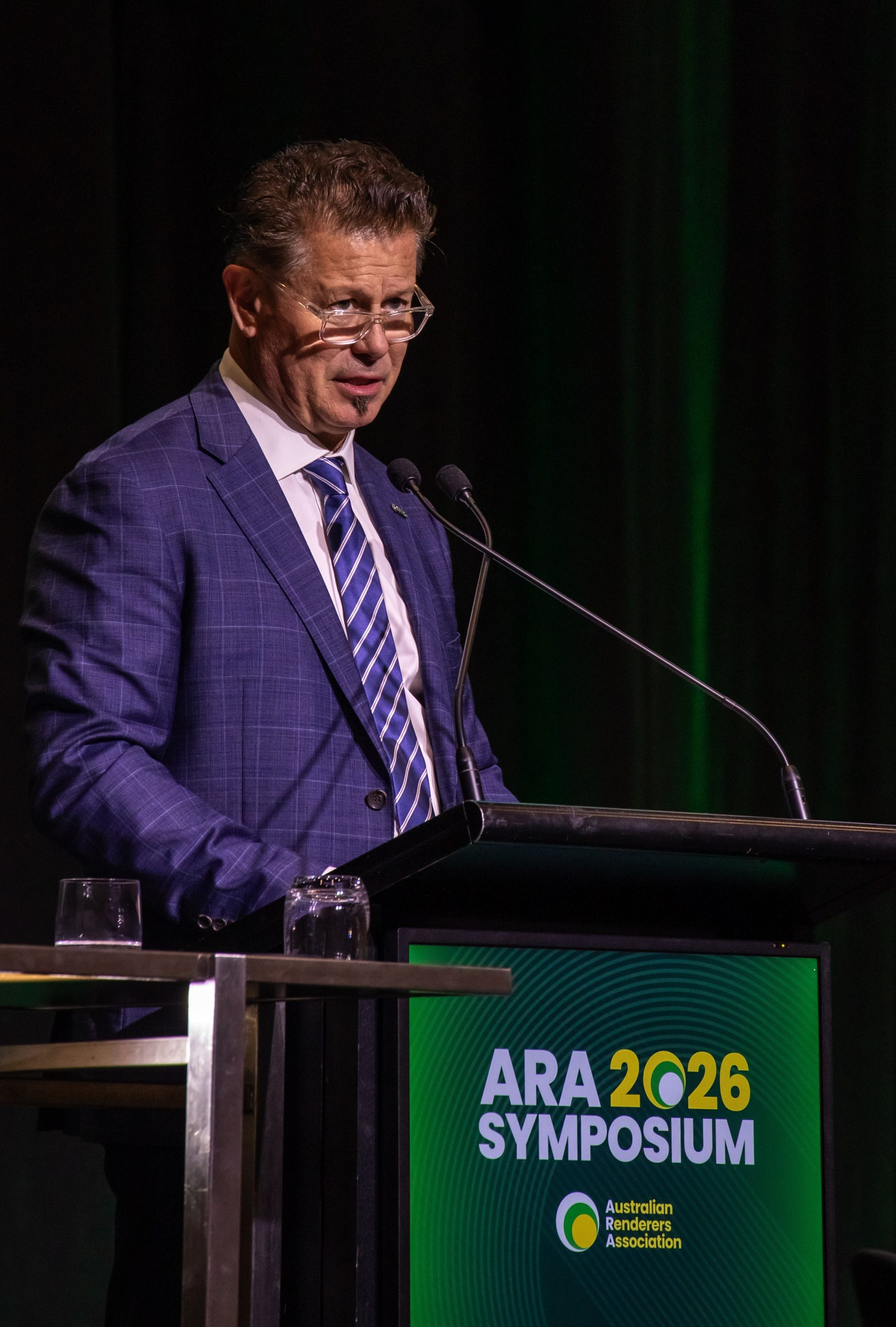
Peter Milzewski
This week’s ARA conference comes at a complex time in world markets, partly driven by US tariff policy which sees cheaper Brazilian beef tallow facing a combined 37.5pc tariff, compared with a 12.5pc tariff on Australian exports.
Last July Indonesia – formerly Australian’s biggest tallow market – reinstated its tallow trade and six Australian establishments have been audited and approved. Meanwhile, in June the Global Centre for Maritime Decarbonisation trialled rendered products as lower-emissions marine fuel in a BHP-chartered bulk carrier.
ARA president Peter Milzewski said rendering was becoming increasingly strategically relevant because it sits across several major parts of the Australian economy – food, agriculture, manufacturing and energy – at a time when all of those sectors are changing.
Mid-August prices for Australian tallow hovered at around US$1300/t.
While tallow prices are relatively buoyant, other by-products from meat processing including cattle hides, skins and foetal blood have seen major declines in value over the past few years.
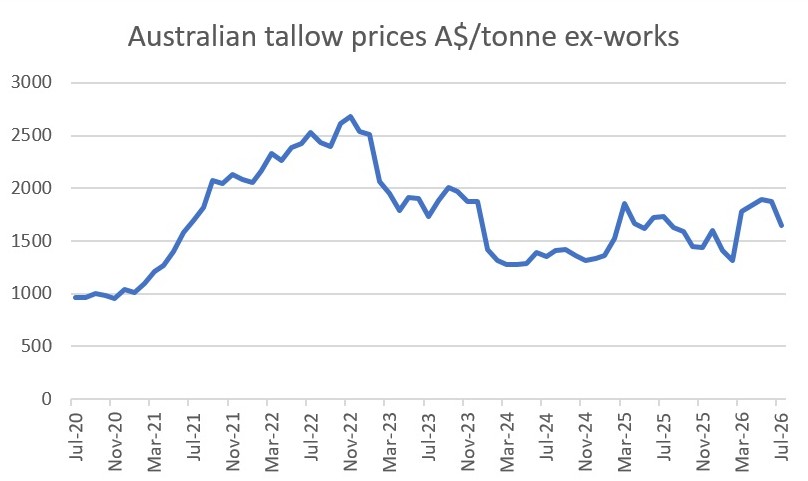
Source: MLA
The US intake is mostly destined as renewable fuel in the aviation industry. The 20pc of Australia’s total rendering output retained in this country is usually destined for pet food.
Mr Milzewski said: “Our export markets are diverse. In 2025, 65pc of Australian fats and oils exports went to the US and 26pc to Singapore, where these feedstocks are used in renewable fuel production. Protein meals go to a broader group of markets, particularly across Asia, including Vietnam, Taiwan, China and Malaysia.
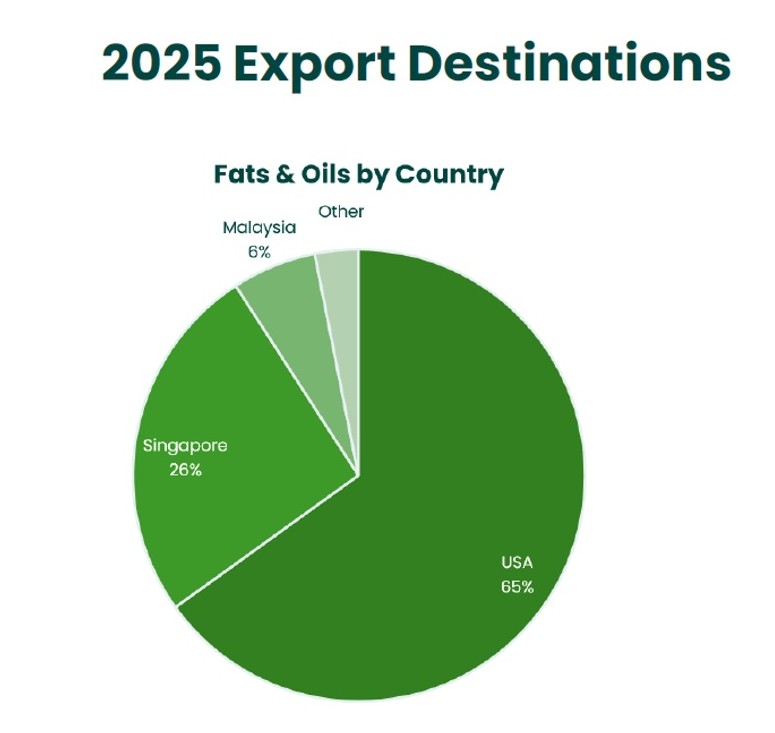
Source: ARA
“That diversity is increasingly important because demand for rendered products is changing.
“Protein meals continue to be important ingredients for stockfeed, pet food and aquaculture. At the same time, tallow and used cooking oil are increasingly sought for renewable diesel and sustainable aviation fuel. Customers are also placing greater emphasis on traceability, certification and carbon intensity.”
Rendering industry volumes are in lockstep with livestock processing. Australia recorded very high cattle processing volumes in 2025, with 9.28 million cattle slaughtered – the highest annual level since 1978. Throughput has remained historically high through 2026, creating strong volumes of co-products for the rendering sector.
Sheep followed a different trajectory. After very high sheep and lamb processing volumes in 2024, supply tightened through 2025 and into 2026 as flock numbers declined and breeder retention increased.
Should Australia develop a biofuels industry?
Can Australia develop a biofuels industry or should the nation’s renderers focus on providing feedstock for other nations’ industries?
Ms Bloomfield replied: “If the policy settings arise, it’s important for Australia to do what the rest of the world is doing. We have the feedstocks here, we just need the policy settings to signal investment in the processing equipment.”
Much of the symposium’s first day focussed on extracting greater value from existing resources.
Colin Hogg, Decarbonisation and Renewable Energy Lead at Tessele Consultants, demonstrated how rendering businesses can transform wastewater from a treatment cost into a commercial opportunity through improved tallow recovery, renewable biogas generation and water reuse.
Using a hypothetical rendering facility, the presentation showed businesses could potentially recover around three tonnes of tallow each week, generate enough methane to produce about 17 megawatt hours of useful heat each day, and create around 380 cubic metres of reusable water daily, while also reducing operating costs and emissions.
Ben Shamuel, chief sales officer at O’Brien Energy, explored practical pathways for improving steam and hot water efficiency and highlighted funding opportunities available to help manufacturers invest in energy efficiency and decarbonisation projects.
A key announcement from the opening day was the establishment of ARA’s new innovation and technology advisory committee. This collaboration of industry, universities, research organisations and providers will focus on automation, artificial intelligence, digital systems, processing technologies and higher-value product opportunities.
Mr Milzewski said the conversations throughout the opening day reflected an industry focused on creating more value from every part of its operations.
“At the heart of this industry is something rendering has always done: recovering value from materials generated through meat processing and food production and returning them to productive use,” he said.
“What we’re seeing now is the industry building on that foundation by embracing new technologies, investing in people, improving operational performance and positioning itself to meet the changing expectations of customers, communities and global markets.”
HAVE YOUR SAY