
WITH an El Nino shaping up to be one of the strongest on record and the Southern Oscillation Index taking a sharp dive into the negative, it is fair to say the talk of dry weather is starting to heat up.
Concern about a potentially dry summer has become more prominent in industry conversations in recent months, as some parts of Northern Australia dry out and storms continue to come through large parts of Southern Australia.
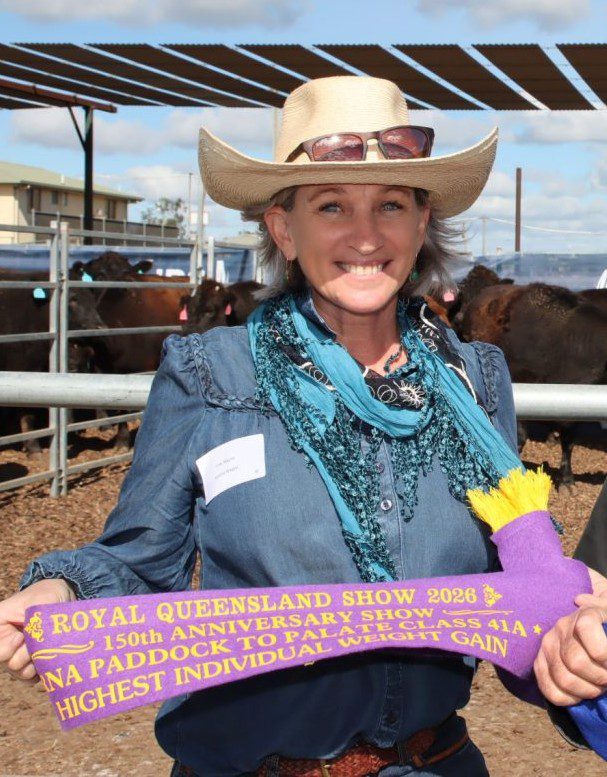
Cattle producer and Climate Mate Vicki Mayne.
With plenty of attention on the weather, Queensland producer and ‘Climate Mate’ with the Northern Australia Climate Program Vicki Mayne says producers should be trying to get a full picture of what is going to impact grass.
She said she was particularly watching another indicator based off heat and wind called the evaporative stress index.
“If multiple climate drivers, such as the positive IOD and this El Nino, do line up, it means the risk of dry conditions becomes much more pronounced,” Ms Mayne said.
“Temperature is our silent assassin that I always closely monitor through spring and summer. Even if some areas have reasonable rainfall, any above average temperatures and extreme temperatures will rapidly increase evaporation, reduce soil moisture, impact pasture quality and increase livestock heat load, which can impact on productivity.
“The temperature outlook deserves just as much attention as the rainfall outlook and that is something we can be pretty guaranteed of with El Ninos.”
Ms Mayne said the Bureau of Meteorology had recently combined the evaporative stress index into their drought monitor tool. (Click here to view the drought monitor)
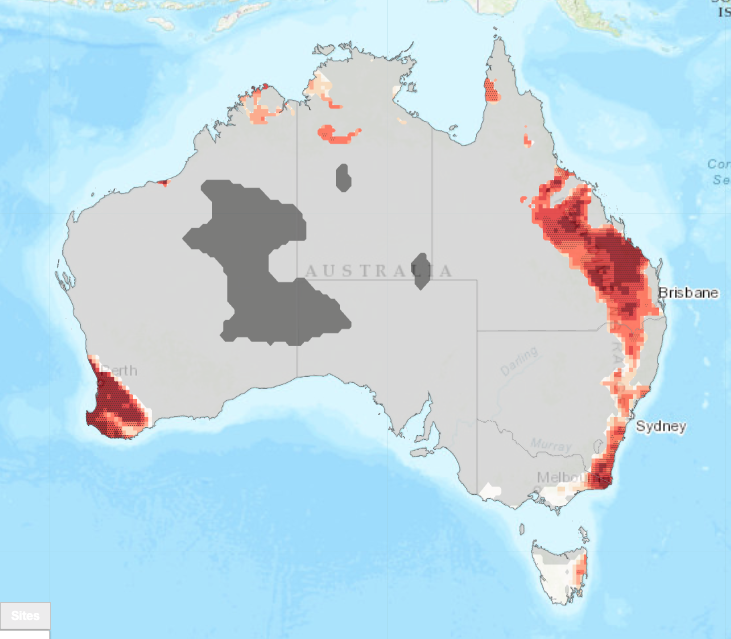
1-month forecast against 3-months deficiencies by 30/09/2026. Source: BOM drought monitor.
She said it was also worth noting that the strengthening of El Nino means the ocean and atmosphere will likely stay coupled for longer, which means its influence could be prolonged.
Updating the SOI
Another indicator that has become more prominent in the livestock industry is the Southern Oscillation Index or the El Nino Southern Oscillation (ENSO), which recently took a sharp dive into the negative indicating a strengthening of the El Nino weather pattern.
Ms Mayne said BOM and the American-based National Oceanic and Atmospheric Administration (NOAA) was currently updating the SOI. She said the idea is to smooth out the fluctuations.
 “The traditional version relies on pressure readings from just Darwin and Tahiti. Because ENSO is a Pacific wide phenomenon, those two points on a map don’t always capture that whole picture.
“It is like trying to judge the Australian cattle market by only ringing two saleyards. It is useful but not really the whole story.
“The new approach is going to use pressure averaged over much larger areas of the Pacific, which should give a cleaner picture of what’s really happening in the climate system.”
Wetter signals starting to weaken
Ms Mayne said there had been some wetter signals in the short term presented by another indicator called the Southern Annular Mode.
“They were talking about SAM playing a role maybe later this spring. SAM can influence rainfall patterns, but the impacts depend on the season and where you are located. It’s tied in with the polar vortex and that could then start to bring through a wetter signal,” she said.
“But it is looking like backing off again now and will be a ‘watch this space’.”
One area Ms Mayne said is receiving wetter signals is Western Australia, but context was also needed for that.
“When I say wetter signals showing up for Western Australia, just be really mindful that at this time of year, the median rainfall for this time of the year isn’t very high,” she said.
“Any wetter signal can lift that and make it look like we are going to get rain when it may not be much.”
HAVE YOUR SAY