
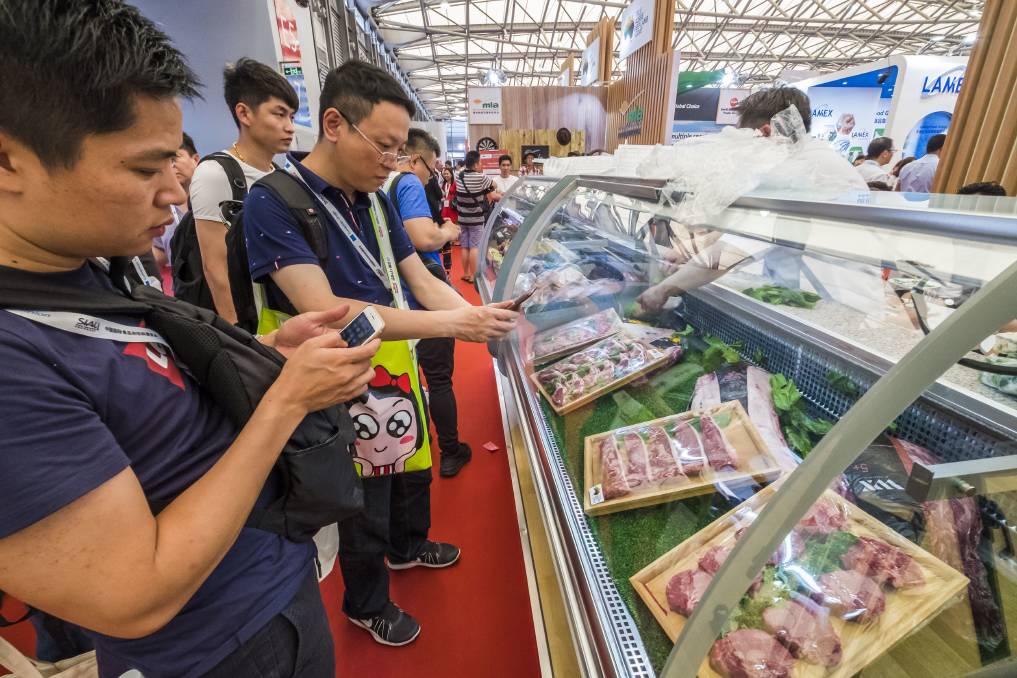
CONSIGNMENTS of Australian export beef for the China market have now effectively ground to a halt, in anticipation of the triggering of the harsh 55 percent out of quota tariff in the next couple of weeks.
China on 1 January announced a harsh 205,000t quota on Australian imported beef, which when exceeded attracts a 55pc out of quota tariff for the remainder of the year. That represented about two thirds of last year’s trade volume.
Major export competitor Brazil also faces a similar quota/tariff restriction this year, designed to protect the Chinese domestic beef industry.
Australian exporters hit 90pc of this year’s China quota of 205,000t on 1 June, with the rate of exports gathering pace as the finish line approaches. As the table below published by Expana analyst Junie Lin shows, it took just 17 days to go from 80pc of this year’s quota figure being filled to 90pc; and 51 days to go from 50pc to 80pc.

Source: Expana. Click on image for a larger view
With product already on the water or about to depart by airfreight likely to quickly soak up the remain 10pc, it effectively means that trade into China this year – tariff-free, at least – is now closed.
“Nobody will be putting meat on the water to China from this week,” a prominent southern Australian export processor told Beef Central this morning.
“By the time it gets there in a fortnight or three weeks, we will have already triggered the tariff, adding 55pc to the landed cost.
“Beef pricing is now starting to be adjusted, as a result. There may be some limited trade after the tariff is triggered in the next week or two, where importers do deals with exporters, where both take a hit on margins, with exporters accepting a lower price to offset part of the tariff cost,” he said.
“The items that work may do that, but for the items that don’t, they will simply stop appearing. Items like briskets and bones that China is desperate for, all the time, may continue to make their way in under the tariff, but in much smaller quantities, given the price impact.”
 Another large Australian exporter said his company would not be engaging in any ‘tariff concession or sharing’ to soften the burden for Chinese customers.
“This is a tariff on importers, not exporters,” they said.
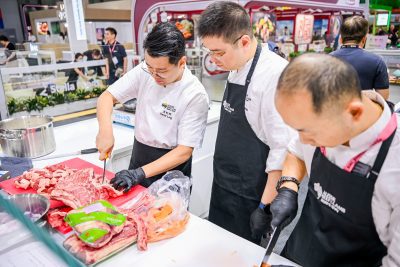
“But every individual packer can decide what they want to do with individual customers. We certainly had no conversations with customers on those topics during the recent SIAL trade show in Shanghai,” the trader said.
“We anticipate that there will be a break in trade now that the tariff-free access is effectively filled. But as those Chinese frozen stocks of Australian beef start to decline, we may see conversions like that during the third or fourth quarter.”
Domestic market already feeling impact
The effective exclusion of China has had an immediate, and in places quite dramatic effect on domestic wholesale beef pricing in Australia – especially for certain cuts and descriptions previously exposed to China trade – as stock starts to accumulate.
Beef Central has heard reports of prices on chilled grainfed cuts like tenderloins, ribeyes and porterhouses falling by as much as 15-20pc on the domestic wholesale market – primarily influenced by the China access closure limiting demand.
“There’s offers out in the market for ‘promptish’ meat this week that are considerably cheaper – as much as 15-20pc, depending on the cut, with loins the worst affected – that would otherwise have gone to China,” a Brisbane export meat trader said this morning.
“There are a few other factors also involved, but I absolutely believe the China gate closing is the driving factor,” they said.
“But even beyond the China impact, there are so many influences on meat price performance for the rest of this year. Australia has already filled 81.44pc* of its South Korean safeguard quota for the year; the geopolitical tensions around the world; and Brazil filling its own quota into China in coming months are all goin g to impact price support.
* Editor’s note: There was a typographical error in the original version of this report, suggesting 88pc has been filled. Now corrected to the figure of 81.44pc.
“That means customers in other markets, like the US and Japan, are now sitting on their hands, in anticipation of some softer prices for Australian beef in coming months, in the absence of competition out of China.”
Another point which has not gained wide attention yet is the fact that China has very different bonded cold storage rules for imports like red meat than most other countries.
It was widely anticipated earlier that by October-November this year, China would be again buying and stockpiling large quantities of Australian beef into bonded cold storage, ahead of the January 1 removal of the 55pc tariff again.
But senior trade access personnel confirmed today that China’s rules in the area of bonded cold storage mean it can only happen for product arriving two weeks prior to the removal of the tariff at the end of December. That would greatly limit trade during the fourth quarter this year, traders suggested.
Australia’s limited cold storage capacity means prospects of stockpiling pre-purchased China export beef here prior to new year are limited, at best.
“And besides, you have to have a lot of working capital behind you to make big beef purchases and then just leave it in a freezer somewhere for later use,” the trade access contact said.
Beef Central yesterday highlighted the big disconnect that’s occurring this month between red-hot slaughter cattle prices and the trends now being seen in the meat markets.
Brazil recognised as FMD-free
In other China news this week, China on 2 June officially recognised the entire country of Brazil as free of Foot-and-Mouth Disease, lifting all related import restrictions on Brazilian livestock products.
Previously only certain Brazilian states were eligible for beef export, however Chinese authorities agreed to recognise all regions under the same sanitary status, eliminating barriers that had limited exports from certain regions.
The announcement made yesterday by China’s customs authority represents a major breakthrough for the world’s largest beef exporter.
The decision is important because China is the largest buyer of Brazilian beef, and expanded market access could generate billions of dollars in additional trade while influencing global livestock prices and agricultural supply chains, Brazilian authorities said.
However the news is somewhat bittersweet, with Brazil heading to trigger its own China quota for 2026 in the next couple of months.
What tariffs do we put on Chinese goods since they seem to love hindering our exports for the few things we can do better then them.
Are they just showing us who is boss in this trade relationship?
yeah it’s pretty hypocritical same with US trade ,Australia have got to stop opening our legs and build our industry back up ,mind you we still have iron ore as a bargaining chip that’s about it,those economists in Australia that crowed on about “free trade ” and farmers were all for it, but Australia can make things and still sell primary industries, we just need to be tough and get realistic there is no such thing as free trade ,you need government to subsidies industry across all sectors all Asian countries know this and we new it in 60s and 70s and what ever people say it worked
I agree. it’s a bit rich that companies like BYD can dump their junk cars in Australia and claim carbon credits back from the Australian tax payers. its ironic that they had 30000 vehicles at the ready to help us poor Australians out during the “fuel crisis” i think it was worth close to $300 million in credits. what are the chances. cheers Matthew Della Gola