
Supplied: Halter
VIRTUAL fencing was commercialised 10 years ago by the CSIRO, but adoption of the technology has been slow in Australia with laws prohibiting the use of it, until now.
There are two main providers in Australia – Halter and Gallagher’s eShepherd. But the technology is only legal in Queensland, Tasmania and the Northern Territory, with Western Australia only allowing the eShepherd brand to date.
This year New South Wales, Victoria and South Australia committed to changing the laws to allow the technology.
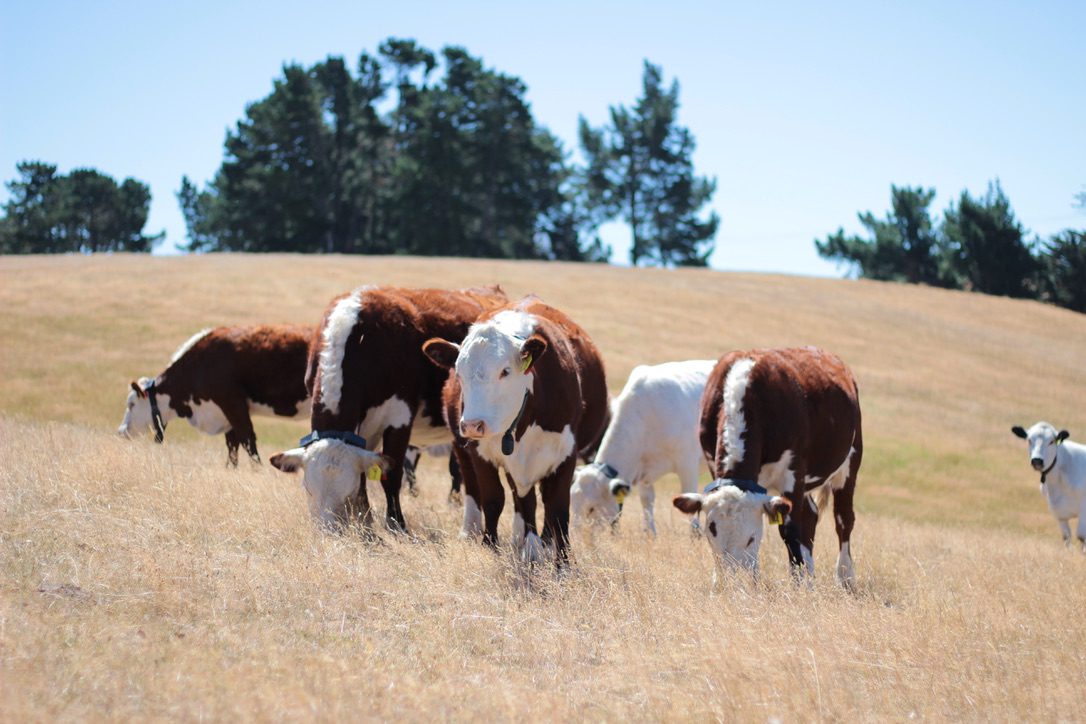
12 months ago, Tom Coggan was the first beef producer to use Halter’s cattle collars in mainland Australia on his family’s sheep, cattle and grain property on Queensland’s Western Downs.
He said the main reason for adopting virtual fencing was to improve land utilisation.
 “We have a lot of water courses throughout our property and in the last five years we have had a lot of floods so that would require a lot of fixing the same fences repeatedly – but because we are a mixed operation, we are always time poor and the virtual fencing has allowed us to use our country straight away, without having to organise fencing after a flood,” he said.
“The collars have also allowed us to cell graze our country with zero labour input and utilise all our waterways between cropping country.”
Mr Coggan said he is currently using 670 collars on his breeders but is looking to increase his herd.
“In the last 12 months, just by getting the collars, I’ve been able to increase our numbers from 600 cows and 300 backgrounders to 670 cows and 2000 backgrounders, and we are going to increase our breeders probably to 1000 head because we can use more of our land now,” he said.
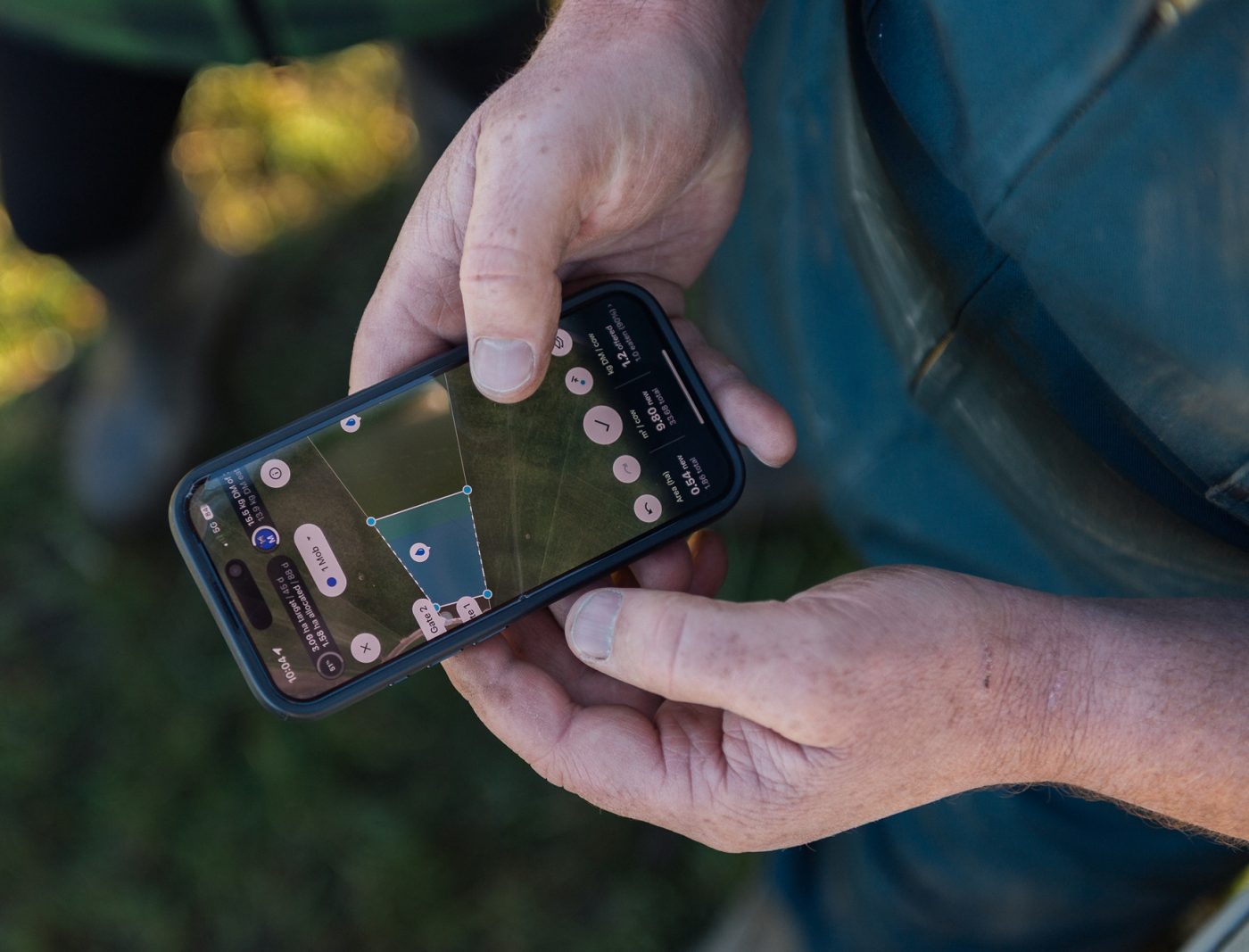
The Halter collars require a tower so there is a one-off cost to set that up at the start and then a monthly fee of $8 per collar.
Supplied: Halter
Mr Coggan said the collars have paid for themselves through increased productivity and reduced maintenance costs.
“We have got some old run-down fences that we’re pulling out now because the collars do the job,” he said.
“The cell grazing has had a massive impact on the condition of our cattle, and our country is not getting flogged out.
“We plan to grow our business by buying more land, but if you are not utilising every bit of that land that is not going to help pay an interest bill, whereas by implementing the collar I can nearly double my cow numbers.”
In the past year Mr Coggan had six per cent of collars fall off but said Halter worked with him to improve the collar and made it more robust and he hadn’t had any issues since.
Australia is a new market for Halter, but it has been operating across New Zealand since 2016 and also operates in parts of the United States.
“Around the world there are 500,000 cattle with Halter collars on. In Tasmania we have collars are on about 25pc of all dairy cows,” Brent Thomas, Director of Strategic Relations at Halter said.
How virtual fencing works
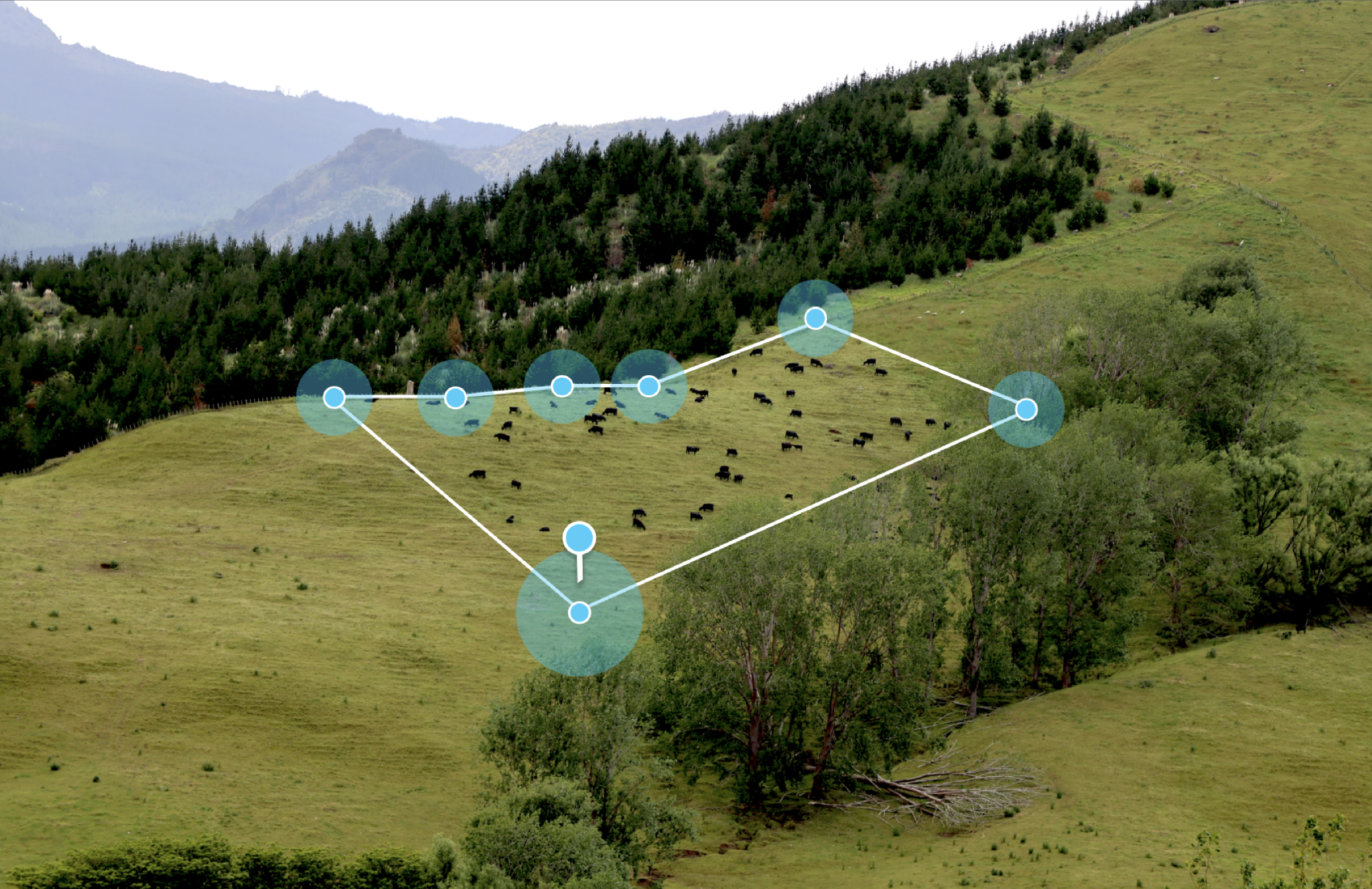
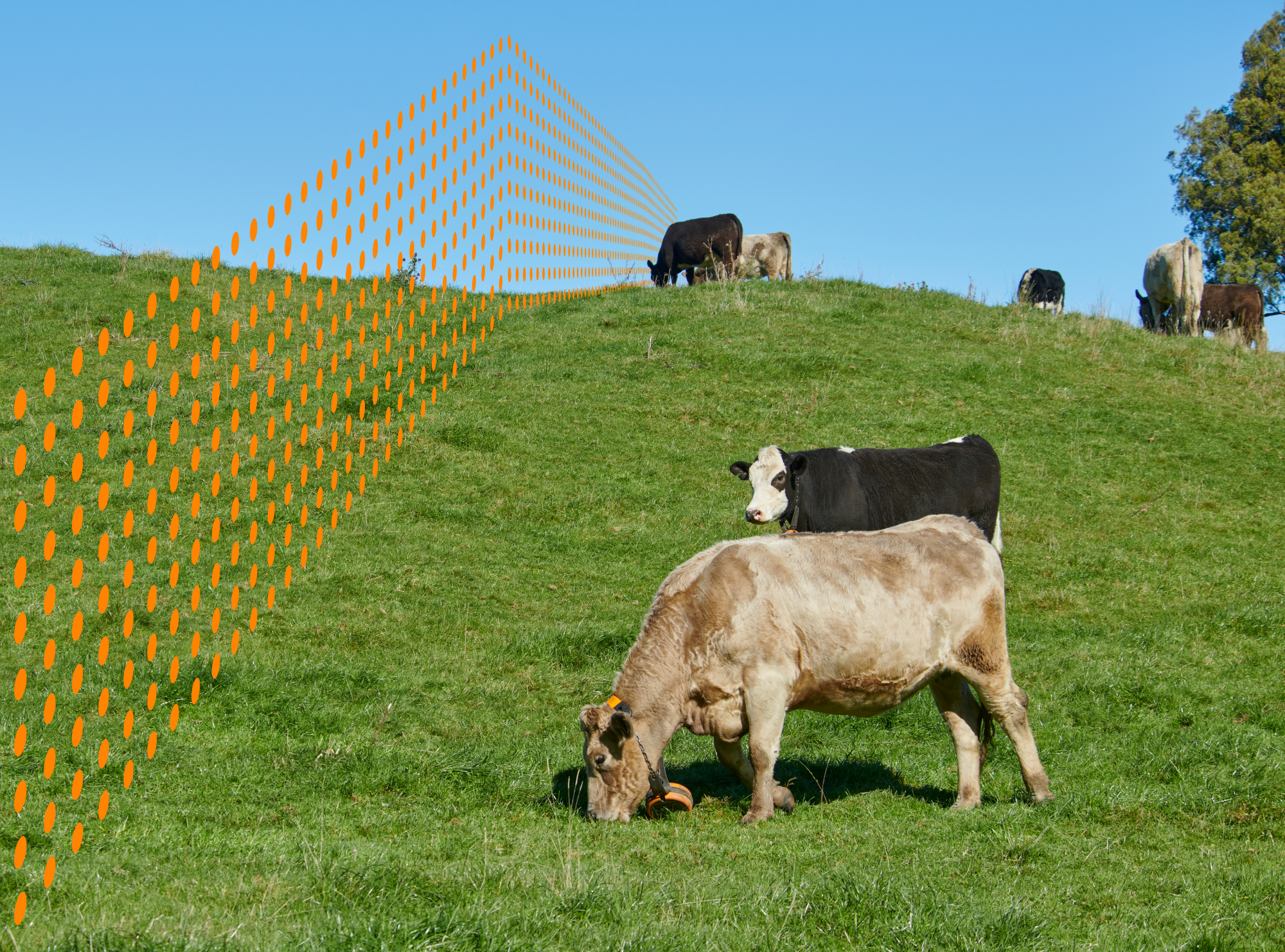
The technology is designed to work with or replace internal fencing but both providers in Australia recommend a conventional boundary fence remain in place.
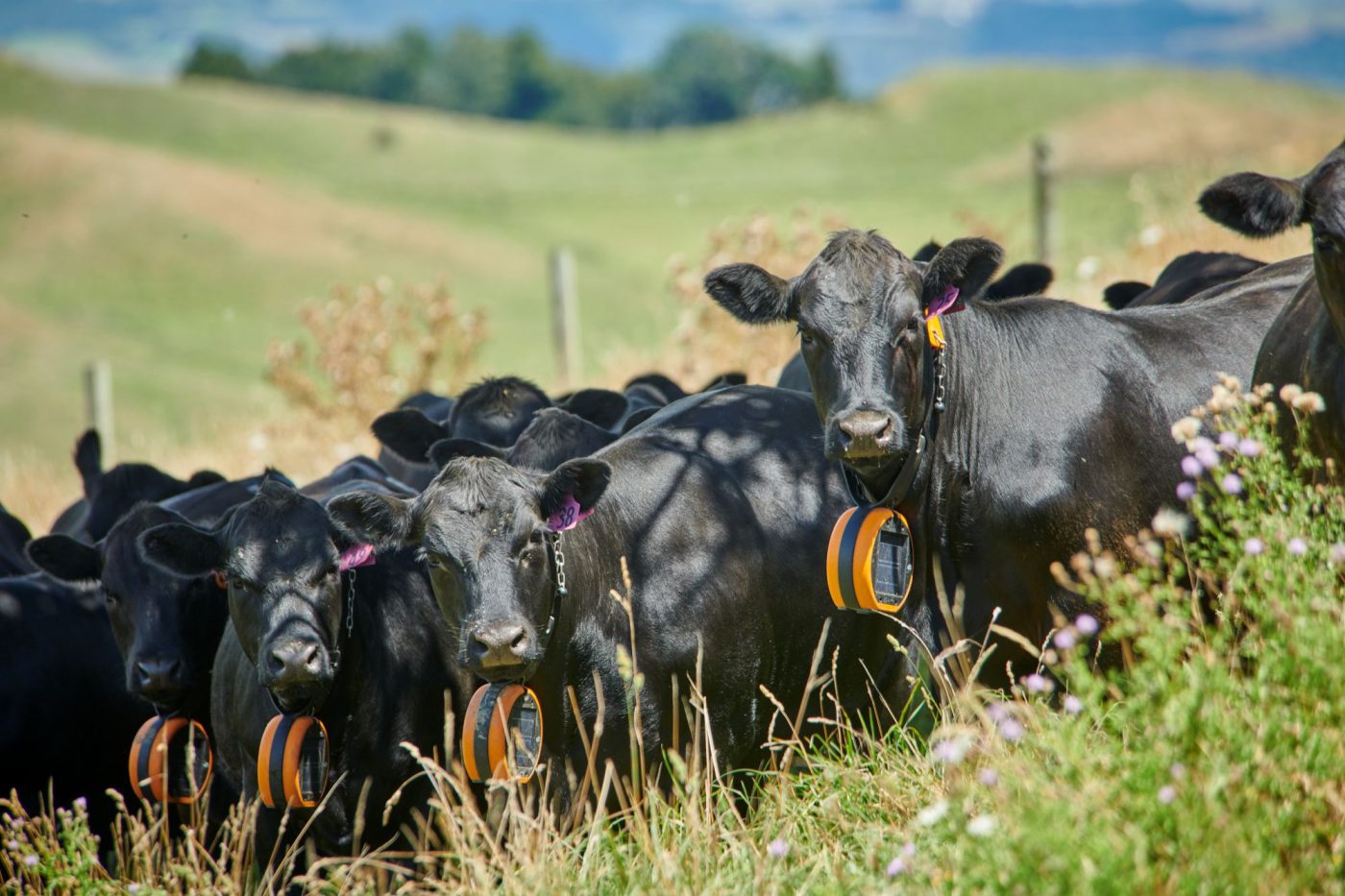
Both Halter and eShepherd collars deliver an audible alarm and vibration to the cattle as they approach the fence, with a ‘beep’ increasing as the cattle get closer to the boundary.
“Cattle learn to recognise those primary queues of sound and the low energy pulse is a secondary queue and cattle will learn that through a training period,” Mr Thomas said.
“The pulses are very small in comparison to fixed electric fences.”
Supplied: Halter
Mr Thomas said the collars improve animal welfare, farm safety and have environmental benefits as areas can be fenced off to allow native animals but keep livestock out.
“Farmers can monitor the health, the fertility status, the whereabouts of their animals if there are welfare issues, they are able to see those things on their device and respond much earlier,” said Mr Thomas.
“It also makes their properties more productive, they can increase their pasture utilisation, they can increase their stocking rates, we have seen weaners putting on more weight earlier on some properties.
“The collars can also be used to help in natural disasters – farmers can move their cattle to higher ground, it allows them to see where their cattle are 24/7, they can get alerts if there are any health challenges and disable all virtual fencing in the case of bushfires to allow cattle to move to safety.
“In the case of severe storms in Tasmania last year a few farmers remotely shifted their cattle away from dangerous tree lines without putting their staff in harm’s way.”
Connectivity improvements have boosted uptake
The other major provider of virtual fencing in Australia is eShepherd which currently operates across Queensland, Western Australia and Tasmania.
Mark Dempsey, Australian Business Development Manager with eShepherd said advancements in connectivity had made virtual fencing more viable and affordable.
“We have some extensive trial work happening in the Northern Territory on remote cattle stations using Starlink with our LoRaWAN technology,” he said.
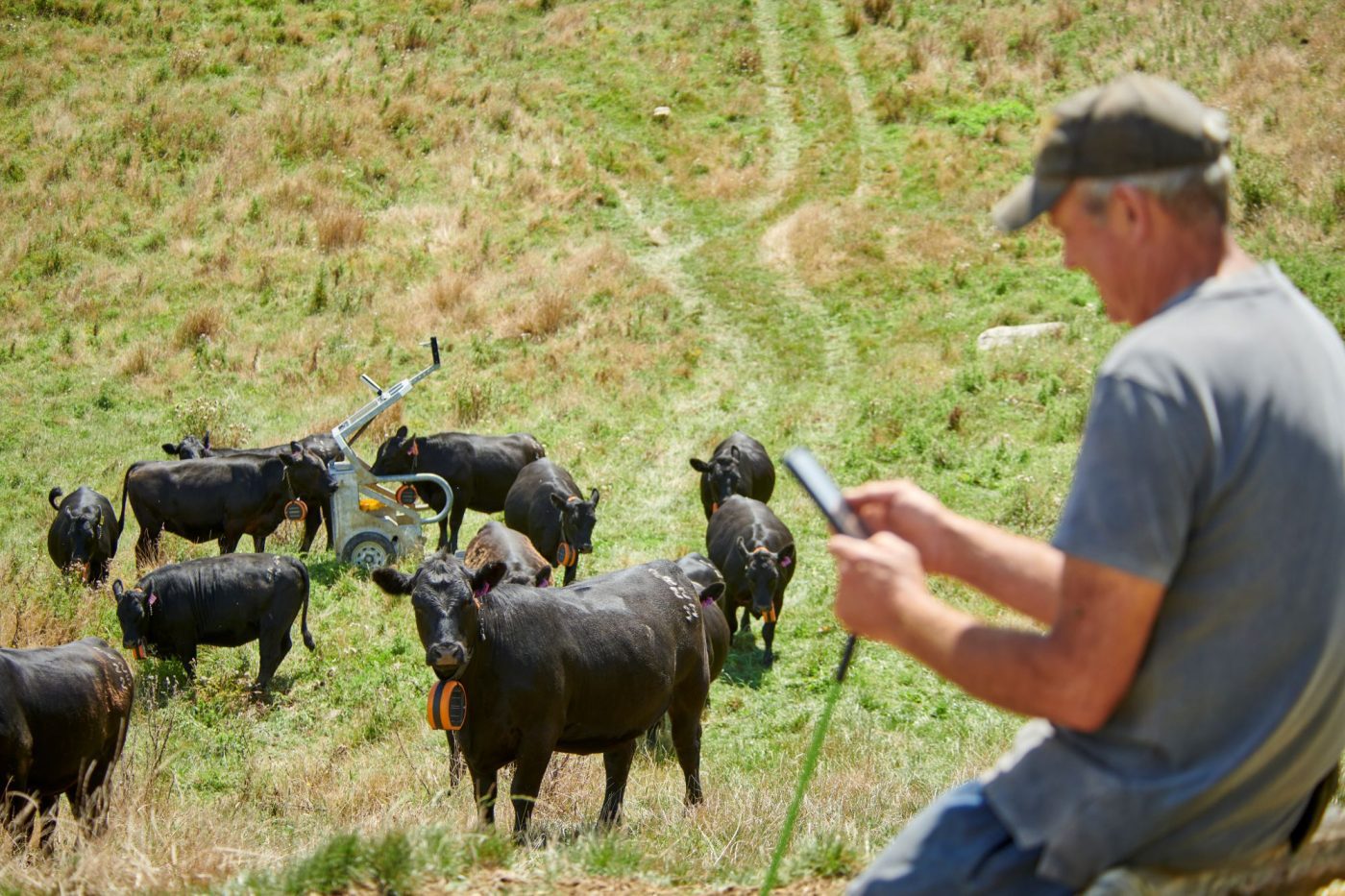
“LoRaWAN technology is essentially a base station on a property and we connect that base station to our cloud via the Starlink in very remote areas, and then that base station connects to our neck bands on the animals.
“Our base stations can be fixed or they can be mobile on trailers. Starlink has allowed them to become mobile which means if producers are leasing country, they can take their fencing with them.
“If the fences on the leased property aren’t great, you can take the eShepherd system with you and then bring it home again so you’re not fencing someone else’s property.
Supplied: eShepherd
Mr Dempsey said in the last 12 months there had been a huge uptake of virtual fencing in Australia with eShepherd growing exponentially in the three states it is allowed to operate in.
“A lot of mixed farming operations particularly in WA have come on board where they are running large, extensive cropping operations and want to integrate cattle, but don’t want to pay for or wait for fencing infrastructure to contain the animals,” he said.
“We are also seeing a lot of producers use the virtual fencing to intensively cell graze by making existing cells even smaller.”
Kent Rochester runs a trading operation in Albany, WA and uses eShepherd to intensively graze his property by shrinking his existing 10-hectare physical cells down to a quarter of a hectare, with 300 animals moving seven times per day.
“It’s mind blowing the results we are now achieving with further intensifying our grazing management. We’ve shifted the average daily gain from 1.2kg per head per day to 1.8kg per head per day, and in the last 60 days we have even seen 2.2kg per head per day on a mob of 500kg plus animals,” Mr Rochester said.
“I have achieved this while creating a 20pc pasture utilisation efficiency allowing me to run more animals on less grass.
“I started with 50 neckbands 12 months ago, but I have recently gone farm-wide with eShepherd so now have 1200 neckbands.”
Supplied: eShepherd
The eShepherd system requires a minimum first purchase of 60 neck bands, which are $385 each that the producer then owns outright. Each one comes with a three year warranty and has an expected lifespan of seven to 10 years.
“There is a monthly data charge on cellular of $2.50 plus GST per neck band. Or if it’s a LoRaWAN neck band, it’s $2 plus GST for the data package. The LoRaWAN version requires a base station, which is $6000 plus GST,” said Mr Dempsey.
Animal welfare concerns
Currently a Federal Government Animal Welfare Task Group is examining animal welfare issues associated with virtual fencing, with a view to harmonise the approach to the use of this technology across jurisdictions.
The subgroup is working towards endorsement and publication of the guide by the end of 2025.
The RSPCA said on its website one of the main welfare concerns is the use of an electric shock and the lack of research regarding the long-term impacts on the animal.
“In order for the technology to be effective, (the shock) must be sufficiently aversive that animals actively try to avoid it,” its website said.
“Other welfare concerns relate to potential irritation and/or ulceration of the skin due to the use of collars, choking on collars, equipment malfunction, and deliberate or accidental misuse.”
The RSPCA said where virtual fencing technology is legally permitted, the use of collars should be subject to regulation that ensures safeguards are in place to protect the welfare of animals, including adherence to standards that ensure appropriate use and avoid animal harm, as well as third-party auditing to verify compliance.
Supplied: eShepherd
States trying to change laws to allow virtual fencing
NSW – In April the NSW Government announced virtual stock fencing would be legalised across the state and would ensure necessary safeguards for animal welfare, biosecurity and public safety are in place for the introduction of the technology.
NSW Minister for Agriculture, Tara Moriarty recently told NSW Budget Estimates the consultation period with interested stakeholders had concluded.
“We wanted to ensure we could get it right, factoring in animal welfare considerations, factoring in biosecurity and other things. The regulation will now be drafted, and I want to have this in place in the next couple of months, before the end of this year,” she said.
Victoria – Victoria’s Minister for Agriculture Ros Spence announced in May new regulations would be prepared for the use of virtual fencing and herding technology for cattle in Victoria.
Agriculture Victoria said new regulations to enable the use of virtual fencing for cattle are expected to come into effect by the end of 2025.
“We know that Victorian farmers are looking to use virtual fencing and herding technology to improve productivity and farm safety, which is why we’re making decisions to ensure farmers have the best technology up to date,” said Ros Spence, Victoria’s Minister for Agriculture.
“It is critical that we have appropriate safeguards in place to protect animal welfare, while enabling innovation on farms and these new regulations will provide a framework to achieve this.”
South Australia – In February the SA government made a commitment to regulate virtual fencing in South Australia’s agricultural sector.
“As part of that commitment, the Department for Environment and Water is consulting with key stakeholders on a proposal to implement virtual fencing solely for the purpose of cattle containment,” said a Department for Environment and Water spokesperson.
“There are potential welfare benefits of virtual fencing when coupled with individual monitoring, enabling producers to manage their herds on an individual animal basis far more effectively.”