
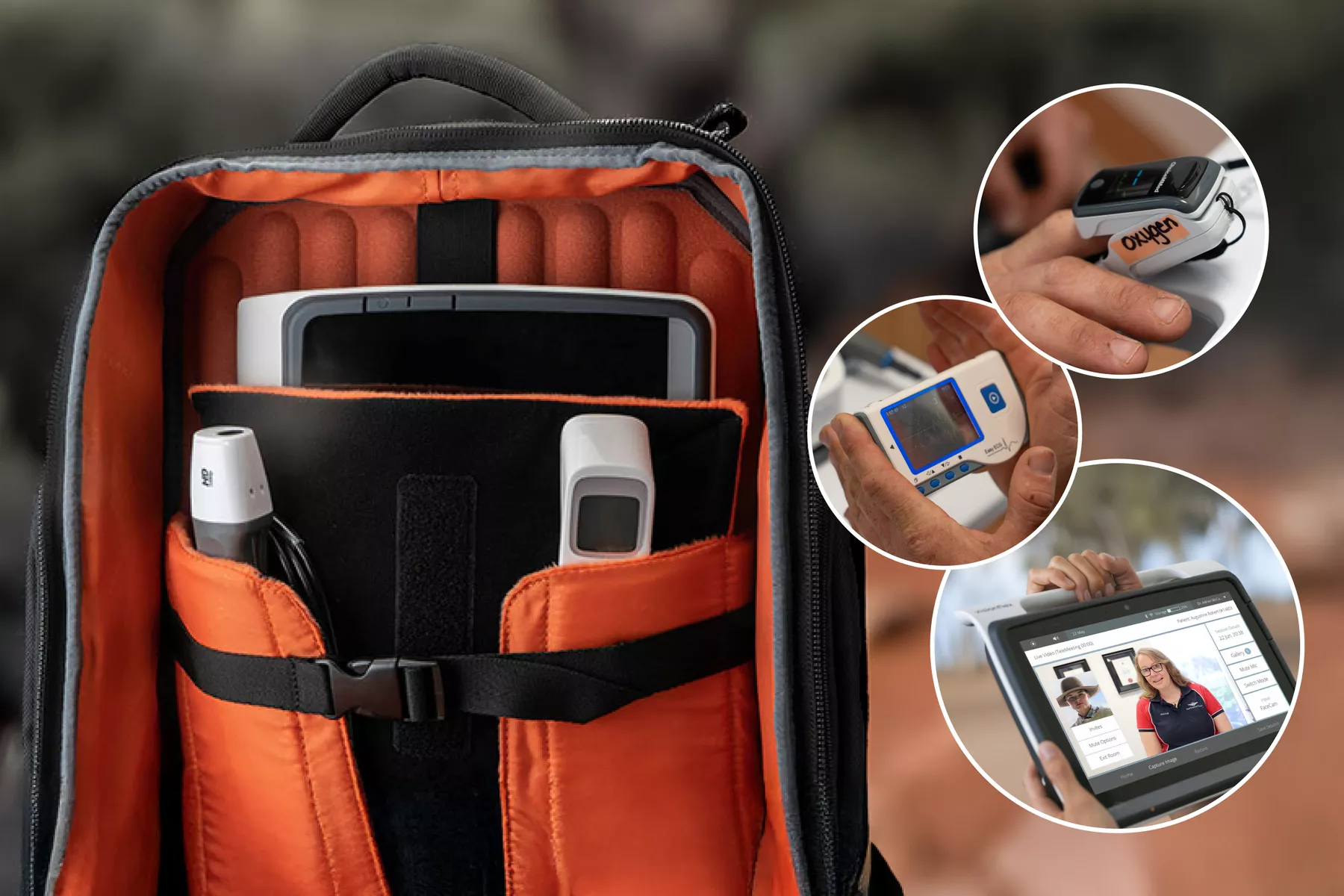
Portable ‘virtual care backpacks’ and desktop telehealth solutions for homesteads will allow on-call doctors to assess critically ill patients, hundreds of kilometres away, in real time.
THE Royal Flying Doctor Service SA/NT will trial an innovative Virtual Emergency Care model on remote cattle stations across Central Australia and the Barkly, improving access to life-saving care in emergencies.
Delivered in partnership with the Northern Territory Cattlemen’s Association, NT Health’s Medical Retrieval & Consultation Centre and Remote Outreach Consultation Centre in Alice Springs, the trial will equip selected cattle stations with portable virtual health technology connecting patients directly with 24/7 clinicians.
Rather than relying on a fixed clinic, the trial will deploy portable ‘virtual care backpacks’ and desktop telehealth solutions.
The telehealth technology combines video consultation, on-site diagnostic equipment and essential medications that can be used in the homestead or out in the field, allowing on-call doctors to assess critically ill patients, hundreds of kilometres away, in real time.
The portable diagnostic tools include an infrared thermometer, HD examination camera, blood pressure monitor, pulse oximeter, electrocardiogram (ECG) and glucometer, all capable of transmitting high-quality images and clinical data directly to the on-call doctor.
The initiative builds on the success of Australia’s first Virtual Emergency Centre established by the RFDS at William Creek in outback South Australia.
Since opening in 2024, the $2 million centre has saved two lives and prevented multiple aeromedical retrievals and hospitalisations.
RFDS Executive General Manager Medical & Retrieval Services Dr Mardi Steere said the trial demonstrates how innovation and partnership can transform emergency care access for rural and remote NT.
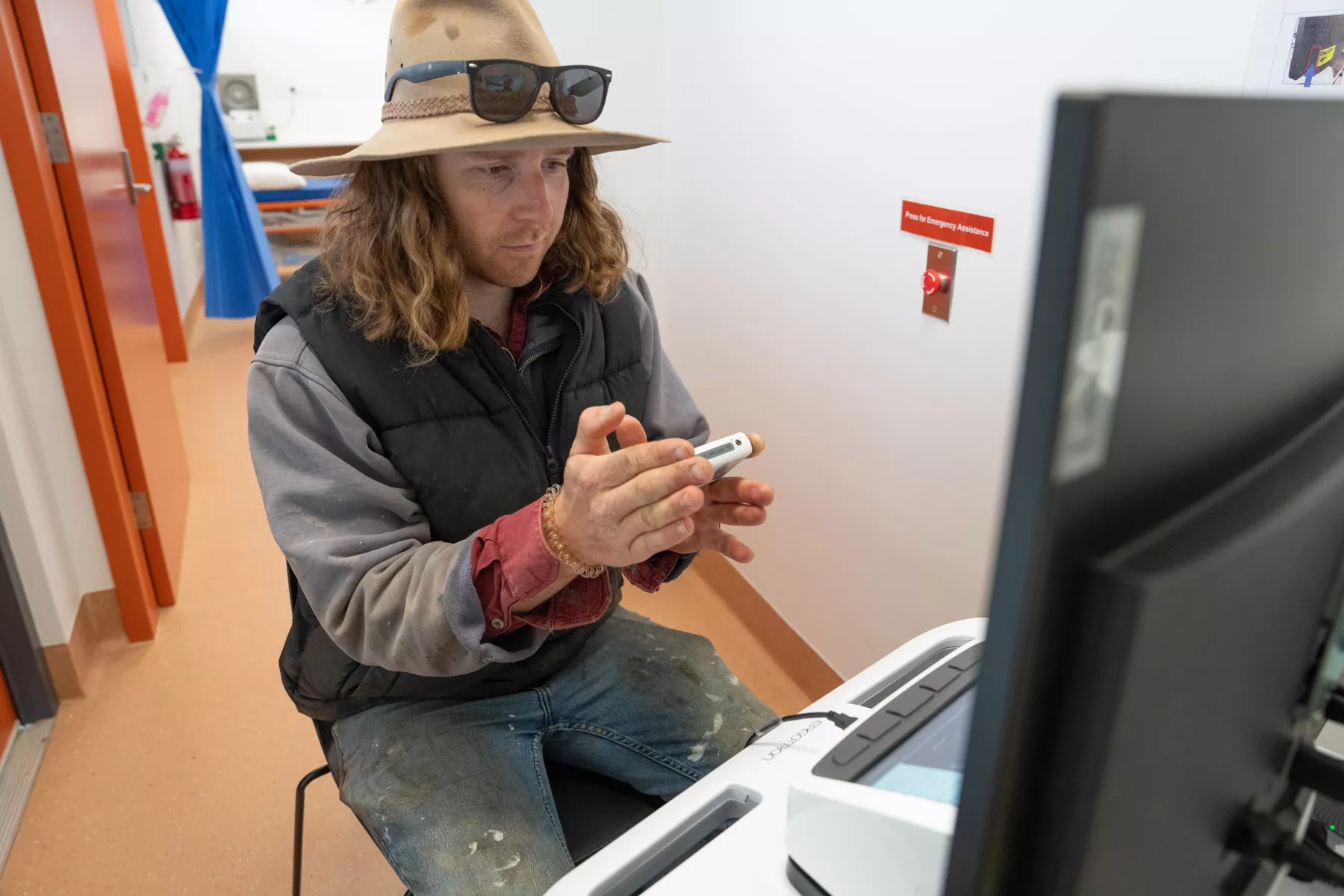
This trial in the NT follows the success of the RFDS’s Virtual Emergency Centre in William Creek in outback SA.
“For Territorians living and working on cattle stations, the nearest medical help can be hundreds of kilometres away and access to timely emergency care is often a matter of life and death,” she said.
“Virtual Emergency Care allows the RFDS to augment MRaCC and ROCC’s expert clinical support directly to the station in real time.
 “Using video, satellite internet, diagnostic tools and essential medications, clinicians can assess, treat and monitor critically-ill patients hundreds of kilometres away – long before an aeromedical team can arrive.
“Following the success of our Virtual Emergency Care centre in outback South Australia, we’re excited to trial a portable model designed for the Territory’s remote conditions.”
“The virtual care backpack and medical chest act as digital critical care companions for stock camps during musters and remote field work,” Dr Steere said.
Game-changer for stations
NTCA Chief Executive Officer Romy Carey said the initiative represents an important step forward for safety and wellbeing across the pastoral industry.
“We’re essentially going to have an emergency department in a backpack, and I know that it’s going to bring a lot of reassurance for those who travel out in stock camps for weeks on end,” she said.
“We’re proud to partner with RFDS and NT Health on this trailblazing initiative for the NT pastoral industry, and we encourage stations across the Barkly and Central Australia to look out for the expression-of-interest process through the NTCA.”
MRaCC and Central Australian Retrieval Service Director Dr Dan Adams said the technology will help enhance clinical decision-making and emergency response across the region.
“MRaCC clinicians already coordinate and support medical retrievals across the Territory, and Virtual Emergency Care provides another powerful tool to support patients before retrieval is required,” he said.
“Being able to see the patient in real time, review diagnostic information and guide treatment remotely can make a critical difference in those early stages of care.
“This trial will help us understand how Virtual Emergency Care can complement existing retrieval services and how it is best embedded to improve outcomes for people living in very remote areas of the NT.”