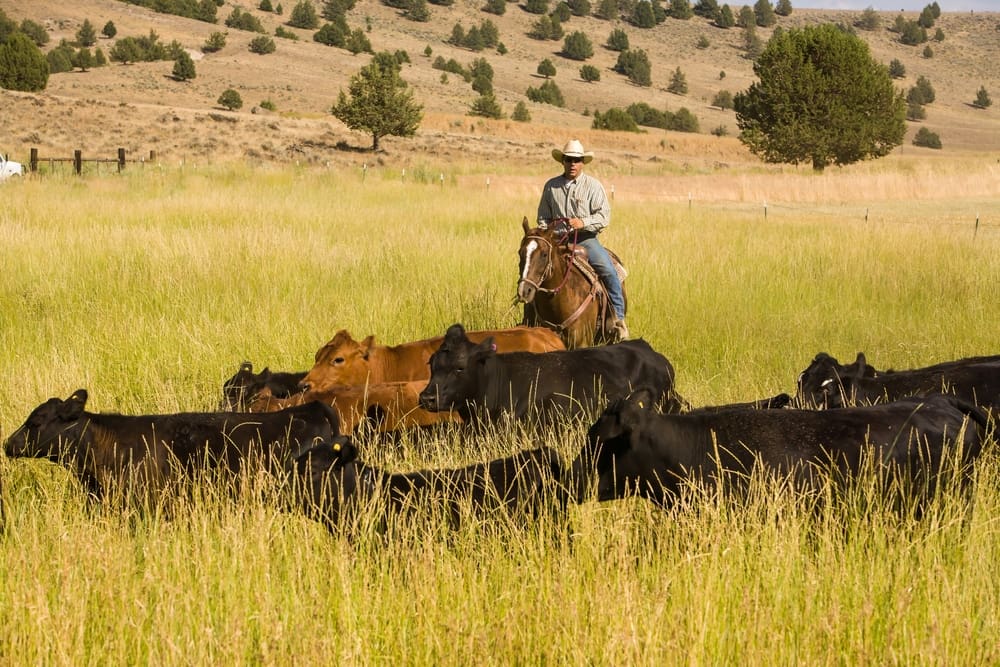
A cowboy herding cattle on a ranch in eastern Oregon. Picture: Shutterstock
The United States has announced plans to build a $750 million facility in southern Texas to combat the threat of New World Screwworm.
The substantial investment aims to breed billions of sterile flies to prevent the flesh-eating parasite from crossing the border from Mexico, where it has been rapidly spreading.
Making the announcement, US Department of Agriculture secretary Brooke Rollins said the new facility will be constructed on an air base in Texas 20 miles from the Mexican border.
It is expected to begin producing and releasing sterile male screwworm flies into the wild within a year. The facility will produce up to 300 million sterile flies per week to combat New World Screwworm.
 Additionally the US Department of Agriculture plans to invest $100m in technology, including fly traps and lures, and enhance border security with “tick riders” on horseback and specially trained dogs to detect the parasite.
She also announced that the US border will remain closed to imports of cattle, horses, and bison from Mexico until the pest is successfully pushed back south towards Panama.
The forced border closure has exacerbated a shortage of cattle in the United States where the herd is now at a 75 year low.
Mexico provided more than one million feeder cattle a year into the US feedlot and beef supply chain before the border was closed due to the spread of New World Screwworm.
A devastating pest
The USDA describes the NWS, which infected US herds in the 1950s and 60s before being eradicated, as a “devastating pest”.
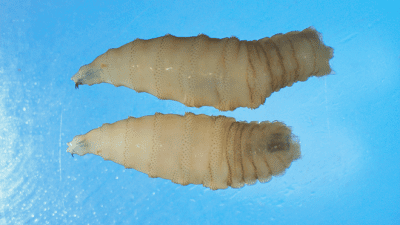
When NWS fly larvae (maggots) burrow into the flesh of a living animal, they cause serious, often deadly damage to the animal.
NWS can infest livestock, pets, wildlife, occasionally birds, and in rare cases, people. It is not only a threat to the ranching community, but also to food supply and national security.
To date, NWS has not been reported or detected in the United States in animals.
USDA’s Food Safety and Inspection Service inspects animals and carcasses at slaughter, including for NWS to keep the food supply safe.
“We have assessed the information on the ground in Mexico and have determined we must construct an additional sterile fly production facility in the United States to stop the northward advancement of this terrible pest that is threatening American cattle production,” Secretary Brooke Rollins said.
“President Trump has made it clear that we must take all necessary steps to protect our country from foreign pests and diseases that threaten our economy and way of life.
American Farm Bureau Federation President Zippy Duvall said it took decades to eradicate the New World Screwworm parasite from within and adjacent to the United States borders more than a generation ago.
This investment was a proactive first step.
“Cattle markets are already volatile and the introduction of New World screwworm within the US would only increase that volatility,” he said.
“We thank USDA and Secretary Rollins for her leadership protecting the domestic cattle industry and we stand ready to help ensure the speedy and efficient construction of this facility and implementation of the updated plan.”
The USDA Animal and Plant Health Inspection Service (APHIS) has technical and informational materials available to escalate communications and public outreach along the United States-Mexico border, particularly with veterinarians and animal owners.
Materials such as pest ID cards and pest alerts raise awareness to be on the lookout for NWS.
APHIS experts have held over 50 meetings with stakeholders to enlist their help and keep them informed about NWS developments, with several more upcoming webinars for members of the animal industry, vets, and state animal health officials.