
NOT since the dark days of COVID in 2019-20 has the export logistics industry for red meat faced such challenges as those being seen this week from the Middle East conflict that’s arisen in the past ten days.
Early last week, 11 Gulf countries closed their airspace and every major sea freight shipping company suspended transits through the Gulf’s Strait of Hormuz, following US military actions and Iranian retaliation.
Ocean container carrier lines like Maersk, MSC and CMA CGM have rerouted more vessels via the Cape of Good Hope (below South Africa), adding at least 14 days to voyage times to Europe, while imposing war-risk or emergency conflict surcharges on freight rates.
The situation has created enormous challenges for Australian export beef and lamb traders so far in March.
Australia last year exported around 44,000t of beef and 115,000t of lamb and mutton to Middle Eastern destinations.
“All we can do is control the controllables,” one exasperated beef export trade contact told Beef Central this morning.
“Nobody knows how long this will last, or what might change overnight, but it is making trading extremely difficult, and adding both risk and cost to the equation.”
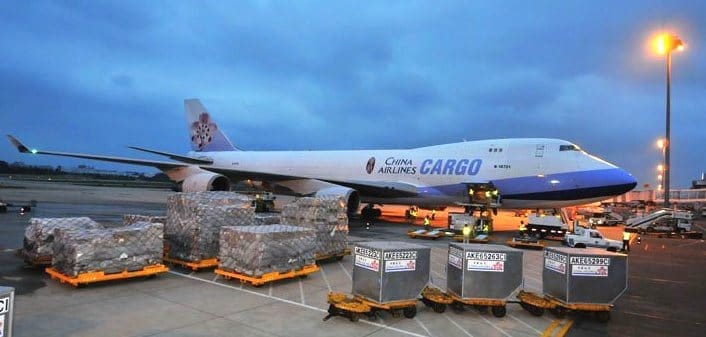
The Iran military action has caused major disruptions to both sea freight and air freight of Australian chilled and frozen beef and lamb into the region, as well as red meat bound for other airfreight destinations that previously used the Middle East airports like Dubai as freight ‘hubs’ out of Australia.
Air freight shipments of Australian chilled beef and lamb destined for markets like the European Union and the UK that used to be hubbed out of airports like Dubai, are now evidently diverting to other airfreight hubs like Singapore – but that is in turn putting extra pressure on logistics channels in Singapore.
One logistics trade contact said some Australian airfreight red meat shipments for Europe were now ‘going around the other way,’ flying via Dallas/Fort Worth and Frankfurt in a rarely-used, more expensive trade route.
“From a logistics perspective, any aircraft heading to Europe from Asia now have to take a new flight path. That means carrying more fuel and reducing the payload further, which means rates go up. Suddenly going via the US looks more attractive.”
Limited airfreight service restored
While all Middle East international airports were closed last week, a glimmer of good news emerged on Thursday, when Emirates announced the restoration of limited air freight services out of Australia, into Dubai.
However those services are only into and out of Perth, Melbourne and Sydney – not Brisbane, which has historically been the biggest embarkation point for Australian beef airfreight exports into the region.
The logistics trade contact said this was likely considerably less than half the airfreight access previously seen, and was attracting a substantially higher freight cost – up around 20pc on rates seen before Trump attacked Iran. Service providers were claiming ‘force majeure’ provisions.
“The freight rates are not as high as those seen during COVID yet, but they are heading in that direction,” the contact said.
“And those restored flights are still subject to change,” he said. “Some were in fact cancelled over the weekend, but if that happens, that cargo is rolled over to the next day.”
“But it’s better than nothing. Services out of Melbourne are already full, each day. It’s not only being soaked up by cargo, but also because the aircraft have to take extra fuel, in case of re-routing, or having to circle for an available landing slot. The Dubai airport has become very congested.”
Seafreight
Outside the airfreight channel, there have been numerous reports of Australian seafreight product destined for Middle Eastern customers stuck on boats that now cannot unload – the future of which is yet to be determined.
“Some customers in countries like Dubai are saying they still need beef and lamb – there is continuing local demand for it – whereas others in countries like Bahrain are saying don’t send any product: demand is down and restaurants are shut. And the Middle East is going into its summer period now, so technically demand would normally be a little quieter.”
Chilled greatest risk
A contact in the logistics industry said chilled containers were now the most heavily exposed to price impact, for containers stuck in transit.
“Some owners may resort to turning down the refrigeration in the containers – effectively turning chilled meat into frozen, as a means of avoiding shelf-life issues on chilled meat. That obviously damages the value of the product.”
“In some cases, it’s probably the only strategy to salvage the product – but then it cannot be technically be sold as a frozen product, because the carton end-label is still going to say ‘chilled.’ Labelling issues may be a nightmare, especially if a product is diverted into another market using a different language, for example.”
Other reports on Friday suggested Brazilian beef exports heading into the Middle East (Brazil is a major beef exporter to the region) are now being diverted into other export markets, facing congestion with product out of Australia.
“The only good thing is that we have such heavy demand out of the US at present, to help soak up some of this surplus product – both commodity beef and higher quality product,” an Australian export contact said this morning.