

Image: Shutterstock
Country Australians have just a few days left to have their say on a Federal Government proposal to reduce speed limits on rural and regional roads.
The Federal Department of Transport is seeking feedback on a proposed reduction of the speed limit on roads outside of built-up areas where there are no sign-posted speed limits.
A consultation paper released in conjunction with the review suggests speed limits could be reduced to 80km/h on sealed roads and 70km/h on unsealed roads.
The Department says the move is being considered as a measure to help improve safety, stating that the risk of being killed on a regional or remote road is 11 times higher compared to a road in a major city.

Default speed limits on roads outside of built-up areas could be reduced. Image: Department of Infrastructure, Transport, Regional Development, Communications, Sport and the Arts
It said that in 2024 there were 1294 people killed on Australian roads and more than 30,000 people seriously injured, with speed a major factor in serious and fatal traffic crashes.
“Your feedback will inform updates to the Australian Road Rules for sealed and unsealed roads outside of built-up areas, which can be considered by state and territory governments,” the Department’s consultation page states.
The proposal is to change the “model Australian Road Rules” which form the basis of road rules in each Australian State and Territory.
The Australian Road Rules state that the default speed limit on roads outside of built-up areas is 100km/h.
The Department says some roads outside of built-up areas, especially in regional and remote areas, may not be safe to travel on at 100km/h.
“Many of Australia’s regional and remote roads are not sealed, and may be dirt or gravel tracks.
“Other roads may have sealed surfaces, but may be in poor condition, or lacking the road features that would enable safe travel at high speeds.
“Travelling at up to 100km/h on roads such as these may not be safe and will increase the risk of crashes, death and serious injuries. Reducing travel speed on these roads can help prevent the tragedy of road crashes, injuries and deaths, by setting a speed limit that is safe for drivers and people using the road.”
It says the Regulatory Impact Analysis currently underway will consider the options, costs and benefits for lowering the current default speed limit in the Australian Road Rules, and introducing a new default speed limit specifically for unsealed roads.
Littleproud slams “lazy Government”
Federal Nationals Leader David Littleproud, speaking to Regional Sky News from Goondiwindi this morning, slammed the proposal as “lazy Government”.
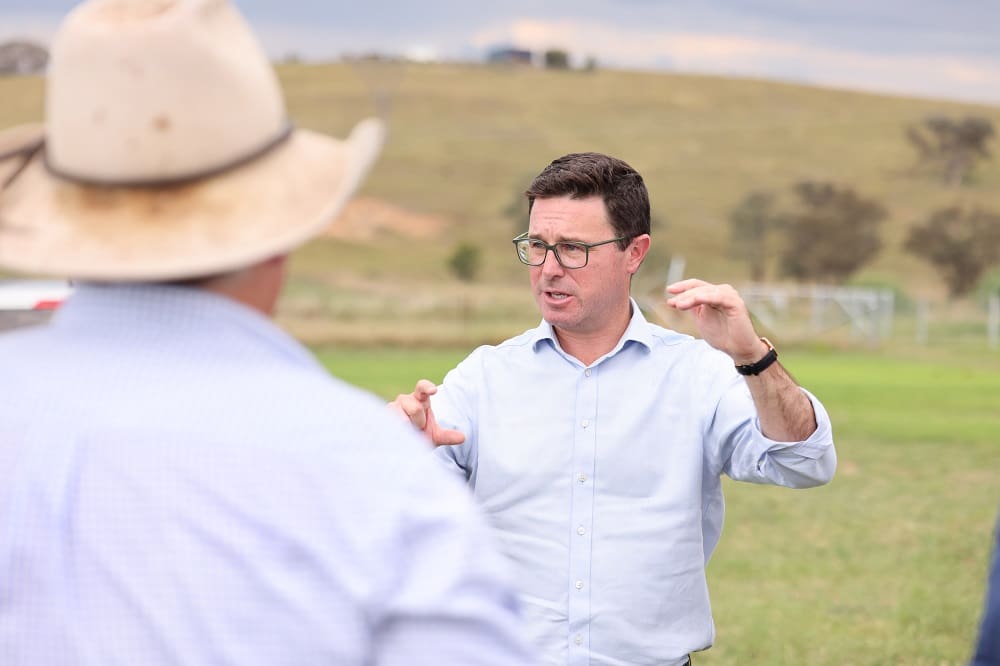
David Littleproud
“Regional Australia have lost over $3300 a kilometre in federal funding to maintain our roads, our national highways.
“And just west of here, instead of fixing the road between Goondiwindi and St George, they’ve simply put permanent signs up to say, ‘Rough surface, slow down’.
“So the next step is, because if people aren’t slowing down, they’re going to reduce the speed limit. This is lazy government.
“This is about saying regional Australia doesn’t matter and that we’re not going to fix your roads, we’re going to let them crumble and you’re just going to have to drive slower.
“Technology in our vehicles means that we can drive safer at the speed limit of 100km/h and potentially places above that.
“So why wouldn’t we use that technology? Because you know what that’s going to mean for you that live in capital cities is your food comes from this part of the world. And if we don’t have the materials that we need to get your product from a paddock to your plate, then you’re going to pay more.
“And this is just going to show that there are two classes of citizen in this country. We’re the forgotten Australians out here and they’ve not just put in people’s lives but they’re actually also tearing up our economy of who’s generating the wealth in this country.”
The window for public feedback closes this coming Monday, October 27.
For more information or to have your say on the Department website click here.