
Fuel price increases and availability, plus global geopolitical uncertainty have for the first time topped the list of factors negatively impacting Australian beef producer sentiment, the latest MLA producer intentions survey shows.
A total of 3055 producers from across Australia respond to the latest Beef Producer Intentions Survey managed by MLA, conducted between the end of March to 11 May (nb before the impact of latest weather events).
Among factors causing a more negative outlook, the dominant points raised by producers included
- Fuel price increases and/or shortage / availability (42pc)
- Middle East war / Iran conflict / global geopolitical instability (36pc)
- Dry / drought conditions (35pc)
- Cost of production / input costs (excluding or not mentioning fuel) 30pc.
It’s the first time since the Intentions survey was re-launched in 2023 that external influences like fuel prices have topped the list of concerns, over more traditional forces like weather.
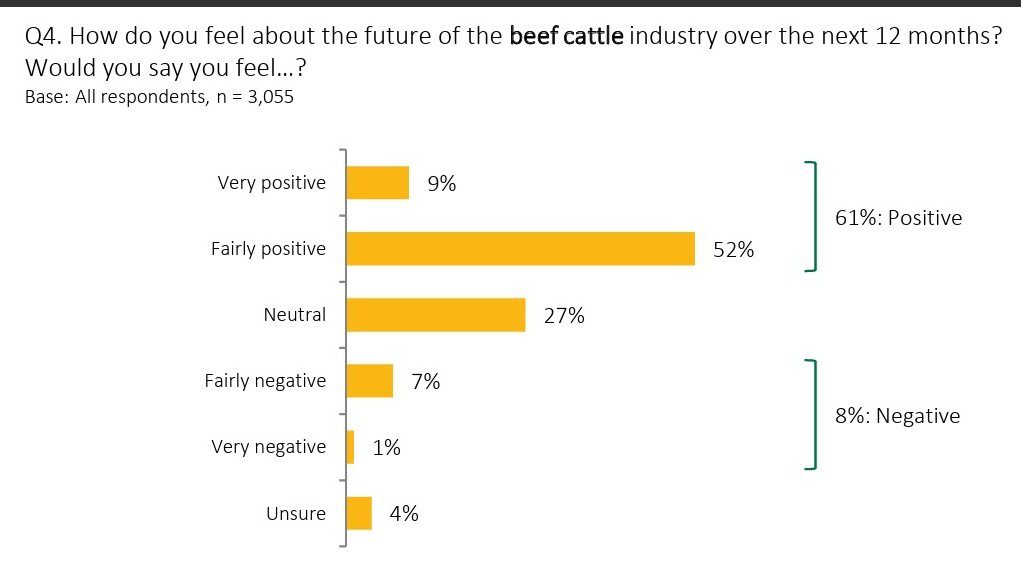
Despite that trend, the majority of beef producers (61pc) are optimistic about the next 12 months, with 8pc indicating a negative outlook, with net sentiment holding at +53 (50 being the breakeven between optimism and pessimism.)
Factors causing a more positive outlook for the year ahead included:
- Improving cattle prices (51pc)
- More rain (17pc)
- Stronger seasonal conditions (16pc)
- Domestic and global beef demand (14pc)
Producer intentions varied across states based on pasture conditions, with southern producers looking to increase herd numbers.
Among other key statistics identified in the survey, 26pc of producers plan to grow their herd size, while 54pc will maintain current cattle numbers, and 21pc will reduce herd size.
The results, weighted to reflect the national producer base, provide a comprehensive snapshot of industry sentiment, herd composition and production intentions.
MLA senior market information analyst Emiliano Diaz said the findings reflected a resilient industry navigating a complex operating environment.
 “Despite ongoing seasonal and market variability, Australian beef producers continue to show strong confidence in the year ahead,” Mr Diaz said.
“While sentiment has moderated slightly from the highs seen in late 2025, it remains well above long-term averages, highlighting the underlying strength of the sector.”
Sentiment remained positive across all states, with Victoria and South Australia recording the highest levels (both +66), followed by Tasmania (+63), Western Australia (+54), Queensland (+50) and New South Wales (+45).
Western Australia recorded the largest year-on-year improvement, reflecting a notable lift in confidence.
“These results show confidence is broadly shared across the country, even though seasonal conditions and operating environments vary by region,” Mr Diaz said.
“This is particularly evident in Western Australia, where producer sentiment has strengthened considerably over the past 12 months.”
Herd size intentions figures were in line with results from the same time last year and point to a cautious but steady approach to herd management.
“Producers are carefully balancing decisions to rebuild or maintain herds against factors such as seasonal conditions, input costs and market opportunities,” Mr Diaz said.
“The data shows most producers are prioritising stability, with gradual herd growth where conditions allow rather than large-scale shifts.”
The survey estimates the national grassfed adult cattle herd at approximately 29.7 million head as at 31 March. Queensland remains the largest cattle-producing state, accounting for around 46pc of the national herd, followed by New South Wales at 18pc.
Strong levels of cattle turnoff were reported in the first half of 2026, with producers indicating total sales of about 5.2 million head, split relatively evenly spread between the first and second quarters.
This reflects both seasonal pressures in some regions and continued strong demand across domestic and export markets.
“Producers are actively managing stock levels in response to local seasonal conditions, particularly in areas affected by dry weather, including northern NSW and southern Queensland,” Mr Diaz said.
“At the same time, strong global demand and tight supply are creating opportunities, which is helping to support overall confidence.”
Mr Diaz said the results reinforce the strength of the Australian beef industry as it navigates a period of both opportunity and challenge.
“Global market conditions remain favourable for Australian beef, even as producers manage ongoing risks such as climate variability and input costs,” he said.
“The consistency in producer sentiment and intentions underscores a sector that is well positioned for the year ahead.”
The Beef Producer Intentions Survey was developed by MLA to provide reliable industry insights and is used by both MLA and the Australian Bureau of Statistics. It is also a key input into MLA’s beef industry forecasting models.
Click here to view the full report