
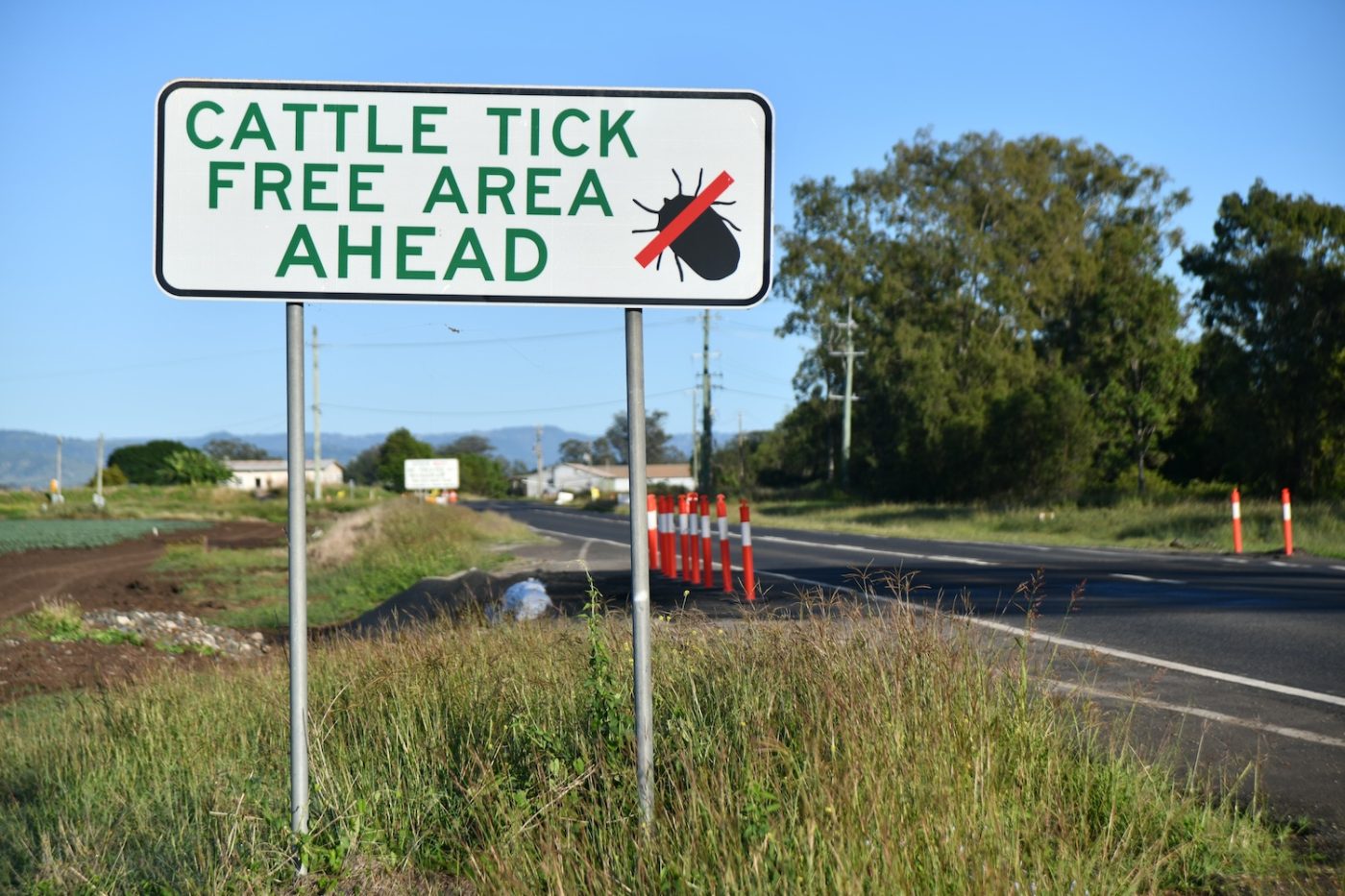
Signage for the Cattle Tick Free Area Ahead for the Lockyer Valley at Gatton, Queensland. Australia. Beef and dairy cattle transported to these areas must be treated for ticks.
TICKS have been making headlines in the cattle industry as producers grapple with outbreaks in previously “clean” areas and debate how best to manage the growing problem.
But ticks have also been at the centre of headlines across Australia in the past week for a very different reason.
A coroner last week determined that a teenager’s 2022 death was caused by a tick-induced meat allergy – the first time a death from that cause has been recorded in Australia.
It is also only the second confirmed death from a “mammalian meat allergy” in the world, after a pilot in New Jersey was ruled to have died from the same cause last year within hours of eating a hamburger at a barbecue.
In a 24-page report handed down last Thursday, NSW Depute State Coroner Carmel Forbes ruled that 16-year-old Jeremy Webb died after eating beef sausages on a camping trip in NSW from an anaphylactic reaction to mammalian meat, which had triggered a severe asthma attack.
The report detailed that as a young child Jeremy’s family moved to a large block of land on the NSW Central Coast surrounded by dense bushland, where he experienced a number of tick bites. At around the age of 10, he began to suffer adverse reactions to eating red meat, including nausea and shortness of breath. His family (his parents are both doctors) concluded that he likely had mammalian meat allergy caused by tick bites.
Following an autopsy and inquest, the coroner attributed Jeremy’s death directly to a tick-induced mammalian meat allergy.
There have been reports since the early 2000s of people in the United States contracting mammalian meat allergy from the lone star tick, but recent fatalities in the both the US and now Australia have sparked a rise in media reporting of the issue.

PhD Student Emily Smith
In response to reader questions for more information about the tick-induced condition, this week Beef Central spoke with three scientists from the University of Queensland and CSIRO to learn more about the science behind tick-induced meat allergies.
Dr Andrew Walker and PhD student Emily Smith from the Institute of Molecular Bioscience at UQ and Dr Alexander Gofton from CSIRO are leading research into how tick bites can cause “mammalian meat allergies” and the types of ticks likely to be responsible.
Here are some of the key points researchers explained when Beef Central spoke with them this week:
The link between tick bites and meat allergies was first discovered in 2007
Allergic disease expert Professor Sheryl van Nunen from the University of Sydney was the first to clinically recognise the link in Australia, but prior to that clinical recognition, it has in effect “always been here”, Dr Gofton noted.
Unclear why some are affected and not others
It is still not known why tick bites can induce the allergy in some people and not others.
Mammalian meat allergy is a very rare condition but research shows it is increasing, and Australia already has some of the highest per-capita rates of alpha-gal sensitisation in the world.
Analysis of 11 years of data to 2025 showed that annual case numbers in Australia remained relatively stable until 2020, but have since grown rapidly, on average 22 percent year on year.
 By 2024, 787 people nationwide tested positive to alpha-gal antibodies.
The researchers estimate that about 90 percent of that increase is down to greater awareness and more testing for mammalian meat allergy.
That means about 10 percent can be attributed to real increase in disease prevalence.
“We don’t exactly know why this is happening,” Dr Gofton wrote in an article on The Conversation. “But hypotheses include a run of mild summers/wet winters leading to higher tick numbers, or greater exposure to ticks as people move to the bush or urban fringes.”
Older age groups more likely to be affected
A key focus of Emily’s PhD studies involves research with major pathology providers across Australia to gain a greater understanding of the prevalence of this issue in this country.
One pattern showing up in the research so far is that older Australians tend to have higher risk of developing a mammalian meat allergy, with one hypothesis being that may be due to the cumulative effect of multiple tick bites over a long period of time, but that is still being explored.
The paralysis tick is the specific cause
In Australia it is specifically the paralysis tick that’s known to cause this meat allergy, Emily Smith said.
Paralysis ticks are a distinct species to cattle ticks, although both can infest livestock.
The NSW DPI notes that paralysis ticks are highly toxic and dangerous to pets and livestock, whereas cattle ticks are primary vectors for cattle diseases.
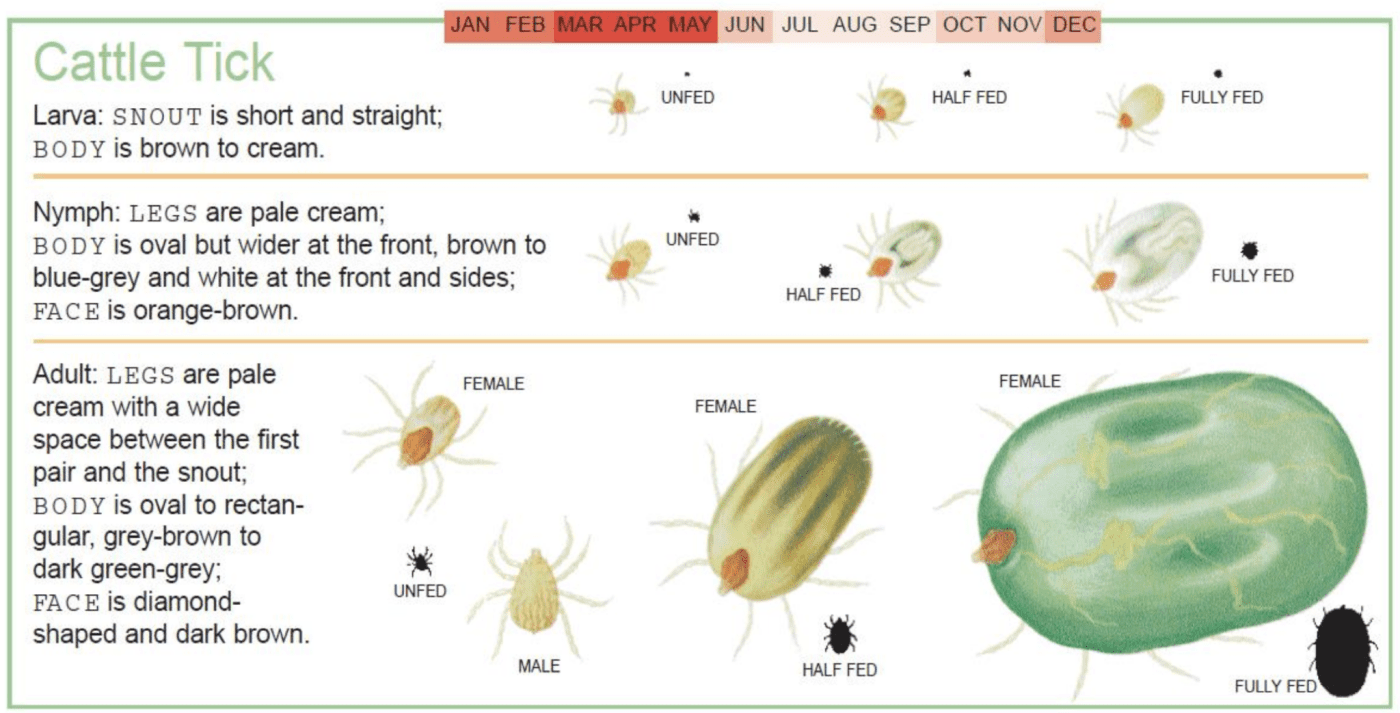
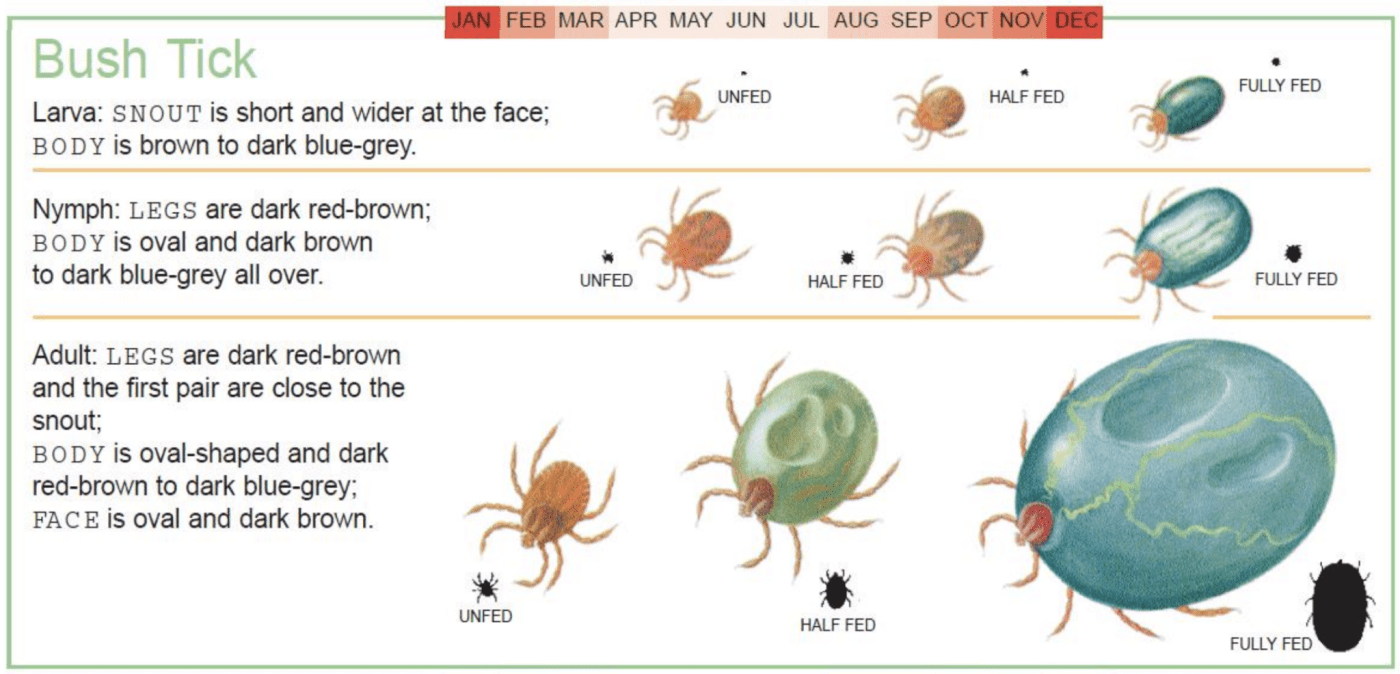
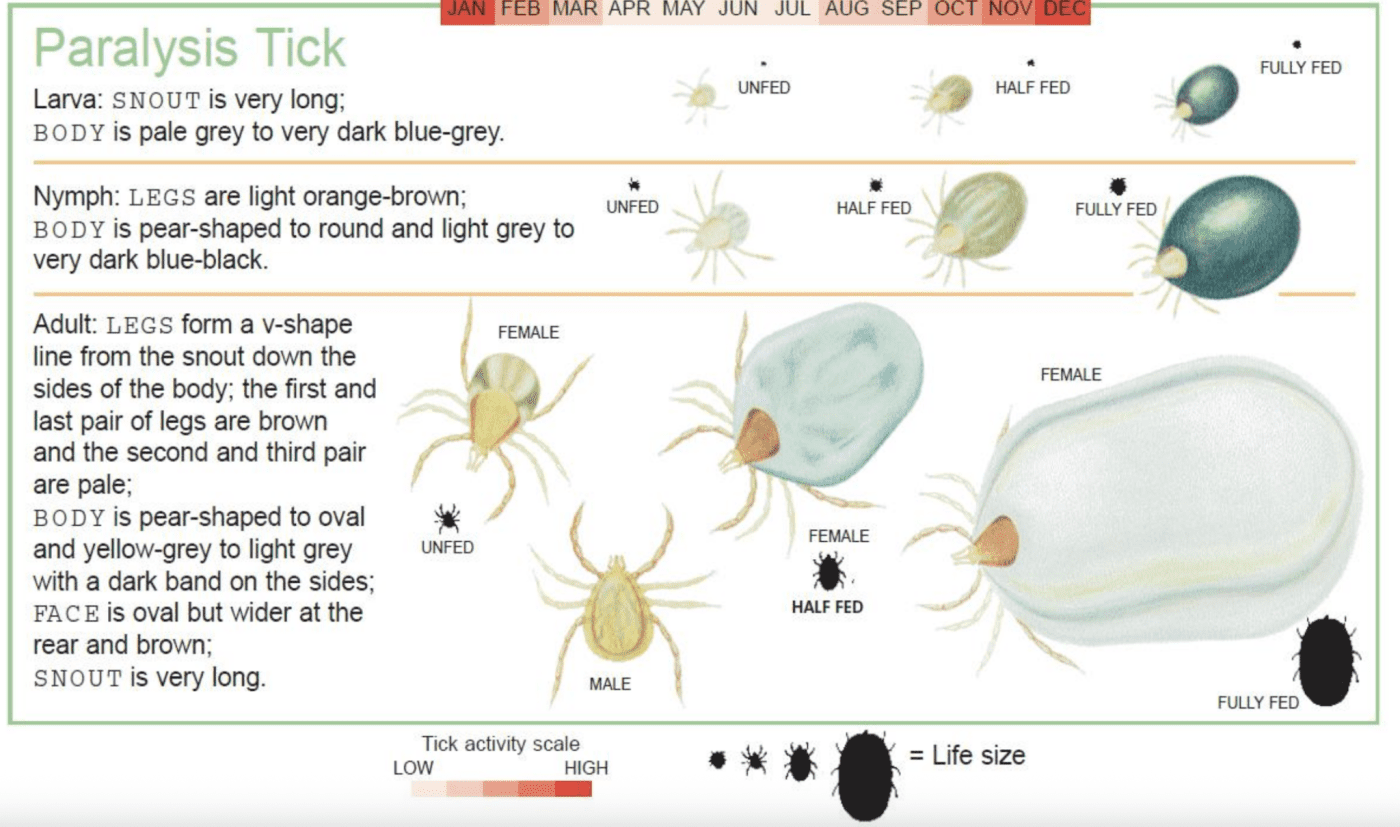
Image Source: NSW DPI
The paralysis tick’s distribution is restricted to the eastern side of the Great Dividing Range, along Australia’s eastern coast, from about Cooktown in the north to Lakes Entrance in Victoria. Abundances and habitat suitability vary within that distribution area, with higher burdens in more humid areas, such as north Queensland. Hinterland regions of south-east Queensland and northern NSW, the northern beaches regions of Sydney, and NSW south coast in particular have also shown disproportionately high case numbers.
In drier areas ticks desiccate and dry out and cannot survive when they’re not attached to a host.
The paralysis tick is regarded as the most medically significant tick in Australia, Emily noted, and the one that causes the vast majority of tick bites. “If you’ve ever had a tick on the East Coast, it’s almost certainly that tick,” Dr Andrew Walker added.
“It’s also the tick that kills dogs and cats by paralysis, and causes tick typhus, among other things.”
Emily said she is also trying to investigate the reason why the lone star tick in America and the paralysis tick in Australia do the same thing on different continents, but with different machinery.
The allergic reaction is caused by specific sugar molecule
The allergy that develops in some people following tick bites is to a specific kind of sugar molecule known by the shortened name Alpha-gal.
Alpha-gal is present in the meat of mammals and their products such as dairy and gelatin, and it is also present in tick saliva, but it is absent in humans.
“When the paralysis tick bites us, it can allergically sensitise us to this sugar, and then after that, eating meat will then trigger the allergic response,’ Emily said.
Dr Gofton added tick saliva contains the alpha-gal molecule but also a whole range of other compounds designed to fight our immune systems so it can stay attached and feed for longer.
“And in that struggle of the tick salivary compounds fighting our immune system, in some people, and we don’t know why some people are not others, the immune system is switched or tricked into producing antibodies to Alpha gal instead of to the tick, and that’s where this sort of allergic sensitisation develops.”
Meat allergy not believed to be permanent
How long can Alpha-gal sensitivity remain in a person’s system after a tick bite, and does this risk fade over time?
Dr Gofton said once someone is sensitised, provided they are able to stop getting bitten by ticks and are able to modify their lifestyle, the amount of specialised antibodies (immunoglobulin E) in their blood that react to the “alpha-gal” sugar molecule will go down over time.
“That can take three, four or five years, and there will be a point in a lot of people’s treatment and management where, under the guidance of a clinician, a GP or specialist, they might start re-introducing meat.”
Not everyone follows the same pattern. After receiving a tick bite, some people don’t immediately become allergic
“What we see is that the peak of people becoming allergic are actually in middle age, and so we’re not sure whether that’s due to immune changes that happen throughout people’s lives, or potentially due to that compounding effect of having tick bites throughout their life. and then the allergy manifesting later.
“So there’s two facets, but certainly, if someone is diagnosed, there is a path to recovery. It just might take four or five years.”
Tips on avoiding tick bites
Tips on preventing tick bites include:
- wear long-sleeved shirts and long pants when walking or working in areas where there are ticks
- tuck pants into long socks
- wear a wide-brimmed hat
- wear light-coloured clothing
- use insect repellent, particularly ones containing DEET.
And if you are bitten by a tick, don’t use household tweezers to remove it. Use the methods described in this video instead.