
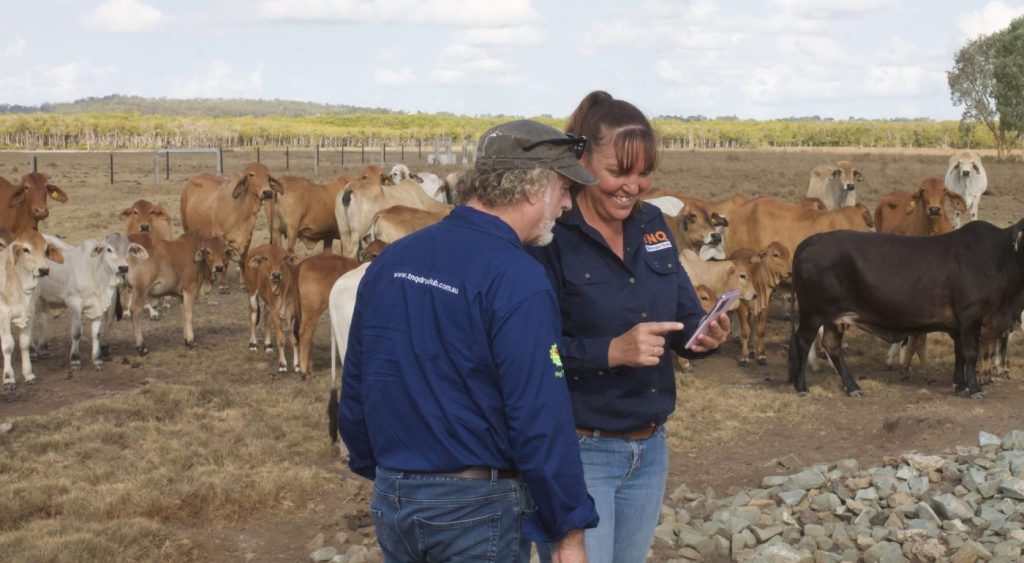
A FIRST-of-its-kind Artificial Intelligence research assistant designed specifically for Queensland beef producers is about to move into pilot testing.
The ‘chatbot’ uses cutting-edge AI and natural language processing to offer beef producers human-like responses to questions and prompts.
Developed across three major Australian universities, the BeefVantage tool gives region-specific recommendations for issues such as reproductive efficiency, drought management and biosecurity.
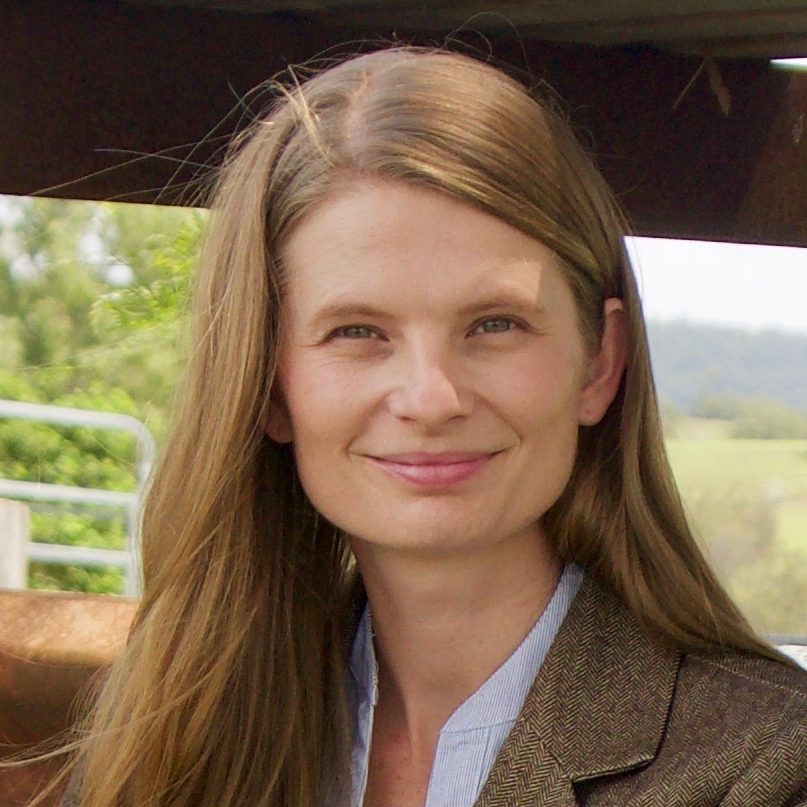
PhD student Carrie-Ann Wilson.
The seven-member team from James Cook University, Macquarie University and the University of Sydney was led by PhD student Carrie-Ann Wilson.
Drawn from the city to living in Queensland’s Scenic Rim region southwest of Brisbane, Ms Wilson has worked more than 15 years in IT and has come to admire the possibilities of agtech.
When she is not studying, running her business or her family, she is the Knowledge Adoption Officer at the Tropical North Queensland Drought Resilience Adoption and Innovation Hub (TNQ Drought Hub), funded by the Future Drought Fund.
“Over the years I’ve become really interested in watching how people make decisions, especially around technology,” she said. “There’s a lot of exciting technology coming out in agriculture now, but there’s also some hesitation from farmers to adopt it.”
She explained the need for beef-centric AI software.
 “While tools like ChatGPT serve broad queries, they lack the precision and contextual relevance required for rangeland beef production, often generating plausible but inaccurate outputs,” she said.
Key BeefVantage features include a user-friendly interface with personalised accounts and saved chats. “For example, producers can review previous queries related to grazing strategies, enabling continuity in decision-making,” Ms Wilson said.
Preliminary testing of the chatbot had demonstrated its effectiveness in presenting complex scientific insights in an actionable format.
“It successfully bridges the gap between academic research and practical applications,” she said.
While the chatbot would be immediately useful for smaller producers, she said there could also be value for larger, more sophisticated operations.
“Down the track, there’s potential to explore more tailored versions for larger organisations,” she said. “But right now, it’s about making external knowledge easier to access and apply.
“It can support new staff or act as a quick reference tool to explore best-practice advice – presented in clear, simple language.
“But more than that, it encourages curiosity. By making trusted knowledge easy to find, it creates space for people to explore ideas and engage with research – without spending hours chasing the right answer.”
Ms Wilson said the tool faced challenges such as patchy in-paddock connectivity and varying levels of digital literacy.
It also advices users to consult qualified professionals for veterinary or animal welfare concerns. Rather than replacing human expertise, the tool is designed to act as a fast, reliable research companion – helping users find the right information and connect with appropriate support.
Producer evaluation opportunity
The next phase involves human evaluation to compare and validate results and ensure functionality.
“We have completed initial evaluation and are now looking for 20 to 30 interested producers and extension staff to help test the accuracy of information provided. Testing can be done from any device with internet access – we’re looking for curious, practical-minded people willing to explore what the tool can do.”
The technology is both scalable and transferable, she said. “It has the potential to be rolled-out to other regions and for other agricultural sectors.”
Others in the development team were Usman Naseem, Zhihao Zhang, Hao Lu, Linwei Tao, Rachel Hay and Yvette Everingham. The project was funded by the JCU Sandpit to Seed Fund with support from the TNQ Drought Hub.
Producers interested in participating in the BeefVantage project, or to learn more, can click here to sign up for updates, or contact Carrie Ann Wilson here.