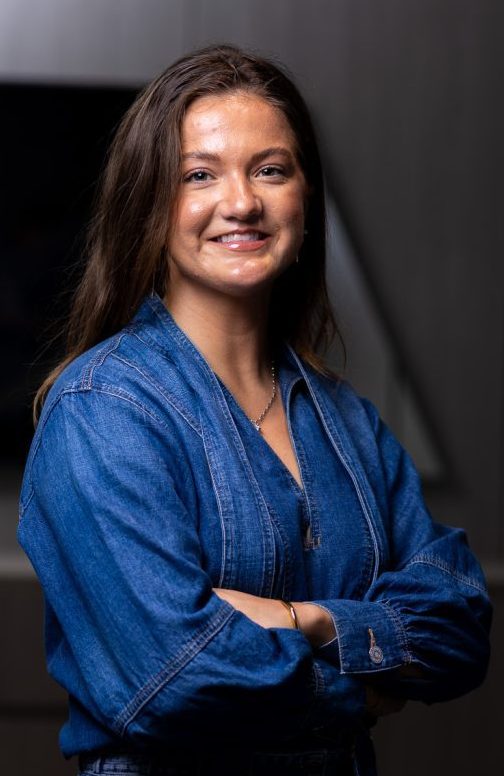
Millie Unthank
Using a monthly diary format, Graeme Acton Beef Connections program member Amelia ‘Millie’ Unthank is outlining her experiences and learnings as part of the mentoring program in the lead-up to Beef Australia next May.
Here’s Millie’s second monthly diary entry, with earlier entries available at the base of this page ….
I DIDN’T know Graeme Acton, but I have found myself in a room shaped by him.
The Graeme Acton Beef Connections program is built from his way and values. I can feel the program shaping me as a person with every engagement, and it feels like legacy.
What is legacy?
Legacy is broadly defined as anything handed down from the past. This can take many forms – a physical asset, an abstract cultural influence, or an impact on future generations.
But a conversation with Caitlin Herbert, a fellow Graeme Acton Beef Connections mentee, recently made me realise I’d been collapsing two different ideas into that one word. Legacy is what is built, but heritage is what is received.
Caitlin applied for the Beef Connections program after observing the high calibre of mentees and mentors who have participated in the program previously. Her project is all about exploring decision making capabilities, inspired by her experience in making large impactful decisions quite quickly within her intergenerational family business.
Caitlin puts it simply, yet powerfully: “I think we often think that heritage means this is the way we’ve always done it, it’s a big thing in farming, and I actually think legacy is quite the opposite.”
In beef terms: a block of land, a bloodline, the stockman identity, bush cattle culture, the opportunity to participate in Beef Connections; they’re all things we receive – they existed before us.
They are part of Australian beef heritage. Then there’s the deliberate stuff like engaging with EBVs and adopting sustainable grazing management – the decisions one generation makes on purpose that go on to shape the next. That’s legacy.
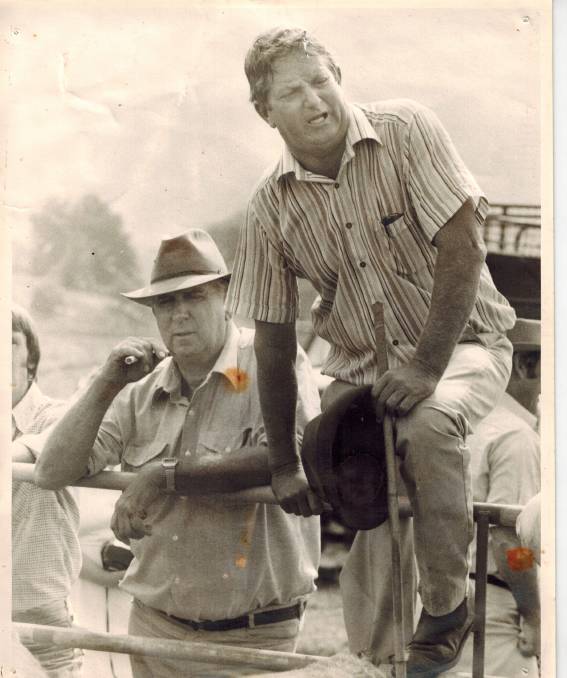
Brian Unthank selling cattle at Running Creek, Victoria. He was a strong advocate for auctions to set the price.
Our family agency business, Brian Unthank Rural, was my grandfather’s legacy.
To me, it’s heritage.
My grandfather Brian Unthank, pictured left, started Brian Unthank Rural 60 years ago, handing the agency business down to his two sons. It was not just a physical asset, but a cultural influence on how good business is done. Similarly, I live and work on a station with three generations of the McDonald family in Northwest Queensland.
Standards are established, perspectives are shared, and the understanding of what matters is unified. I’m not building these things – I’m receiving them.
A mainstay of Australian beef
Australian beef is full of multigenerational influence. What one generation does directly sets the circumstances for the next.
Bull selection will influence the genetic direction of a herd for 20 to 30 years. Stocking rate will define the condition of a paddock well beyond a single season. The way cattle are handled today sets the standard for the next person who picks up the job. It’s an industry built on continuity and accumulation – built on legacy.
But continuity only works because of the handoff. Each generation’s legacy becomes the next generation’s heritage.
Legacy today
Today more than ever, legacy isn’t about copying the past, it’s about continuing its intent in a new context – most likely reframed by technology.
As part of the sixth generation of the Herbert family farming at Gundamain, Caitlin understands this well. She identified: “Even just in our generation, we’ve already seen these challenges like changing markets, droughts, technology, shifting consumer expectations, and I suppose enhanced compliance and regulation.
But I think that’s all part of it, we can’t sit still. It’s not about preserving a farm exactly as we’ve inherited it, but leaving it stronger than when we got it.”
For Caitlin, that’s possible because of what heritage actually hands down – a foundation.
She explained: “Heritage gives us our values, not our limitations. What have we always done that we still do? We still care for our people. We still want to be a good neighbour.
We still look after our livestock. I think every generation still wants to leave the land in a better condition than what we took it on with. We don’t let it limit us.”
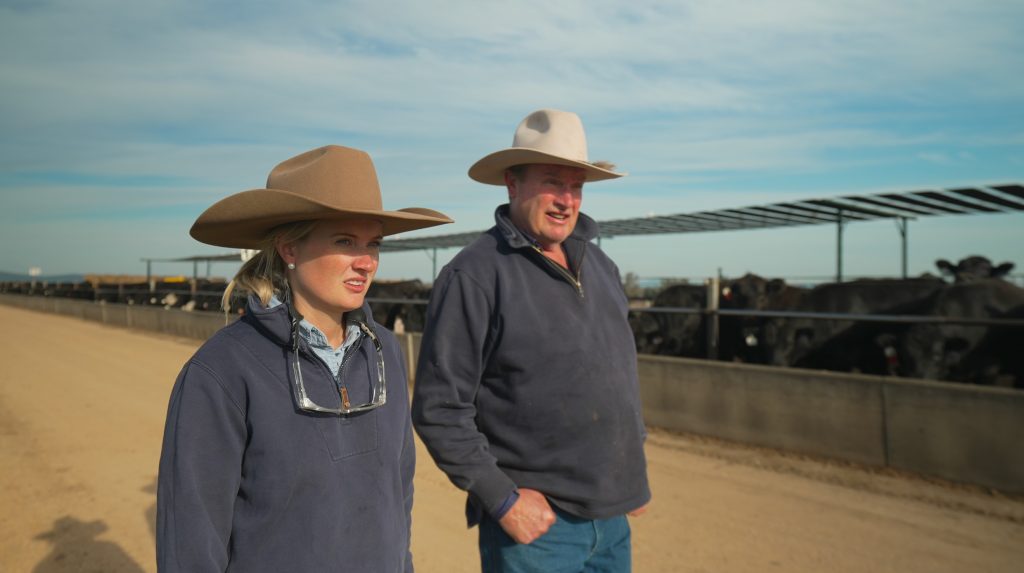
Caitlin Herbert and her father Andrew at Gundamain feedlot
My conclusions
Memory fuels momentum. I still never knew Graeme Acton, but I’ve felt the momentum of what he valued carry through every room Beef Connections has put us in. That’s heritage. What we do with it from here is ours to call legacy.
I challenge you to reflect on what you hold as heritage, including the legacies that have shaped it.
What do you strive to put forward as your legacy?
See you next month!
Millie
Earlier articles in this monthly series:
July: Is negotiation a word you use, or a life you live?
June: Graeme Acton Beef Connections member’s journey towards Beef 2027
HAVE YOUR SAY