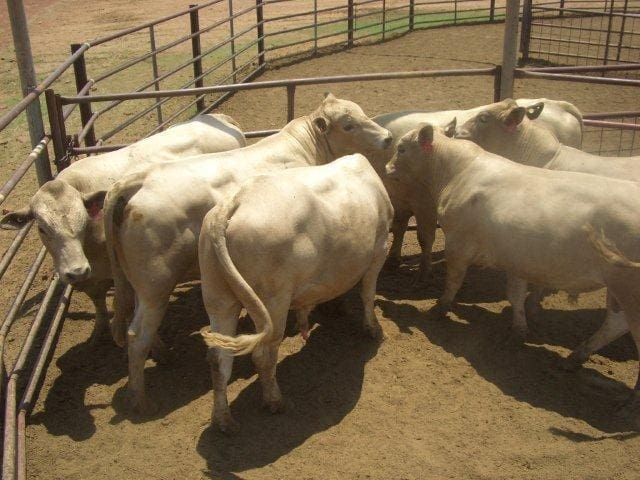
Composite bulls bred for extensive conditions by S. Kidman & Co
WITHIN a beef herd, genetic improvement is a measurable outcome. The rate of genetic improvement is determined by several factors including accuracy of selection.
There are two key factors that producers can control in genetic improvement: the first is accuracy of selection, while the second is selection intensity.
Many producers place high levels of selection pressure on their replacement females. However much of the work done to select animals can be undone or progress slowed by inaccuracies in selection decisions.
I most often encounter inaccurate selection decisions at bull sales where producers rely heavily on raw data and visual appraisal.
While visual appraisal is vital to assess many physical traits as well as a bull’s actual ability to move and walk, assessing genetic potential without accurate data is much more difficult.
In talking with producers who are using raw data to compare animals in a sale ring or in paddocks, there are several considerations that should be factored into the discussion.
Additional influences
While most producers readily acknowledge the role that nutrition and the pedigrees of animals have in determining a particular animals phenotype, these are not the only two areas to consider.
Additional influences, such as the age of the animal, the age of the dam, whether the bull was a single calf or a twin, or if it was produced as a result of ET are all non-genetic influences on the animal over and above nutrition and genetics.
It’s very difficult to know what these additional influences are or how to account for them in a selection decision.
The result often means a producer ends up selecting on differences that are a result of these multiple factors, rather than for the genetic differences in animals.
Challenges in selecting on raw data
Selection on raw data is further complicated by the heritability of individual traits. Highly heritable traits such as coat color can be an easy selection decision, as these traits can be easily passed on to progeny.
However as a trait becomes less heritable, it is harder to see these differences reflected on the basis of raw data alone. Producers attempting to manipulate traits to meet breeding objectives in areas such as female fertility have a harder job to select for improvement when they are reliant on raw data and visual observation. It is not an impossible task, however it is a much more difficult, and drawn out process over several generations.
There is also a third consideration: The relationship between the trait that has been recorded and the traits that are the focus of breeding decisions.
Not all traits follow linear progressions. In the case of scanned data for eye muscle area, the size of EMA at a particular point in time may not be reflective of increased muscularity, but rather a result of growth rate to that point in time. A larger EMA may be more reflective of the growth and weight of the animal when it was scanned.
I’m often concerned when producers place all their emphasis on the raw data of animals as the basis for their selection decisions. Without knowing the cumulative impact of the environment, feed and other non-genetic factors, bulls are being selected more on reflection of the year’s circumstances, rather than on their genetic capability.
This often works in a counterproductive manner to selection pressure placed on the breeding group at home.
As the 2019 breeding season progresses, I would be encouraging producers to make time to plan their breeding objectives and consider how they could make greater improvements with more accurate selection decisions.
Early planning allows time to consider a wider range of more accurate information and to consider the availability of data from Breedplan rather than reliance on raw data on sale day. Combined with selection pressure, these two areas do have a positive influence on genetic progress in any herd.
Alastair Rayner
Genetics editor Alastair Rayner is the Principal of RaynerAg, specialising in cattle selection, breeding and herd management.