
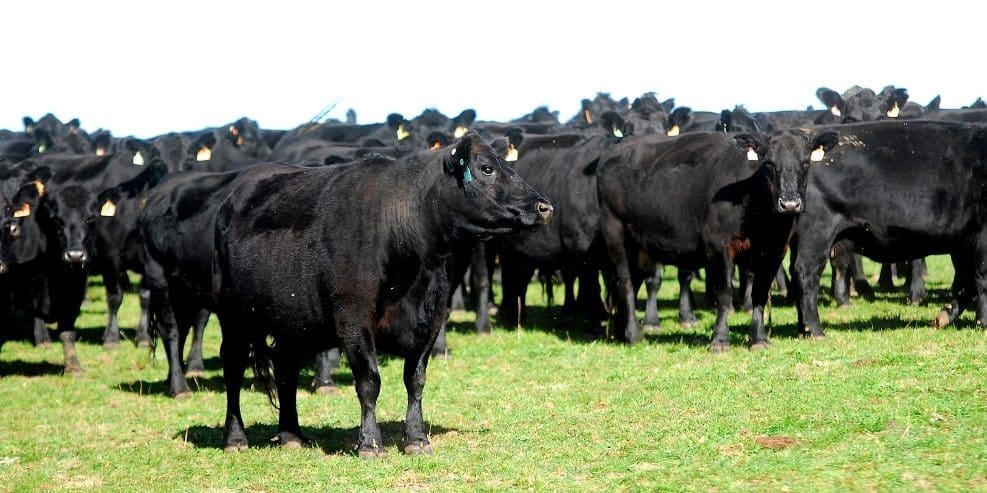
THE beef industry is one step closer to breeding highly productive cattle that produce lower methane emissions thanks to a collaborative research project.
Since 2022, researchers have recorded the methane emissions and key performance traits – including growth and fertility – of more than 5000 animals from the Southern Multibreed Project and Angus Sire Benchmarking Program herds.
The recent release of genomic Research Breeding Values (RBVs) for methane emissions marks a key milestone in the project. It will soon enable producers to perform multi-trait genetic selection to maximise their herds’ productivity while reducing their methane emissions.
Long-term reductions
The ‘Low methane beef (LMB) project’ is a joint initiative between the University of New England, NSW Department of Primary Industries and Regional Development, Angus Australia and MLA.
Measurements of methane were taken from steers at UNE’s Tullimba feedlot during feed intake and performance testing, while their sisters were monitored on pasture using GreenFeed emissions systems.
 Researchers and participating producers collected genetic data right throughout the animals’ lives, from birth to processing. They recorded performance traits such as carcase quality, growth, fertility, eating quality and yield.
The new methane RBVs are designed to work in combination with other traits currently available in BreedPlan.
UNE researcher Professor Sam Clark see this as a key requirement for industry-wide adoption and the potential for lasting impact.
“Genetic change is long term, permanent and cumulative – we can essentially improve herd genetics with each generation to increase productivity and efficiency for methane traits,” he said.
Dr Tom Granleese from NSW DPIRD is excited about the win-win for both producers and the environment.
“We’re still a little way off from making industry-wide impact, but the most exciting part of this research is that like at Oprah Winfrey shows, everybody gets a prize,” Dr Granleese said.
“The environment benefits from lower methane emissions and producers benefit from more efficient, productive cattle.”
Measuring for methane
At the paddock level, the project has uncovered insights that will inform future emissions reduction projects.
When animals enter the GreenFeed units voluntarily to feed, sensors monitor the carbon dioxide levels in their breath.
“At the start of the project we had a 60pc visitation rate to the GreenFeed systems in the paddock,” Dr Granleese said.
“The machines are competing for the cattle’s attention with other attractions such as watering points and trees to play with.
“We trialled different measures to encourage them to use the machines and were able to increase visitation up to 80pc.
“The cost of the project doesn’t change whether you get 100% visitation or none, so maximising visitation is important.”
A whole-of-system approach
The project is one of the largest of its kind internationally. Sam sees it as just one part of a larger body of work to move the whole production system towards greater efficiency and sustainability.
“Producers manage methane indirectly by optimising the time it takes to get an animal to market,” Prof Clark said.
Culling dry cows, getting cows to calve at two years of age instead of three, and selecting bulls for optimised productivity and lower emissions are the fastest ways to make long-term changes to the national herd. Feed additives and pastures may also have their place in future.
Producers are expected to have access to the new methane genomic breeding values via BreedPlan from 2027–28.
There are new investments in collaboration with the Zero Net Emissions Agriculture CRC, UNE, Animal Genetics and Breeding Unit and the Global Methane Hub to continue collecting the required methane data to build on this project to routinely deliver methane breeding tools to the Australian red meat industry.
How methane Research Breeding Values (RBVs) work
- A bull passes on 50pc or half of his genetic information to his offspring, with the cow contributing the remainder.
- A sire with a negative methane RBV (less than the current breed average of 0), will produce offspring with at least half its potential to emit less methane.
- For example, a sire with an RBV value of -20 grams per day (g/day) will produce offspring with a -10g/day RBV.
- Over time, selecting for reduced methane emissions in conjunction with overall performance will make a significant and cumulative impact on the national herd’s overall methane emissions to the effect of 2.8–12.4 million tonnes of carbon dioxide equivalent (Mt CO2e) by 2050 or 5–20pc reduction in CO2e.
Source: MLA
Another attempt at making Breedplan relevant. It seems MLA and others are still keen to flog a dead horse, with relevance being the key issue in the produced figures. As the years pass, the figures relate less and less to the actual animals described. Ask any smart breeder, they will all say the same thing – ” Breedplan figures no longer relate to the actual animal”. Here you have something as contentious as “Methane emissions” and CO2 emissions and our producer body is driving the Beef bus off a cliff. We as levy payers of MLA should be made aware as to who is behind the money coming from private funding that is pushing this agenda. Why is MLA and other science bodies ready to discard the CO2 life cycle and invent some form of Green ideology, back the industry that pays to keep you in a job. Your own examples of how RBV’s work, have over time any beneficial sirelines running out through generational loss( sire has -20, progeny has -10, next generation -5, etc.), your scientific example. Even I’m not dumb enough to post an example with that many holes. Says a lot for who we have running this industry.