
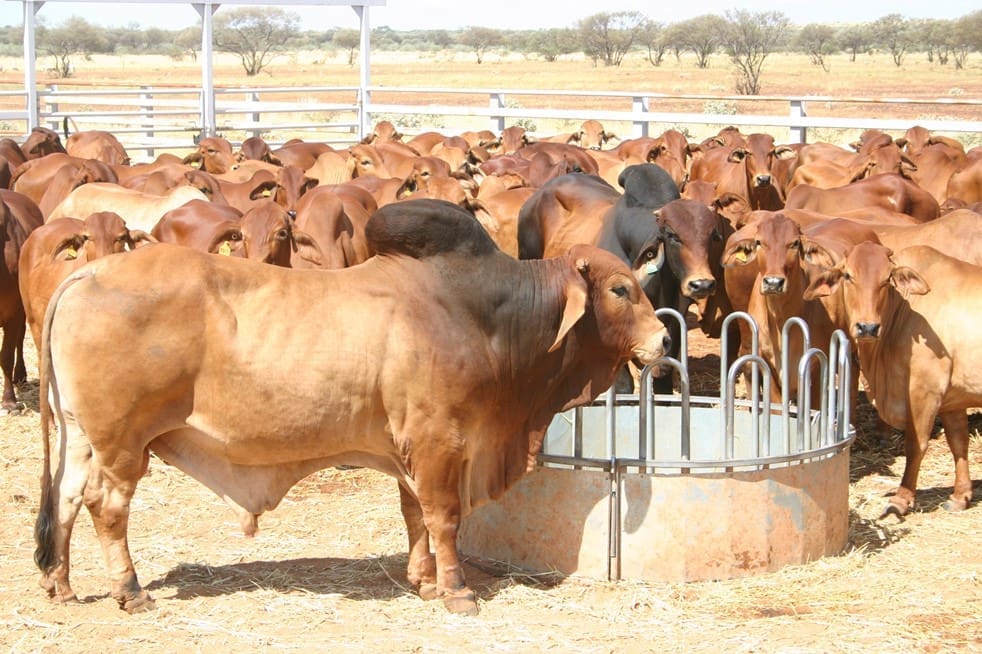
Red Brahman x Droughtmaster cattle on Balfour Downs
THE impact of bulls on calving numbers is not determined only on successful mating.
While mating itself requires a bull to be physically capable as well as producing healthy sperm in each ejaculate, a bull’s general health is also a significant contributor to successful conception.
Many producers focus on bulls’ health and assess readiness and ability to mate through Bull Breeding Soundness Examinations (BBSE), however as noted in recent articles, bulls may pass a BBSE prior to sale, or even ahead of joining. However, the impact of transport or of short illness can result in sub-fertility.
These are considerations all producers need to factor in ahead of joining. While attention is generally placed on bulls, it is also important not to overlook the impact that endemic reproductive diseases also have on annual calving numbers.
Priority list of endemic cattle diseases for the red meat industry — MLA 2022
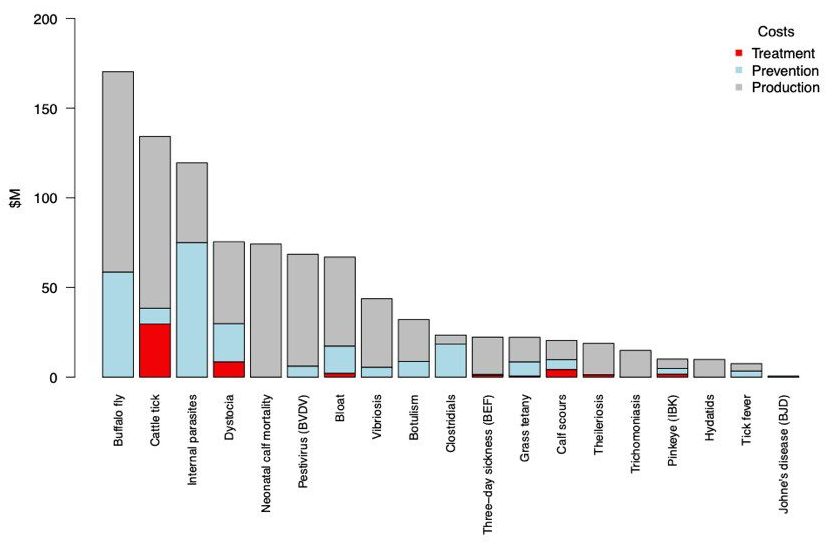
The most recent priority list of endemic diseases, published by MLA in 2022 ranks Vibriosis as one of the most significant reproductive diseases impacting cattle production. Vibriosis, or Bovine Campylobacteriosis (BGC) is primarily linked to embryo loss and abortions. Bulls often show no symptoms, and the disease is spread primarily by mating.
Two production losses
There are two significant production losses associated with Vibriosis or BGC. The first are losses from abortion which may occur within controlled joining, meaning females in the herd may not have an opportunity to recovery and return to oestrus before bulls are removed. This direct loss of calves may often trigger producers to investigate issues associated with fertility.
The second, and more insidious loss occurs more frequently in herds with longer joining periods. In these herds, cows may lose an embryo and then successfully reconceive later in the joining program. While a calf may be born, it will be younger and lighter than its cohort. Research has shown the impact of these later calves can result in weaning weight reductions of 5-12 percent.
The 2022 publication of endemic disease highlighted research done in the mid 2000s suggestion that in northern Australia, the prevalence of BGC in herds ranged from 4-14pc, with more than 4000 samples analysed. The results from this work found 9.4pc testing positive for BGC.
Management of BGC traditionally relies on vaccination, mainly of bulls, maintaining younger aged bull teams as well as removing non pregnant females. However the challenge most producers face is testing and diagnosing the prevalence of BGC within a herd.
The laboratory tests such as IgA ELISA (Enzyme-Linked Immunosorbent Assay, a lab test that detects antibodies in blood or mucus samples) can detect exposure but not current infection levels within a herd.
Challenge for producers and advisors
This presents a challenge for producers and advisors attempting to discover the causes underlying a lower-than-expected calving rate.
The University of Queensland, funded by MLA, have conducted research into the impact of BGC in the northern beef industry.
The project published in September 2023 as “Improving fertility in northern cattle through host and pathogen molecular diagnostics” (P.PSH.0799) investigated the development of better diagnostic tools as well as considering if reproductive microbiome influences susceptibility to BGC.
Biomarkers research
Research was also done to identify biomarkers that could show infection or vaccination status, and test whether resistance to vibriosis could eventually be built into Estimated Breeding Values. The research was conducted with more than 1000 animals sampled across northern herds, while controlled challenge trials were conducted with both bulls and heifers to compare vaccinated and unvaccinated animals.
 This project, led by Professor Ala Tabor from the University of Queensland, demonstrated that vaccination remains an effective management strategy for producers.
The trials confirmed that vaccinated animals were better at clearing infection, but both vaccinated and unvaccinated animals could briefly test positive after exposure. The research reinforced that young bulls are much less likely to remain carriers, while older bulls tend to harbour infection for life. This underlines the importance of both consistent vaccination and regular bull turnover.
Withing the project, the researchers developed a diagnostic test using qPCR (quantitative Polymerase Chain Reaction), that detects the DNA of the vibriosis bacteria. While more specific than older tests, results were often short-lived and could miss infections.
It was found that genomic sequencing proved more accurate, but this requires specialist labs. The team also identified three blood proteins linked to infection or vaccination, which could form the basis of simple blood tests or even rapid crush-side kits.
Second contributor
Research also found that infertility isn’t always caused by vibriosis alone. Another bacteria, commonly known as Histophilus, was often also found. This makes reproductive disease complex and hard to pin to one cause.
The project also investigated whether some cattle might be naturally more resistant to vibriosis. However, too few confirmed cases were found to develop reliable Estimated Breeding Values (EBVs). Early signs suggest genetics may play a role in how susceptible animals are, but at this stage there is no practical way for producers to use genetic selection to manage the disease.
While the MLA 2022 endemic diseases report suggests the prevalence of vibriosis within northern herds raging from 4 to 14pc, the inability of current testing to confirm current infection levels could mean that vibriosis is more widespread than many producers may appreciate.
Until the release of more accurate tests, because of the recent research, producers shouldn’t overlook the effectiveness of traditional management programs.
Vaccination is effective and the research makes a strong case for including maiden heifers as well as bulls.
Bull management is equally critical. Retaining older sires increases the likelihood of carriers staying in the herd, so culling bulls earlier and running a younger team is an effective strategy. Preg-testing and culling empty cows is still essential.

Alastair Rayner
Alastair Rayner is Principal of RaynerAg and an Extension & Engagement Consultant with the Agricultural Business Research Institute (ABRI). He has over 28 years’ experience advising beef producers and graziers across Australia. Alastair can be contacted here or through his website: www.raynerag.com.au