
FOR the past four decades, Estimated Breeding Values have been available to Australian beef producers through BreedPlan.
Over that time, EBVs have been tested through large-scale research programs, including the Beef CRC, breed trials and research involving both British and tropically adapted cattle. They have also underpinned many successful stud and commercial breeding programs and contributed to genetic progress across a range of economically important traits.
This established record does not remove the need for continued testing. EBVs are predictions, and it remains important to compare those predictions with the performance subsequently recorded in cattle.
This is particularly relevant as genetic evaluations incorporate more genomic information and other sources of data.
New work testing this was published this month in Animal Science in Australia, the proceedings of the 36th Biennial Conference of the Australian Association of Animal Sciences held in Adelaide.
The one-page conference communication, titled BreedPlan 200 day weight and milk EBVs predict weaning weight differences in Brahmans, reports work by Kim Hubbard and Tim Grant from Queensland DPI, together with Dr David Johnston and Dr Kirsty Moore from the Animal Genetics and Breeding Unit.
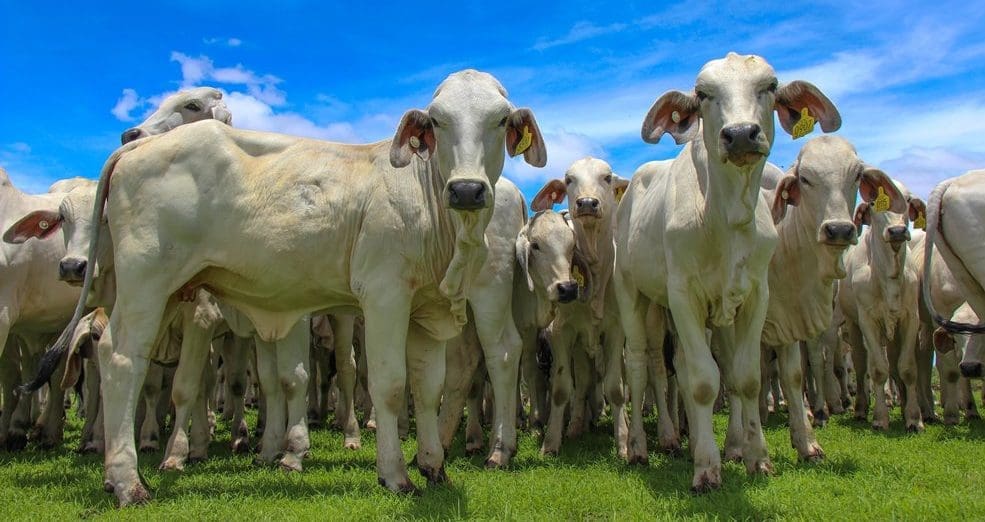
Using information collected through Northern Repronomics, the team examined 280 weaning weights from animals in the 2025 Brahman cohorts at Brian Pastures and Spyglass research stations. Their aim was to determine whether BreedPlan 200 Day Weight EBVs and the dams’ Milk EBVs reflected the differences recorded at weaning.
None of these weights had been submitted to BreedPlan, so they had not contributed to the EBVs being tested. The single-step evaluation had instead drawn on genomic relationships and information from related animals. This allowed the recorded weights to provide an independent check of the predictions.
Explaining 72pc of the variation
The analysis accounted for location, calf age and sex, and dam age. Together with the two EBVs, these factors explained 72pc of the variation in weaning weight. Each 1kg increase in 200 Day Weight EBV was associated with an average 1.06kg increase in recorded weaning weight. This was very close to the expected one-for-one relationship.
 The Milk EBV showed a similar relationship. Each 1kg increase in the dam’s Milk EBV was associated with an average 1.43kg increase in calf weaning weight. Both EBVs were significantly associated with the weights subsequently recorded.
However, the Milk estimate was less precise than the result for 200 Day Weight. The dams’ Milk EBVs ranged only from –8kg to +5kg, so more records across a wider range are needed before concluding that the response is greater than the expected one-for-one relationship.
The relationship between the EBVs and weaning weight was similar at both research stations and for bull and heifer calves.
For bull buyers, the 200-Day Weight result supports the usual interpretation of EBV differences. If two sires differ by 20kg, their progeny should average about 10kg apart at 200 days, provided the sires are joined to comparable cows and the calves are managed under similar conditions. The study tested the relationship behind this expectation and found that differences in the calves’ EBVs were closely reflected in their recorded weights.
The Milk result is also useful, because Milk EBVs are often misunderstood. They do not predict how many litres of milk a cow will produce. Instead, they estimate the maternal genetic contribution of a dam to the 200-day weight of her calf, separate from the calf’s own genetic potential for growth.
For a sire, the Milk EBV estimates the maternal effect his daughters are expected to contribute to the 200-day weight of their calves.
For producers, the value is that these figures can be linked to likely paddock outcomes.
Differences in 200 Day Weight EBVs indicate expected differences in progeny growth to weaning, while differences in Milk EBV indicate expected differences in the maternal performance of daughters.
This gives bull buyers a clearer basis for deciding whether a sire offers the growth and maternal performance required in their herd.
 Alastair Rayner is the Strategic Account Manager for Southern Australia with Vytelle and Principal of RaynerAg. He has over 30 years’ experience advising beef producers and graziers across Australia. Alastair can be contacted here or through his website: www.raynerag.com.au
HAVE YOUR SAY