
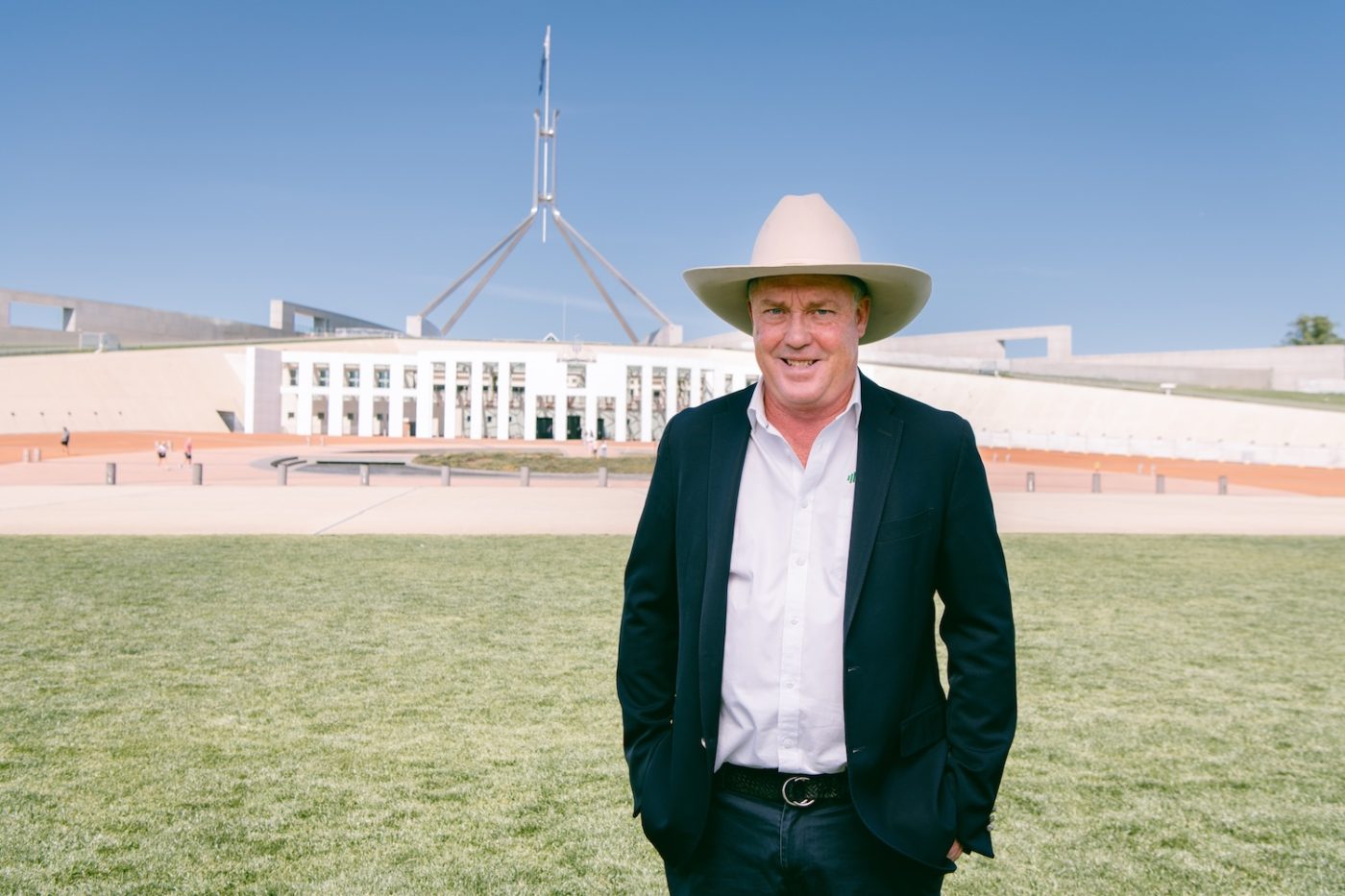
Hamish McIntyre, NFF President.
THE National Farmers’ Federation (NFF) has welcomed today’s improvements to proposed Working Holiday Maker visa reforms, saying the changes show the Federal Government has listened to concerns from agriculture and regional Australia.
NFF President Hamish McIntyre said expanding regional work requirements, delaying the proposed ballot and increasing the number of third-year visas were important steps in the right direction.
“The changes announced this morning put the agriculture industry in a better workforce position than we were facing in September, following Home Affairs Minister Tony Burke’s initial announcement,” Mr McInytre said.
 “But we still have many unanswered questions. We need more details on the logistical realities of this reform before we can fully throw our support behind it.
“We’ve been clear with the Government just how important backpackers are to keeping Australian farms running and food on supermarket shelves.
“Working Holiday Makers fill roughly one in seven farm jobs nationally and contribute an estimated $726 million directly to regional economies each year. Getting these visa settings right is important beyond the farm gate.”
Mr McIntyre acknowledged the Government’s constructive engagement as it reconsidered its original proposal.
“We’ve had constructive discussions with Home Affairs Minister Tony Burke, Agriculture Minister Julie Collins and their offices, and the Government deserves credit for listening and responding to the evidence industry has put forward,” he said.
“Delaying the ballot gives us valuable time to keep working through our concerns with Government and get the settings right.
“Increasing third-year places is also significant progress, although we remain concerned that capping places through a ballot risks creating uncertainty and will decrease productivity.”
Mr McIntyre said the NFF would continue working constructively with the Government on the detail as there are still some creases to iron out.
“Our focus will remain on a migration system that has integrity while ensuring farmers can access workers when and where they’re needed. We welcome ongoing negotiations in this important space,” Mr McIntyre said.
AMIC welcomes Working Holiday Maker changes
The Australian Meat Industry Council (AMIC) welcomes today’s announcement by the Australian Government regarding changes to the Working Holiday Maker (WHM) program, acknowledging the extensive engagement undertaken by the offices of Minister for Home Affairs Tony Burke, Minister for Agriculture Julie Collins and the Department of Home Affairs throughout the development of this policy change.
The changes introduce a new registration and allocation process for second and third-year Working Holiday Maker visas, alongside transition arrangements designed to provide greater certainty for businesses and workers.
Today’s announcement also strengthens the regional work requirements for second-year visas and increases the proposed allocation from 5,000 to 25,000 for third-year visas, recognising the workforce needs of regional industries and supporting ongoing access to labour in meat processing communities.
AMIC Chief Executive Officer Tim Ryan said the announcement recognises the importance of maintaining workforce availability in regional Australia.
“Australia’s meat processing sector employs tens of thousands of Australians and continues to invest heavily in attracting, training and retaining a local workforce. However, migration pathways remain critical to addressing persistent labour shortages, particularly in regional and remote areas where workforce availability continues to be one of the industry’s greatest challenges,” Mr Ryan said.
“Working Holiday Makers make up approximately 15 per cent of the meat industry’s workforce, highlighting the important role these workers play in supporting processing capacity, production continuity and regional economies across Australia.
“The transition arrangements announced today provide important certainty for both businesses and workers as they adapt to the new system. That certainty is essential for businesses making long-term workforce and investment decisions.
“While we continue to review the details of the announced changes, our priority remains ensuring businesses have reliable access to the workforce required to maintain production, process Australian livestock and support economic growth.”
Mr Ryan said the meat processing industry remained a cornerstone of many regional communities.
“Any workforce settings must recognise the critical role workers from migration programs play in maintaining processing capacity, supporting exports and sustaining regional economies,” he said.
AMIC General Manager Corporate Affairs Jemma Harper said the announced changes to the program struck an important balance between migration objectives and the workforce needs of regional industries.
“AMIC acknowledges the Government’s engagement with AMIC throughout the development of this policy change and welcomes the transition arrangements and increased third-year numbers which provide greater certainty for members and workers as they adjust to the new system,” she said.
“It is encouraging to see greater recognition of the workforce challenges faced by regional industries through increased regional work requirements and the transition arrangements that provide certainty for employers and workers alike.
“AMIC looks forward to continuing to work closely with Government to ensure migration settings and labour programs remain responsive to industry workforce needs and support the long-term growth and sustainability of Australia’s meat industry.”
AgForce welcomes backpacker visa rethink, but calls for lasting certainty
AgForce Queensland has welcomed the Federal Government’s decision to revise its proposed Working Holiday Maker visa reforms, following strong concerns from agriculture and other regional industries.
The changes announced today by Home Affairs Minister Tony Burke represent a significant improvement on the September proposal, particularly the increase in third-year visa places from 5,000 to 25,000.
AgForce General President Shane McCarthy said that while the revised arrangements were encouraging, the uncertainty experienced by agricultural businesses in recent months should not be overlooked.
“Agriculture should not become collateral damage in broader debates about migration. Our producers grow the food Australians rely on, and changes to established workforce arrangements have real consequences for their businesses,” he said.
“Producers need certainty. They cannot simply delay a harvest or put production on hold while visa arrangements are reconsidered.”
While the Government has substantially increased its proposed third-year visa allocation, the new limits remain below previous numbers, and concerns about visa processing times remain.
“We welcome today’s progress, but there is still work to do. AgForce will continue working with the NFF and the Federal Government to ensure these arrangements support agriculture and the regional communities that depend on it,” Mr McCarthy said.
Opposition responds to Burke’s backpacker backdown
The Albanese Government’s dramatic backdown today on its Working Holiday Maker visa restrictions is an admission that its original proposals were fundamentally flawed and completely misjudged.
However, there is no denying the revised arrangements are still a cut on last year’s figures.
Leader of The Nationals, Senator Matt Canavan, said today’s announcement by Immigration Minister Tony Burke confirmed precisely what the Coalition and regional industries had warned from the outset.
“The Coalition and industry stakeholders warned very clearly that Labor’s original proposed restrictions would threaten regional jobs, businesses and agricultural production,” Senator Canavan said.
“These are industries that depend on Working Holiday Makers to fill genuine workforce shortages, especially in regional communities where finding enough local workers is already a serious challenge.
“Instead of consulting with and listening to those industries before making its original announcement, Labor pressed ahead with poorly conceived restrictions and created completely unnecessary uncertainty for regional employers and Working Holiday Makers.”
Shadow Minister for Home Affairs and Immigration, Senator Jonno Duniam, said that – unlike Labor – the Coalition remained committed to reducing overall migration to sustainable levels, while ensuring that Australia’s immigration system responded to genuine workforce needs.
“Australia needs a migration program that reflects our housing and infrastructure capacity, and that means abandoning Labor’s approach and actually recognising the particular needs of regional communities and industries that rely on seasonal and temporary workers,” Senator Duniam said.
Shadow Minister for Agriculture, Fisheries and Forestry, Darren Chester, added the Coalition has a clear and constructive alternative policy – announced last month – which will encourage Working Holiday Makers to travel to where they are needed most.
“We will abolish Labor’s arbitrary caps and bureaucratic ballots, introduce visa fee concessions for Working Holiday Makers undertaking regional work, and review the definition of regional Australia to better target genuine workforce shortages,” he said.
Shadow Minister for Tourism, David Littleproud, slammed the Albanese Government for its shambolic handling of Australia’s migration system, saying that Labor’s decision to target the backpacker intake was hopelessly misguided and a disgrace.
“These are the workers who change the beds in our motels, who pour the beers in our pubs, and who fill critical shortages when local workers aren’t available. By doing the jobs that Australians won’t do, they are essential to strengthening the productivity of our nation,” Mr Littleproud said.
“Despite the humiliation of today’s backdown, Labor’s decision to persist with a rebranded ballot system is shameful. This Government will base our migration system on a raffle, rather than on merit, and this will harm Australia’s reputation as a tourism destination and deter backpackers by adding uncertainty to their visa conditions.
“Labor must also urgently provide clarity and detail on processing times to help ensure there is continuity and confidence in the international visitor market into the future.”
Key facts on WHM:
- Australia has the most desired WHM visa program in the world, attracting over 200,000 WHMs every year.
- Working Holiday Makers fill roughly one in seven farm jobs nationally.
- They make up around 14 per cent of all farm worker jobs and are especially important during peak demand periods, including around 44pc of the horticulture workforce, 31pc of grains, 26pc of red meat and 25pc of cotton workers.
- They can supply up to 80pc of peak harvest labour in fresh produce.
- About 52,000 Working Holiday Makers work in horticulture each year.
- They are expected to spend $4.68 billion annually in the Australian economy, including about $726 million directly in regional communities.
- During the covid pandemic, labour shortages contributed to fresh produce price increases of 15-25pc.
- Deloitte Access Economics has estimated the absence of Working Holiday Makers from horticulture would cost the industry $6.3 billion, put 127,000 supply-chain jobs at risk and reduce GDP by $13 billion.
- Click here to download the Regional Impacts of Working Holiday Makers report.
HAVE YOUR SAY