

COULD cows eating grass now trigger a land clearing event under the Federal Government’s new environment rules?
That is the question the Department of Agriculture, Fisheries and Forestry (DAFF) told Senate Estimates it needed to get clarity on, after the National Environment Protection Agency (EPA) released its Agriculture and the EPBC Act guide in August.
Leader of The Nationals Matt Canavan said the guide now defines a ‘clearing event’ and ‘land clearing’ to include removing native or non-native vegetation from land that changes any of its use, structure or ecological function.
“This includes woody vegetation, trees and shrubs, and non-woody vegetation like ground cover, including grasses,” Senator Canavan read out from the guide in Senate Estimates last week.
“So would the simple act of grazing, where cows come and eat grasses, would that account to be a clearing event under this guide?” Senator Canavan asked DAFF representatives.
To which the response was “not as I understand it, if there’s grazing activity already occurring,” a DAFF representative said.
Given the new amendments have removed the continuing use exemption for clearing vegetation, Senator Canavan requested clarification on if land had not been grazed for 15 years and then livestock were introduced to that paddock, would that be considered a clearing event?
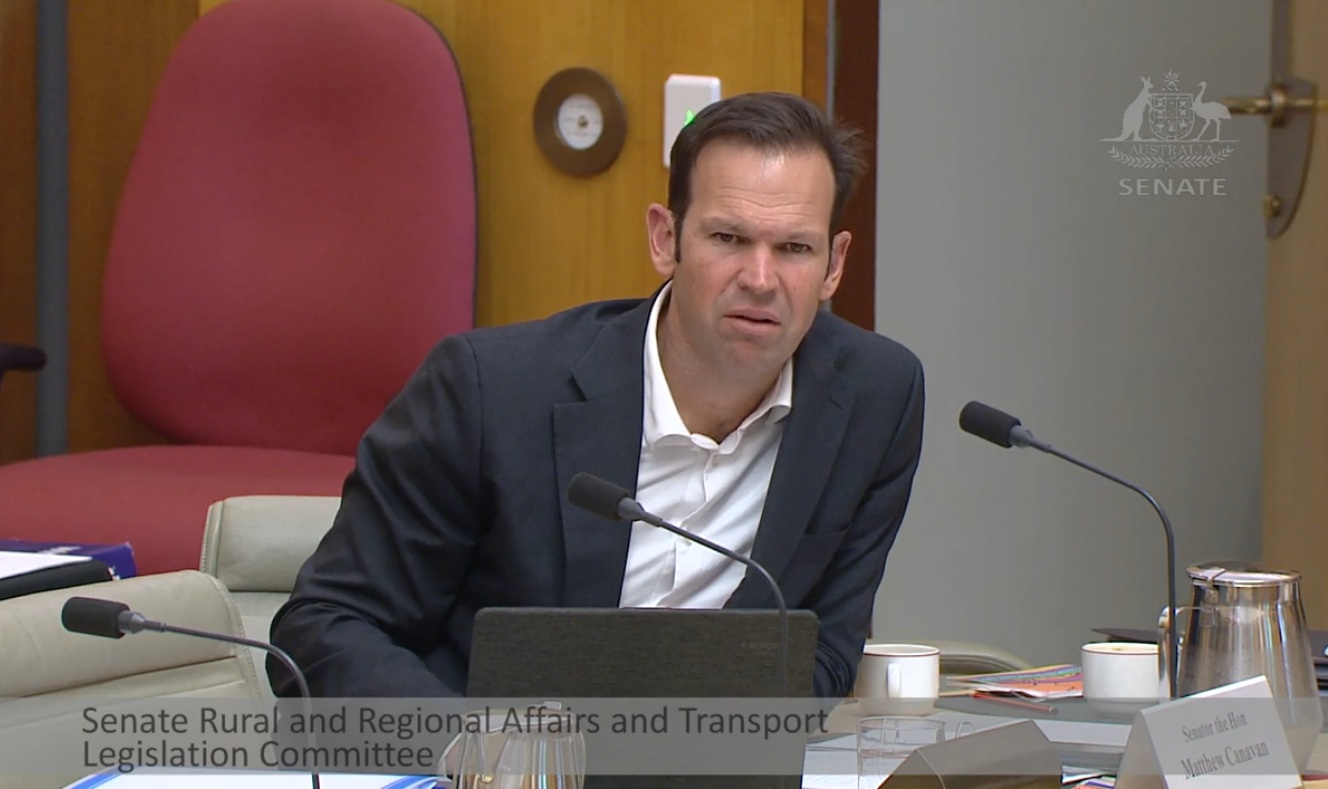
Senator Matt Canavan, Leader of The Nationals.
“If cows eating grass is a clearing event, the new regulations say that the continuing use provision only applies if land has been cleared in last 15 years,” Senator Canavan said.
“Australia is in big trouble if cows eating grass on farming land is now potentially breaking laws. Farmers cannot exactly ‘pause’ to get clarity either – their cows must eat every day.”
While the majority of land will have been grazed in the last 15 years, one industry source who has been working closely with the Environment Protection and Biodiversity Conservation Act (EPBC) explained there are a number of scenarios where it won’t have.
Country that had been locked up for carbon projects or renewable energy developments that had excluded livestock from grazing for 15 years were two examples of how introducing livestock again could trigger a breach of the EPBC laws.
Another example was introducing goats to mountainous country that sheep and cattle had not been able to access.
‘Legislation should not be grey’
The main concern from the industry source was how vague legislation exposed industry to having interpretations of the laws changed over time, so that an activity that is within the law today is breaking the law in a few years’ time.
“Legislation should not be grey. Just because DAFF may not interpret grazing as land clearing now, doesn’t mean that can’t change,” the source told Beef Central.
“Government’s do this so that over time they can crack down without having to change legislation, a new minister or new director can come in and have a whole new interruption of the same legislation.
“Our industry needs certainty. We need clear legislation so that we know what we can and can’t do.”
National Farmers’ Federation and AgForce have previously stated they do not support the new guide. The EPA has committed to review it within three months, due in early November.
National Farmers’ Federation CEO Michael Guerin said if this discussion tells us anything, it’s that environmental regulation should be easier to understand and navigate.
“Farmers shouldn’t have to second-guess how the rules apply to everyday land management activities,” Mr Guerin said.
“What producers need are clear rules, practical guidance and better decision-support tools to help them make the right decisions with confidence, protect the environment and continue sustainably managing their land.
“The NFF has long questioned why a few cows quietly grazing can be considered a key threatening process in some circumstances, while European carp, one of the most significant threats to native fish populations, water quality and river health, was not recommended for the same classification by the Threatened Species Scientific Committee.
“There appears to be a disconnect in the way risks are being assessed and prioritised.”
Cattle Australia wants clarity in guide that grazing is not land clearing event
The EPA’s review of Agriculture and the EPBC Act guide is due this month and Cattle Australia is calling for a clear statement that grazing is not a land clearing event to give producers certainty.
“Cattle grazing pasture is not land clearing, and the National EPA’s own guide recognises that grazing within an existing footprint is low risk and doesn’t need a detailed self-assessment,” Will Evans, Cattle Australia CEO said.
“The issue is that the guide’s definition of land clearing is very broad. It covers removing any native or non-native vegetation, including grasses, in a way that changes the land’s use, structure or ecological function.
“That has left open a question that should have a simple answer, and the Department of Agriculture has said it is also seeking clarity.
“This matters because the continuing-use exemption is now measured from the ‘last clearing event’. Producers need to know exactly what a clearing event is to know where they stand.
“We’ve been working with the Department of Environment alongside AgForce and the NFF since these reforms passed in November last year, and with the National EPA since it was established. Our ask has been consistent: guidance that is workable, transparent and reflects how production systems actually operate.
“The EPA’s review of the guide, due this month, is the right opportunity to fix this. A clear statement that grazing is not a land clearing event would give producers the certainty they need.
“Our producers look after around half of this continent, and their cattle need to eat every day. Clear rules let them get on with that job.”
HAVE YOUR SAY