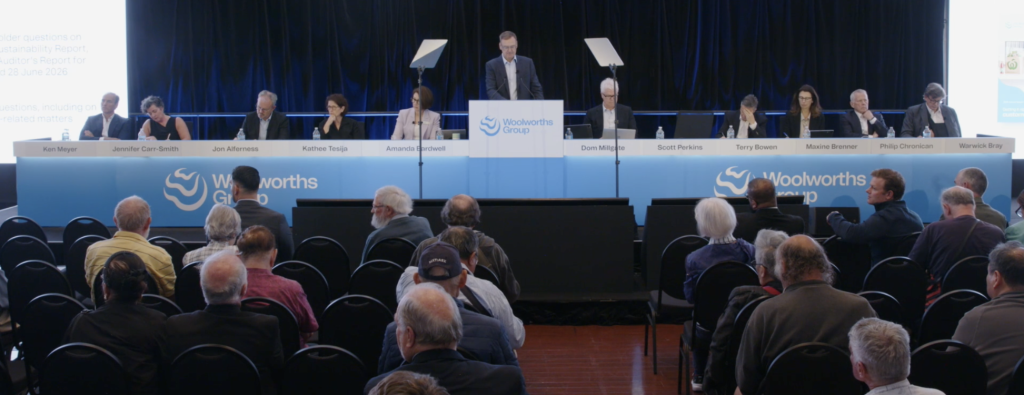
ENVIRONMENTAL activists are now taking their campaigns against what they term as ‘illegal deforestation’ to the annual general meetings of major corporations, with the latest example playing out at the Woolworths AGM in Sydney this morning.
Today’s Woolworths AGM was also attended by Central Queensland cattle producer and Cattle Australia deputy chair Adam Coffey who took to the floor during shareholder question time to warn against allegations that he said were misleading, unfairly damaged producers and threatened food production.
About half of the 20 or so questions asked during the shareholder Q&A segment of this morning’s Woolworths AGM were posed by people identifying themselves as members of specific conservation groups, or others who were speaking out on environmental issues.
Some spoke on behalf of groups such as the Australian Conservation Foundation, Greenpeace Australia and The Wilderness Society and accused the Woolworths Board of being unable to fully trace where the beef sold in its supermarkets came from, and lacking in knowledge as to whether the beef it sold was from ‘illegally deforested’ land.
In answering their questions Woolworths chair Scott Perkins said the company “had substantial visibility of its fresh beef supply chain.”
He said the company had undertaken its own aerial surveillance and had not identified in its direct supply chain any farmers who supply Woolworths with fresh beef with any instances of deforestation.
However, he acknowledged further work was needed to achieve full visibility of beef supplied through third parties.
Cattle Australia deputy chair defends industry
CQ producer Adam Coffey, attending as a shareholder, defended producers’ environmental management and commended Woolworths for working constructively with the cattle industry (see his full statement to the meeting below this article).
Mr Coffey said he had worked with Woolworths for several years on implementing its policy and welcomed the company’s constructive engagement in considering more than 50,000 beef producers who actively managed over half the continent and fed millions of Australians every year.
He said Australian producers operated in one of the most highly regulated environments in the world regarding biodiversity protection and vegetation management, and operated under at least 126 different state, territory and federal vegetation management laws.
Cattle Australia categorically opposed deforestation, he said, while supporting landholders’ right to undertake routine agricultural activities in accordance with state and federal rules.
Mr Coffey said that maintaining productive agricultural land was essential to Australia’s food security and capacity to supply sustainable beef.
He also accused activist organisations of making misleading and false allegations against producers.
 “Australia has the seventh-largest forest area of any country on earth. Over the decade from 2010 to 2020, the Food and Agriculture Organisation recorded that we have the second-highest rate of re-forestation of any country in the world, an increase of 4.4 million hectares of forest area. These are not marginal statistics. They describe a continent-scale trend of expansion, not loss,” he said.
“Cattle Australia remains highly concerned that activist organisations continue to make not only misleading, but categorically false and damaging allegations against our beef cattle producers, and we fully support Woolworths for their mature, science-based approach in partnering with industry to continue to find opportunity and manage any areas of concern.
“Australian consumers ought to be highly alarmed at the ongoing ideological attacks aimed at our industry and at supply chain partners such as Woolworths.”
As a cattle producer operating within the catchment of the Great Barrier Reef in Queensland he said the ongoing ecological health of the land was tied “directly and profoundly” to the ongoing economic viability of cattle production businesses.
“Queensland beef producers care deeply about their land and their waterways which run into the Reef, and this is reflected in the fact that the Reef’s raw coral cover is the highest it has been in any of the preceding 35 years, according to the Australian Institute of Marine Science.”
He also commended Woolworths on the proactive steps it was taking to positively engage and work with Australia’s cattle industry.
Groups question policy coverage and traceability
In earlier questions an Australian Conservation Foundation representative alleged Woolworths had narrowed its deforestation-free beef commitment from all of its own-brand beef to beef sourced directly which they claimed meant that many of the beef products sold under the Woolworths brand no longer fell under its commitment to be deforestation-free.
Chair Scott Perkins said the ‘no-deforestation requirement’ applied across its supply arrangements, and he was unaware of the alleged policy change.
A Greenpeace Australia Pacific representative told the Woolworths board that “you don’t know where the beef on your shelves comes from.”
Mr Perkins also disputed that view.
“We have a great deal of visibility of our supply chain in respect of suppliers of fresh beef,” he said.
Activists tried similar approach at CBA AGM earlier this month
It is not the first time activist groups have used AGMs of publicly listed companies to platform deforestation-focused campaigns.
Earlier this month several groups including the Australian Conservation Foundation (ACF), SIX Invest, Australian Ethical, and Ethinvest put a resolution to the Commonwealth Bank of Australia (CBA) AGM in Sydney calling on the bank to commit to a clear pathway toward ending lending that supports deforestation.
The ACF claimed that roughly a third of CBA’s agricultural lending portfolio was potentially linked to forest loss.
However in its annual report CBA said its own assessment using geospatial technology of agribusiness customers with $5 million or more debt indicated its exposure to cases with more than 200 hectares of forest loss was about 0.2 per cent of the group’s “total committed exposure.”
The first of two resolutions put to the CBA AGM by the groups was rejected with more than 93pc of shares cast against it, which meant the second resolution did not proceed.
During the AGM, CBA’s Chair and executives also defended the bank’s position, stating that not every instance of land clearing is the same, that government and regulators set the law, and that CBA relies on risk assessment processes rather than a blanket ban on forest-clearing customers.
In its notice of meeting which advised shareholders to vote against the resolution, CBA chairman Paul O’Malley said agriculture depended on healthy ecosystems and the bank recognised “the importance of Australia taking action to maintain, restore and enhance nature and biodiversity”.
“Through our strategy, we seek to: enhance our understanding of nature-related risks; consider relevant lending risks through established credit and risk processes; and support customer awareness in a changing operating environment,” he said.
The activists groups have also indicated they plan to lodge a similar motion at ANZ’s meeting in December.
Full statement from Adam Coffey to Woolworths AGM
My name is Adam Coffey, and I am attending as a shareholder, and as a Director and Deputy Chair of Cattle Australia – the peak industry body for Australian beef cattle producers.
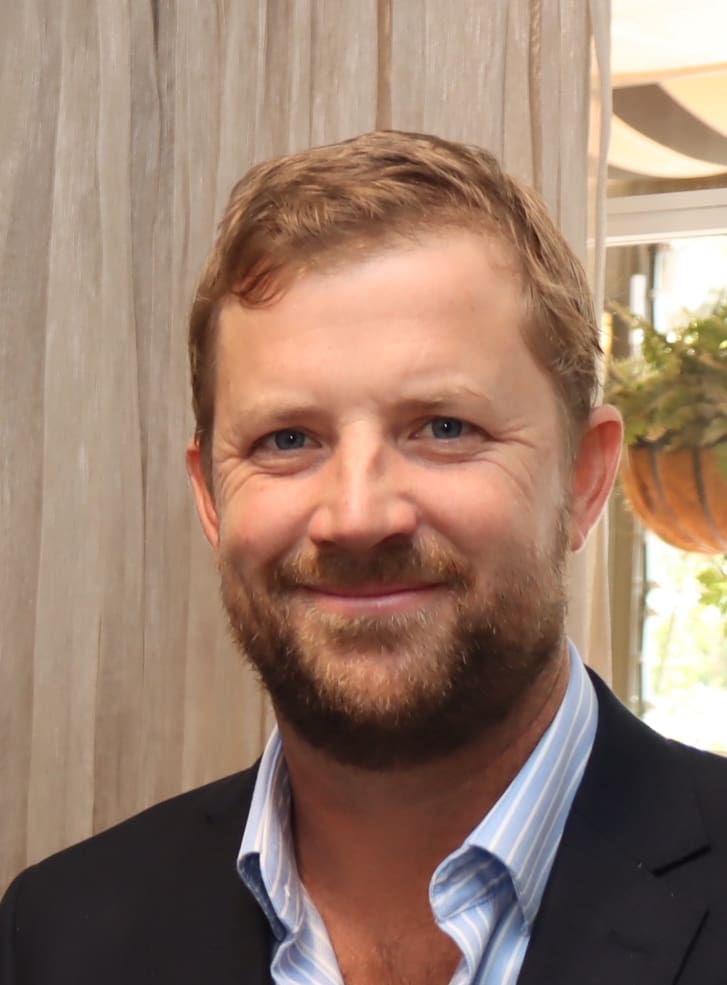
Adam Coffey
I have worked closely with Woolworths for several years on the implementation of its No Deforestation Policy, with the company achieving its target of implementation in December 2025. I would like to acknowledge Woolworths constructive engagement in working together on this issue, and in considering more than 50,000 beef producers who actively manage over half the continent, to feed millions of Australians each year.
Australian beef producers operate in one of the most highly regulated environments in the world regarding biodiversity protection and vegetation management, operating under at least 136 different state, territory and federal vegetation management laws.
Cattle Australia categorically does not support deforestation.
What we do support is the ongoing right of landholders to undergo routine agricultural activities in accordance with state and federal regulations, to ensure the ongoing prosperity of our country and the agricultural sector and to maintain and grow our ability to be a world leading supplier of sustainable beef.
I want to be very clear that remnant vegetation in Australia is protected, and ongoing vegetation management is just that – routine agricultural activities to maintain the productive capacity of our land. These activities are not specific to the beef sector and are an integral part of agricultural land management as a whole.
The activist attacks undermine our reputation as some of the best beef producers and land managers in the world and they are unfairly damaging Australia’s ability to maintain its position as a supplier of quality product that millions of people depend on domestically and abroad.
This risks raising the cost of food in Australia and it also directly negatively impacts our food resilience. This is something that every consumer in Australia should take very seriously.
Personally, as a beef cattle producer within the Great Barrier Reef catchment in Queensland, I can assure you that the ongoing ecological health of our land is tied directly and profoundly to the ongoing economic viability of our business.
Queensland beef producers care deeply about their land and their waterways which run into the Reef, and this is reflected in the fact that the Reefs raw coral cover is the highest it has been in any of the preceding 35 years, according to the Australian Institute of Marine Science.
Finally, I congratulate Woolworths ‘proactive steps in positively engaging and working with Australia’s cattle industry.
Well done Adam a diplomatic & factual statement of efforts by cattle industry , in maintenance & management of environment .
Well done, Adam Coffey, and thank you for standing up for Australian beef producers at the Woolworths AGM.
This is exactly why grassfed cattle producers need a strong, well-structured and appropriately funded Peak Industry Council in Cattle Australia.
Our industry is increasingly challenged by activist organisations making damaging claims about how we manage our land and produce food. We need knowledgeable, credible people prepared to challenge misinformation and defend our industry’s reputation.
Adam has demonstrated the importance of having a strong voice representing our 50,000-plus cattle-producing businesses.
This is why effective industry representation matters, and why it must be properly resourced.
Thanks Adam, for being the voice of reason in that room today, we should be grateful for you making the effort to be there and keep showing up in these rooms for us all, well done and thanks!
Well done Adam, great representation, thank you!