
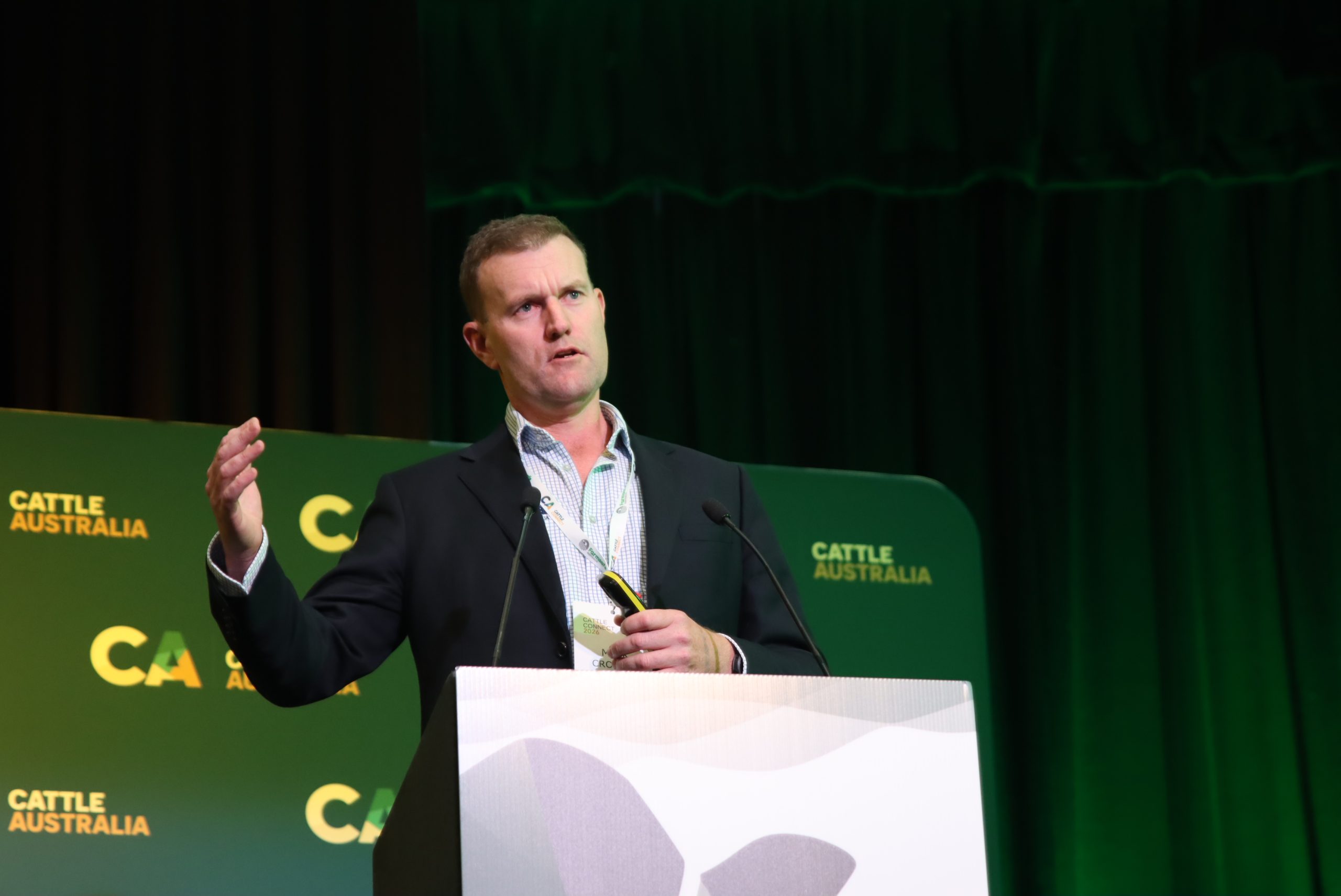
FOR the first time in a decade, more Australian consumers are increasing their red meat consumption than reducing it, Meat & Livestock Australia managing director Michael Crowley says.
Speaking at Cattle Connect 2026 in Wagga Wagga, Mr Crowley said growing interest in protein, health and nutrition were the main reasons behind the shift.
“The nutrient density discussion is is fascinating, and what we’re seeing in Australia, we do consumer insights work, and for the first time in a decade, we’re seeing more consumers increase red meat consumption than decrease, and that’s primarily driven from health and nutrition reasons.”
Mr Crowley said the trend was helping the industry attract the next generation of consumers.
“There’s a huge trend on health and nutrition in younger generations, and so we’re recruiting the next generation of red meat consumers. Health and fitness is a big part of it.”
He also pointed to the use of weight-loss medications such as Ozempic and increasing attention to protein intake as part of the changing consumer landscape.
“Everything being sold to you there is plus protein,” he said.
“But we’re one of the most natural sources of protein, nutrient dense, nutrient diverse, and bioavailability.
“So it’s a great thing that we get to lean into, and what a great story and an extra string to our bow when we’re marketing beef both domestically and around the world.”
Taking the producer story to new audiences
Alongside promoting beef’s eating and nutritional qualities, Mr Crowley said MLA was working to strengthen public understanding of livestock production.
That included its Australian Good Meat website, Red Meat Ambassador network and partnerships with influencers who can reach large audiences outside agriculture.
 He pointed to a recent visit by a group of influencers from metropolitan Australia to a NAPCo cattle station, where they learnt about livestock management, animal welfare and care for the environment, before experiencing the finished product through a meal prepared by MLA chef Sam Burke.
Mr Crowley said the visit generated more than 100 pieces of online content, attracting an estimated 70 million to 80 million views.
Noting there was no more authentic voice than the voice of a livestock producer, he said the imagery and vast reach generated from that visit alone “was just gold in my view”.
“The more the more open we are, the more we invite people into our businesses, and the more authentic that story becomes,” he said.
2026: A year of dramatic change
Mr Crowley said the global context in which Australian beef trades is “just fascinating at the moment”.
“I don’t think I’ve seen a time over the last 18 months where we’ve seen so much change in the operating environment with safeguards, with tariffs, with geopolitical tensions, that’s led to significant supply chain shocks.
“You think about fuel and fertiliser availability. We’re filling quotas into China off the back of increasing our market share with other retaliations around trade with the US.
“And we took market share from the US into China, then we filled our quota earlier than ever, and now we’re at 55 percent import duties.
“The dynamic state of trade has changed the game, and I’m not sure that we’re going to see things return to normal.”
Mr Crowley said the competitive landscape had also changed with some competitors that had previously been restricted gaining access to markets Australia supplies, most notably Brazil.
“So you start thinking about how do we stay ahead of the game, how do we respond, and how do we become more agile to respond to those changing market dynamics.
“And whilst there are some headwinds, we’re seeing some really strong price signals for livestock at a time where we’ve got record production as well, and what under pins that is very strong demand outlook.”
Mr Crowley pointed to continued US demand for protein, strong growth in Canada, the United Kingdom and Middle East, and opportunities in South-East Asia as populations and household incomes increased.
China visit strengthens relationships
He also discussed a recent visit which was aimed at re-establishing and strengthening Australia’s relationship with the industry in China.
Despite the disruptions caused by safeguard quotas introduced on all countries including Australia this year, Mr Crowley said the visit produced very productive meetings with the Chinese Meat Association and an Australian delegation including MLA, Cattle Australia, ALFA, Sheep Producers Australia, AMPC, AMIC and the Department of Agriculture.
The trip “really opened a lot of doors” he said, which including meeting a Chinese producer who has his own large feedlot, abattoir and restaurant.
“In that conversation, he was telling us how much he values imports from Australia, because it’s totally complementary to their local production, and because of the investments that we make within the market promoting Australian beef, lamb, and goat grows the category and creates more opportunities for their business to grow as well.
“What a fantastic message to receive. So we signed an MOU, and we will continue to build on that collaboration as we go forward.”
HAVE YOUR SAY