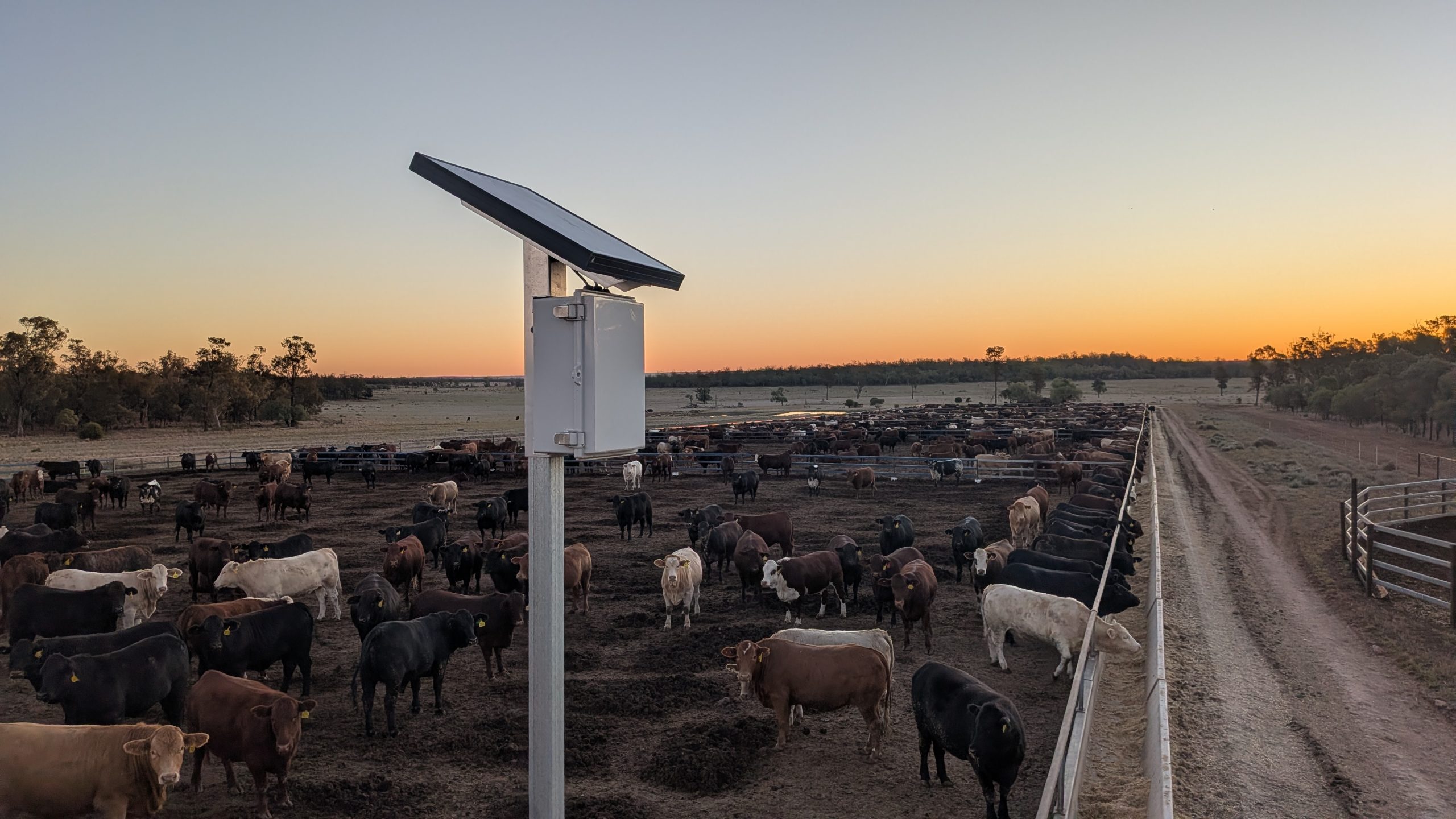
Bovision has been developed on two Qld feedlots to monitor cattle health.
TECHNOLOGY that monitors cattle health and performance in a feedlot is currently being developed on two Queensland feedlots, to help pen riders identify sick animals earlier.
Bovision is a vital signs monitor that uses overhead and water trough cameras to watch every animal in a feedlot pen continuously, to catch problems as alerts rather than as losses.
The system is designed to support pen riders, not replace them, according to cofounder and CEO, George Gleeson.
“I grew up in the Queensland beef industry, and both sides of my family have a background in lot feeding, so I’ve spent a lot of time around pens and around the people who look after them,” he said.
“Cattle are very good at hiding when they’re crook, and by the time an animal looks sick it has often been going downhill for a day or two.
 “The experience and judgement of a good pen rider is what makes a feedlot work, and we want to give them better information to work with.
“My cofounders and I are engineers, and we wanted to build something that supports the pen riders and lot feeders, so there are eyes on every animal around the clock, and they can put their time where it’s needed most.”
The technology is still in the trial phase but has been developed from the beginning on two Queensland feedlots owned by the Penfold family, who run the Four Daughters Beef brand.
“Having people who live and breathe lot feeding guiding us from day one has shaped the whole system, and they’ve been honest with us about what’s useful and what isn’t,” Mr Gleeson said.
The technology is being installed in two more Qld feedlots before the end of the year to expand the trial.
“We’re keeping the trials small while we prove the system works, and the plan is to expand to more pens and more feedlots once we have the results,” Mr Gleeson said.
“For the first few months the system will be recording and learning, and the feedlot teams will share their pen rider pulls and treatment records with us so we can check what the system sees against what the experienced people on the ground are seeing.
“We’re aiming to have the first alerts going to pen riders early next year and then run those trials for at least six months to make sure it’s genuinely helping before we talk about a commercial rollout.”
No collars or tags required
The Bovision technology does not require an attachment to the animal, instead it matches the data to an animal’s NLIS tag.
“Nothing for the crew to fit, charge or maintain. No workflow change. The system fits the way your yard already runs,” Mr Gleeson said.
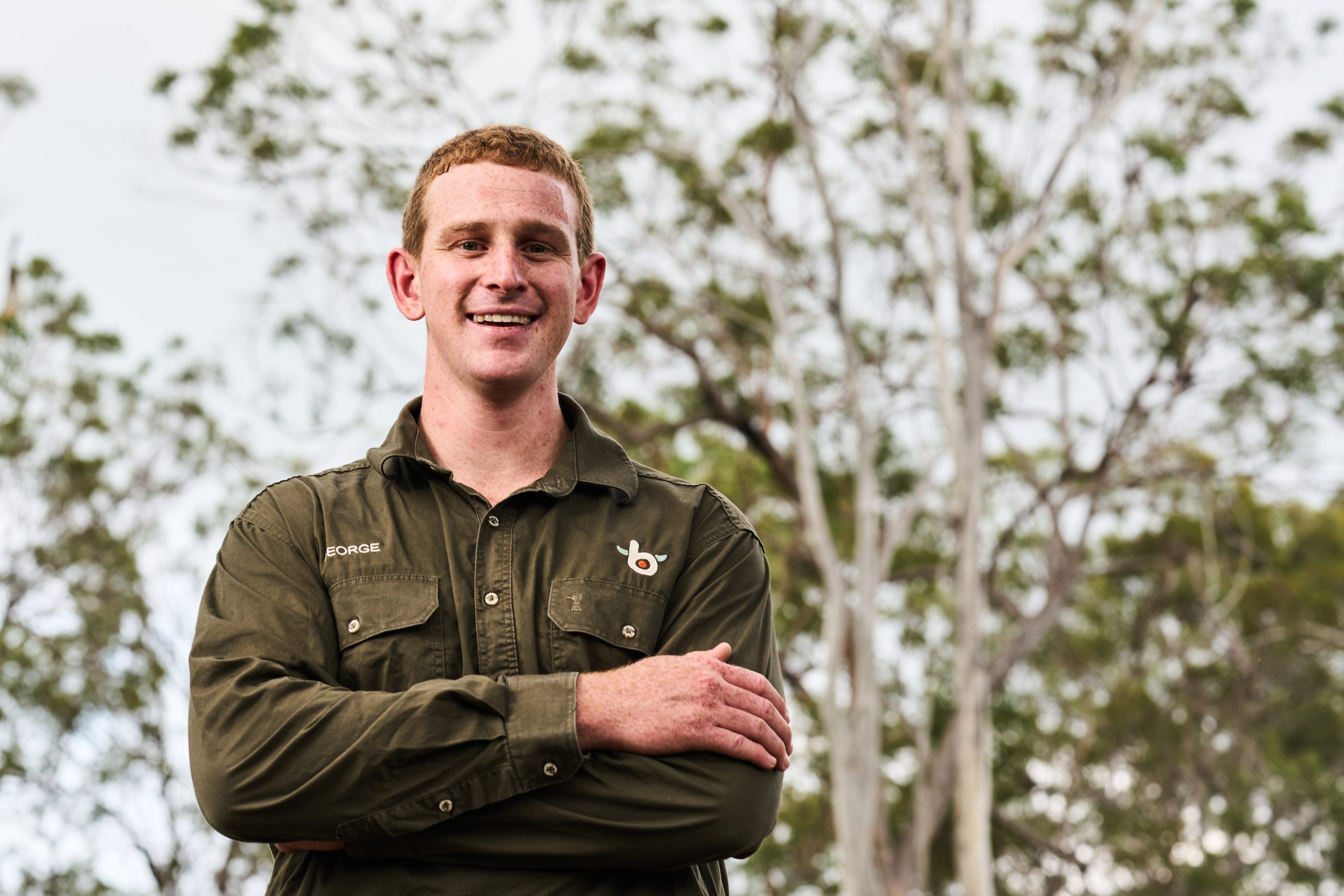
George Gleeson, Cofounder & CEO, Bovision.
The system requires cameras that overlook the pen and additional cameras at the water troughs to follow each animal as it moves around throughout the day and night.
“Every time an animal comes in for a drink, a camera at the water trough reads the ear tag it’s already wearing, which confirms who that animal is,” Mr Gleeson said.
“Putting those together, we can build a picture of each animal’s normal behaviour, like how often it goes to the feed bunk and the water trough, how much it moves around, how long it spends lying down and where it sits in the pen.
“When an animal starts getting sick it usually changes that behaviour before it looks sick to the eye.
“It might go off its feed, drink less, hang back from the group or spend more time lying down.
“The system looks for those changes and flags the animal to the pen rider, so they know which animal to check and where to find it.”
Bovision is also looking into thermal cameras that could be used at the water trough to monitor body temperature and signs of heat stress, but that work is at an earlier stage.
Bovision identified as part of ag Groundbreakers Program
Mr Gleeson is one of five emerging agrifood leaders from Australia and New Zealand that has been selected for the evokeAG Groundbreakers Program, which supports emerging agrifood leaders, aged 18-30, to develop their leadership capabilities, build industry connections and accelerate the impact of their work.
“Our primary industries need people who can identify the challenges facing the producers and businesses and develop practical solutions that make a difference,” Brianna Casey AM, AgriFutures Australia Managing Director said.
“These five emerging leaders are doing exactly that, applying new ideas and technologies to issues ranging from workforce availability to waste reduction and input efficiency.
“Supporting emerging talent is about more than recognising a good idea. It’s about helping people build the skills, networks and opportunities to take their ideas further and deliver meaningful outcomes for industry.
“That connection between innovation, adoption and impact is central to what we want to achieve through evokeAG.”
Over the coming months, the Groundbreakers will participate in a tailored leadership development program, connecting with industry leaders, investors, researchers and innovators before taking the stage at evokeAG in February 2027.
The five selected for this year’s Groundbreakers program are:
- Yasmin Wessels (NZ) – Founder of The Flower Loop, which has collected and processed more than one million plastic flower sleeves for recycling.
- George Gleeson (QLD) – Founder of Bovision, using technology to help producers detect cattle illness earlier.
- Tom Bessell (NSW) – Co-founder of ALBON, developing algae-based technology to treat agricultural wastewater and recover valuable resources.
- Zoe Carter (VIC) – Founder of Agriculture Jobs Auswide, connecting agricultural businesses with workers across Australia.
- Zane Sheffield (SA) – Co-founder of Agtech By Design, whose WeedSelector technology is helping growers reduce herbicide use.
HAVE YOUR SAY