
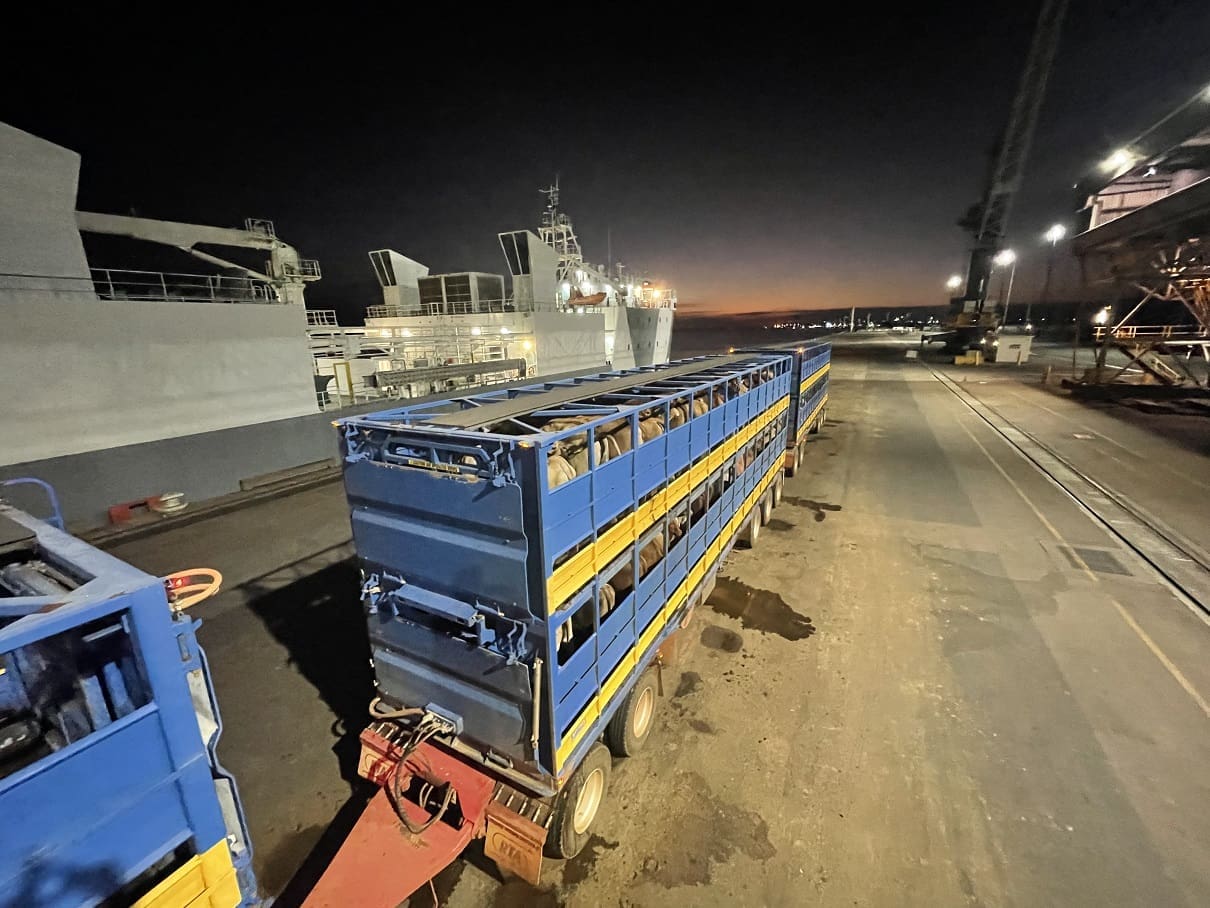
Australia’s live cattle exports fell by almost 35 percent in September, but Darwin feeder prices remain firm as the trade prepares for an expected lift in Indonesian buying ahead of Ramadan.
September shipments totalled 46,765 head, down from 71,711 in August which was the highest monthly total of 2026 bolstered by buying from Indonesian feedlots to replenish depleted cattle numbers.
Export buying activity is anticipated to increase again from November as feedlots move to fill pens in preparation for next annual peak Ramadan/Lebaran supply period, which falls in February 2027.
Several trade sources contacted by Beef Central this week reported Darwin live export steer prices around 450c/kg liveweight, with prices reaching 460c/kg in areas.
Those prices continue to test Indonesian importers, who face higher freight costs, weak economic conditions, reduced buying power from a weaker rupiah and concerns about government limits on finished cattle selling prices.
However, northern livestock agent Michael Spencer, of Adcock Partners Property and Livestock, said cattle were continuing to move and there was no significant build-up of Australian supply awaiting export.
Shipping schedules help maintain the balance
Mr Spencer said shipping activity was central to the balance between Australian cattle prices and what Indonesian customers could afford.

Michael Spencer
More vessels arriving in northern ports increased competition among exporters trying to secure cattle to fill them.
Conversely, diverting vessels to longer voyages, including southern dairy cattle shipments, reduced the immediate pressure to source northern feeder cattle while keeping ships working.
That was reflected in the September shipment figures which, in addition to the 34,085 head shipped to Indonesia, also saw 7567 dairy cattle shipped to China and 5213 feeder and slaughter cattle shipped to Vietnam – the highest monthly figure to that market this year.
Mr Spencer said the current shipping schedule appeared to be maintaining a workable balance, with producers receiving attractive prices and Indonesian customers continuing to write contracts.
“Australian producers should be happy at $4.50 and I think they are, the customer would like it cheaper than that but they’re doing business at that, they’re writing contracts at that price.”
The annual turn-off of floodplain cattle in October and November would add supply, but Mr Spencer did not expect a large volume of uncommitted cattle to weigh on the market.
He estimated a typical floodplain turn-off at 40,000-50,000 head, with perhaps one-third already committed to operator owned supply chains.
“So I don’t think there is a big glut of them going to be sitting on the market waiting for homes,” he said.
Cost pressures weigh on the broader outlook
Addressing an audience of northern cattle producers in Cloncurry last week, Global Agri-Trends market analyst Simon Quilty outlined noted that Indonesian feedlots continue to face a squeeze between higher cattle and operating costs and limits on finished cattle selling prices.
A weaker rupiah reduced their purchasing power, while higher freight costs and competition from cheaper Brazilian offal added further pressure.
“The falling Rupiah makes buying power very limited within that market,” he said.
Mr Quilty also expected Australian cattle prices to rise further as herd rebuilding gained momentum, potentially increasing the challenge for price-sensitive export customers.
“This year I think we’re going to see probably overall forecast Australia drop to about 614,000 head,” he told the All About Beef event.
Cheaper protein reshapes other markets
Elsewhere in South-East Asia, Mr Quilty said competition from Indian buffalo meat was severely constraining demand for Australian live cattle.

Simon Quilty. Image: Kim Woods
He expected Australian shipments to Vietnam to total only 10,000–20,000 head this year.
Mr Quilty also pointed to Brazil’s expanding live cattle trade,which is due to ship about 1.2 million head this year.
Brazil had gone from exporting very few cattle a decade ago to significant numbers now, which was partly due to cheaper prices, which are currently about 21 percent lower than the cost of Australian live export cattle.
Also helping to drive the growth of the Brazilian cattle export trade has been the strength of the market it provides in the Middle East.
“So if you look at the key markets of Egypt, Saudi Arabia, Iraq, they are all oil driven,” he said.
“And as you can see, oil prices today thanks to the Gulf War, are up considerably, they have money to spend.
“And Morocco is doing well. Why? Well, the truth is Morocco’s third largest income is fertilizers, and like anything oil, fertilizers gone through the roof and enabled them to import a lot of live cattle
“And also Turkey, well that is just all about cheap cattle out of Brazil versus Europe.”
HAVE YOUR SAY