
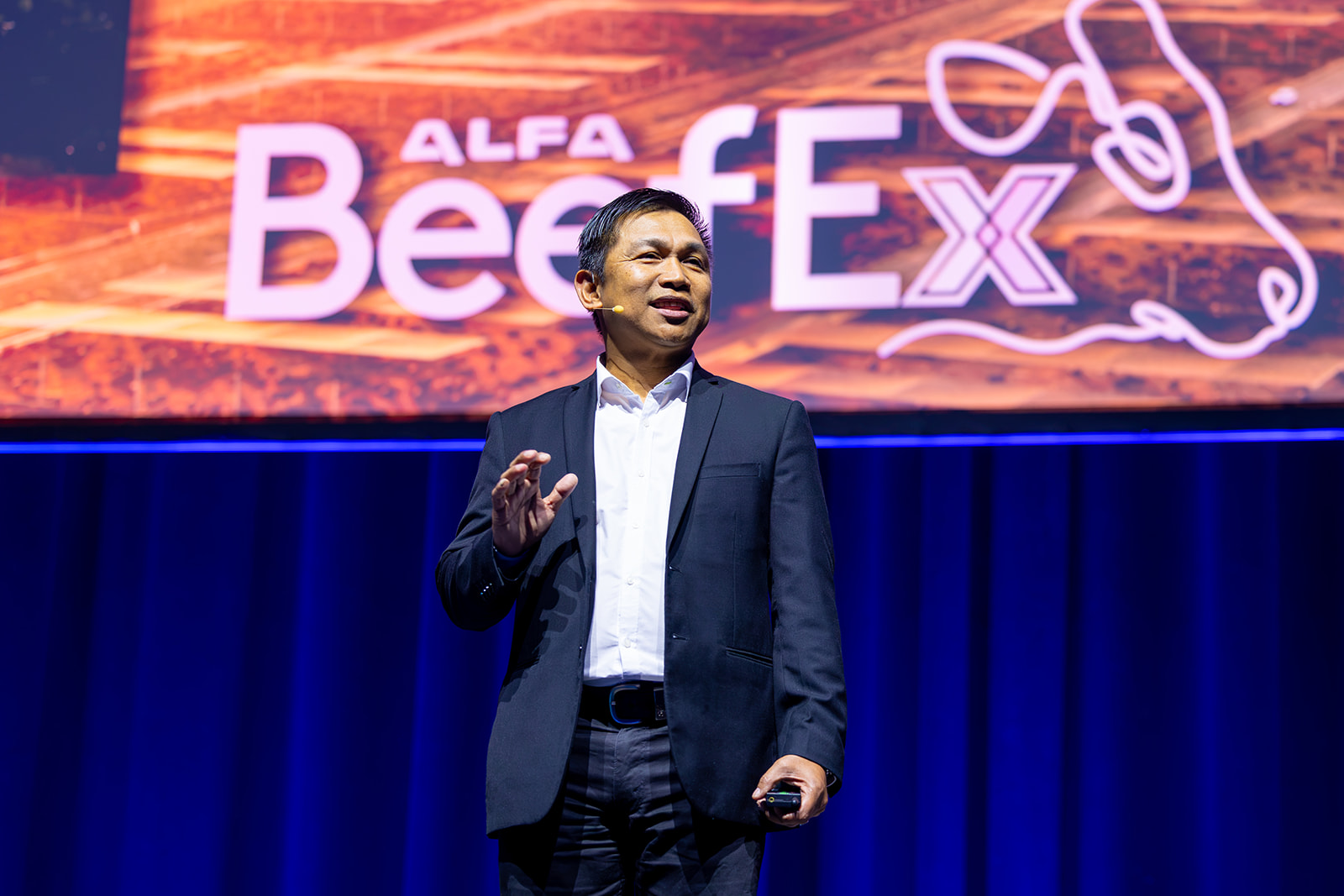
Arnel Corpuz was one of the first Filipino workers to join an Australian feedlot.
‘IT’S not simply a better job, it’s a better future for the next generation of our family’, that was the message Arnel Corpuz, one of the first Filipino workers to join an Australian feedlot, delivered at BeefEx 2026.
In his delivery, which at times was emotional as he shared why he left his family to build a life in Australia, Mr Corpuz outlined how feedlot businesses can help create workplaces where people from different cultures truly become part of the team.
Today Mr Corpuz helps build the feedlot industry’s workforce with overseas workers that keep many of them running.
“Give somebody an opportunity, teach them well, set high standards, trust them and give them time. They will not just build a career. They will help build your business,” was the advice Mr Corpuz shared at the grain fed beef industry’s biennial event.
‘Retention begins on day one’
Today there are close to 200 Filipino workers in Australian feedlots, which was estimated to be one in every 11 feedlot workers, highlighting the importance of overseas workers to the industry.
Beef Central first wrote about the offshore labour trend in lofeeding in this report published in January.
“Most of the Filipino workers I know have built a career of around 14 years. Some are progressing to supervisory and management positions,” Mr Corpuz shared.
But ‘retention begins on day one’ Mr Corpuz outlined in his delivery, highlighting the simple things that can make a big difference to helping new overseas workers feel confident in their role.
When a new worker understands why their work matters, they will take ownership.
“The first 30 days can shape or break a new worker’s future in this industry,” he said.
“I still remember my first 30 days in Australia. They were the loneliest days of my life.
“My wife and two young daughters remained in the Philippines, and I wanted to prove that hiring me was the right decision. But there were moments when I wondered if I truly belonged.
“Overseas workers know that feeling – learning a new job, a new workplace, a new culture in a new country, all at the same time.
“Sometimes silence can be misleading. A quiet worker may still be building confidence, trying to understand, or trying hard not to make a mistake.
“The first 30 days is not only a test of the new worker, but also a test of the workplace.
“How well do we welcome people? How well do we teach, and how well do we build their confidence?”
The simple things that can make a big difference
Mr Corpuz shared three simple tips that could make a big difference for helping new workers feel valued, confident and reassured in their decision to work in a feedlot.
“Firstly, explain the whole system. Do not just teach the task. Show them where it fits. If someone is feeding cattle, show them how that work connects to bank management, animal health, welfare, and the whole performance of the feedlot.
“When a new worker understands why their work matters, they will take ownership.
“Secondly, give every new worker someone they can go to to safely ask questions. It doesn’t need to be the manager. Sometimes the best mentor is an experienced worker who is happy to help.
“When people feel safe to ask, they will learn faster, and they will work safer.
“Thirdly, give every new worker time to learn. Learning is not a weakness. If we invest patience early, often we gain loyalty later.
“None of these things are complicated, but together they could shape an entire career.”
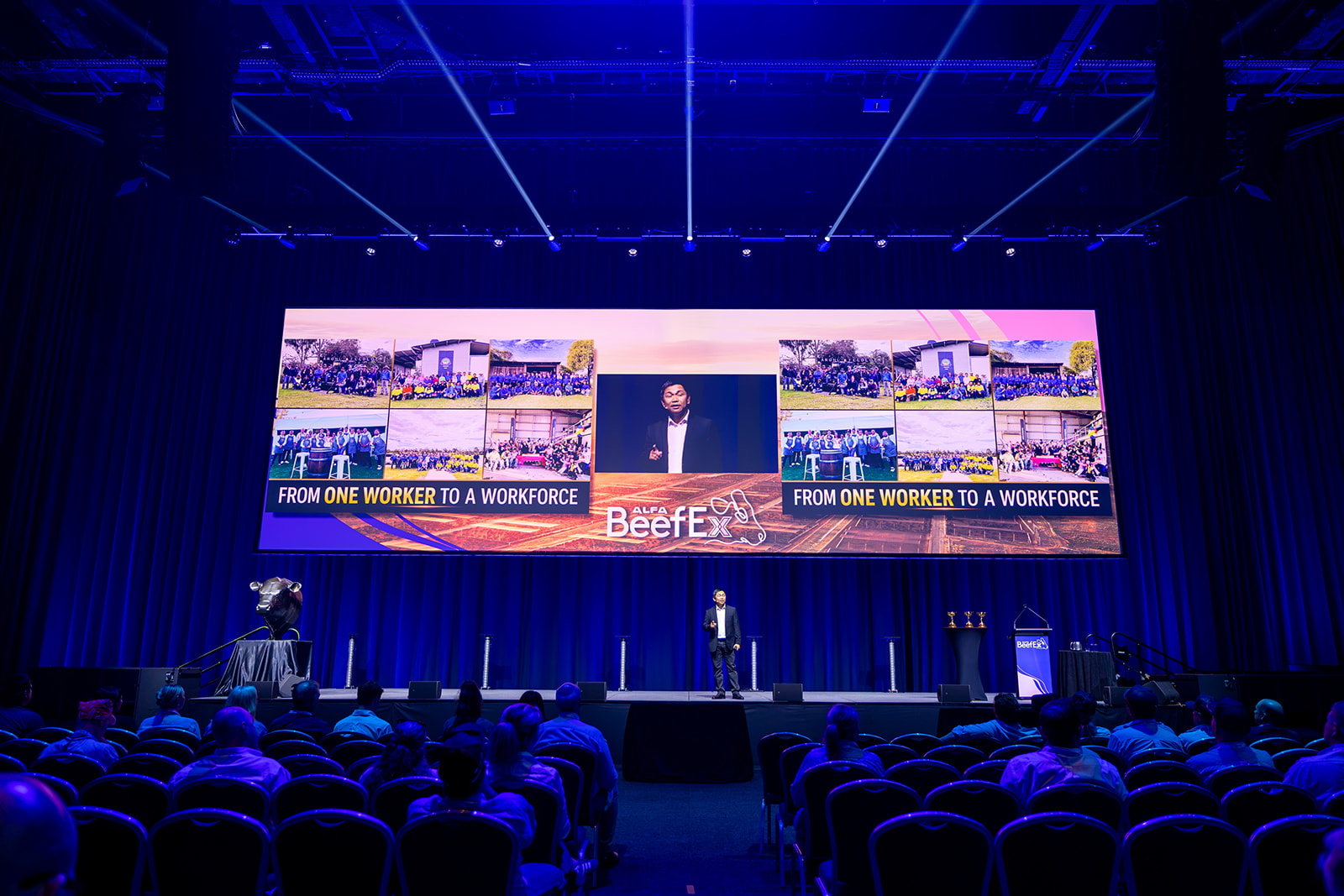
Mr Corpuz said underlying all of this is good communication.
“If you are the one giving the instructions, slow down, use simple language. Good communication is everyone’s responsibility,” he said.
I did not have a chance to finish university, but because this industry opened a door for me, both of my daughters were able to graduate from a prestigious university.
Mr Corpuz also outlined the importance of making workers feel like they belong.
“Personally, I don’t believe that the hardest thing for a new worker is learning to feed cattle, or ride a horse or operate machines,” he said.
“The hardest thing for a new worker is believing that he belongs.
“Once that new worker believes that he belongs, his confidence changes, his performance changes, and sometimes his whole future changes.”
How a feedlot job builds a better future for overseas families
As part of his address at BeefEx Mr Corpuz shared what a job in an Australian feedlot provided for his family, highlighting that it wasn’t just a job or money, but a better future for the next generation
“There is another side of this story. When people arrive at the feedlot, we only see the worker, but not the family behind them,” he shared.
“When I first arrived in Australia, my youngest daughter was only two years old. When I finally went home, she was already 30.
“Those are the years that I can never get back. And many overseas workers made the same sacrifice – they miss birthdays, miss school activities, moments that can never be repeated, but they make that sacrifice to give the people they love a better life.
“For me personally, I did not have a chance to finish university, but because this industry opened a door for me, both of my daughters were able to graduate from a prestigious university, and one of them is now a lawyer.
“To me, that is what opportunity looks like. It’s not simply a better job, it’s a better future, and for most overseas workers, that better future is not only for themselves, but also for the next generation.”
HAVE YOUR SAY