
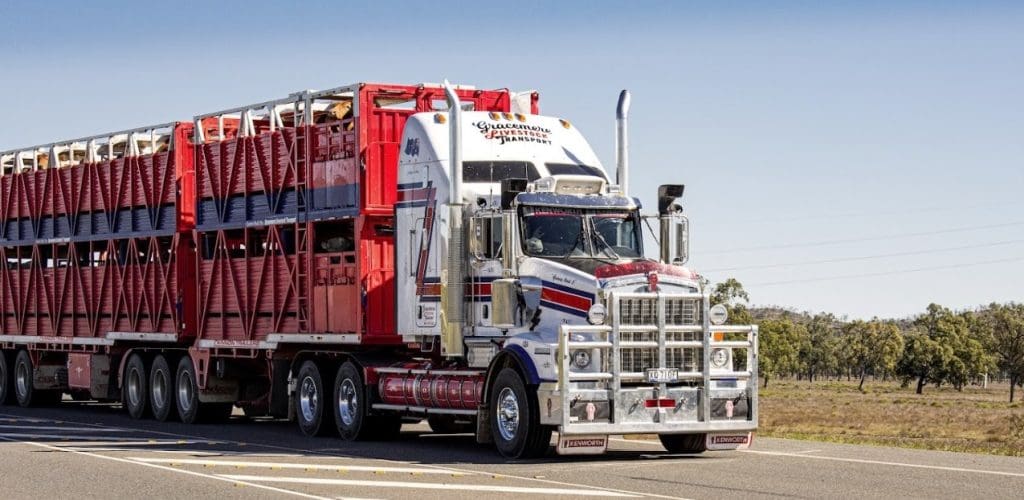
THE first early works project under the $500 million Central Queensland Beef Roads Program has been delivered, with construction now complete on Clermont-to-Alpha Road north of Alpha.
A 3km section of the key freight corridor is now sealed, meaning safer journeys for locals and a more reliable and accessible route for the beef industry, the state government said in a statement.
The Central Queensland Beef Roads Program will progressively upgrade and seal priority sections of nine strategically important freight corridors across Central and Western Queensland.
This completed section forms part of the early works package which was announced in 2024 to bring forward delivery of the Program.
Construction is now continuing on Clermont–Alpha Road south of Clermont, Fitzroy Developmental Road north of Bauhinia and Alpha–Tambo Road south of Alpha, while design work progresses on May Downs Road west of Clarke Creek.
Together, these upgrades are helping to strengthen beef supply chains, supporting regional jobs and building the infrastructure needed to support Queensland’s world-class beef industry into the future.
 The Central Queensland Beef Roads Program was advocated for by seven regional councils in central Queensland and is funded with $400 million from the Federal Government and $100 million from the Queensland State Government.
Federal assistant minister for regional development, Senator Anthony Chisholm said this was an important milestone not only for the Central Queensland community, but for agriculture and freight industries which use this road network every day, supporting safer and more reliable freight connections across some of the state’s most important beef-producing regions.
“Through the early works package, we are delivering priority upgrades that will strengthen supply chains, improve access and support the long-term productivity of Queensland’s cattle industry,” he said.
Acting Queensland Minister for Transport and Main Roads, Tim Mander said completing the first early works project was an important milestone, showing how targeted investment can deliver practical improvements for regional industries, local economies and the communities that depend on these routes every day.
“By progressively sealing priority sections of Clermont–Alpha Road, we’re getting Queenslanders home safer and sooner, while strengthening freight reliability and supporting primary producers, transport operators and communities that rely on this corridor every day,” Minister Mander said.
“This is the culmination of long-running advocacy and will make a real difference for producers, truck drivers and communities. This investment is critical for the beef industry’s prosperity, community and social cohesion and the safety of all users.
Isaac Regional Council Mayor and Queensland Beef Corridors Committee Chair, Kelly Vea Vea said the milestone was about recognising what can be achieved when regional councils and governments work together with a shared vision.
“Central Queensland Beef Roads Program supports one of Australia’s most significant beef-producing regions and this project is an important milestone, but there is still more work ahead to improve freight access, safety and resilience across the network,” she said.
Barcaldine Regional Council Mayor Rob Chandler said the Australian and Queensland governments’ commitment to fund the Beef Roads Program would make a huge difference to landholders, self-drive tourism, freight and agriculture right across Central Queensland.
“Cattle will arrive at their destination in better shape with much less wear and tear on machinery and quicker delivery times. The advocacy for this funding has been in the pipeline for many years, and its success is a credit to those who have been involved,” he said.
Mayor of Woorabinda Aboriginal Shire Council, Terence Munns said improved road conditions would reduce transport costs, improve access to markets, and strengthen the long-term sustainability of the cattle industry and agricultural sector in the region.
“The upgrades will also shorten travel time and improve connectivity, safety and access to essential services and opportunities,” he said.
Source: Qld Govt
HAVE YOUR SAY