
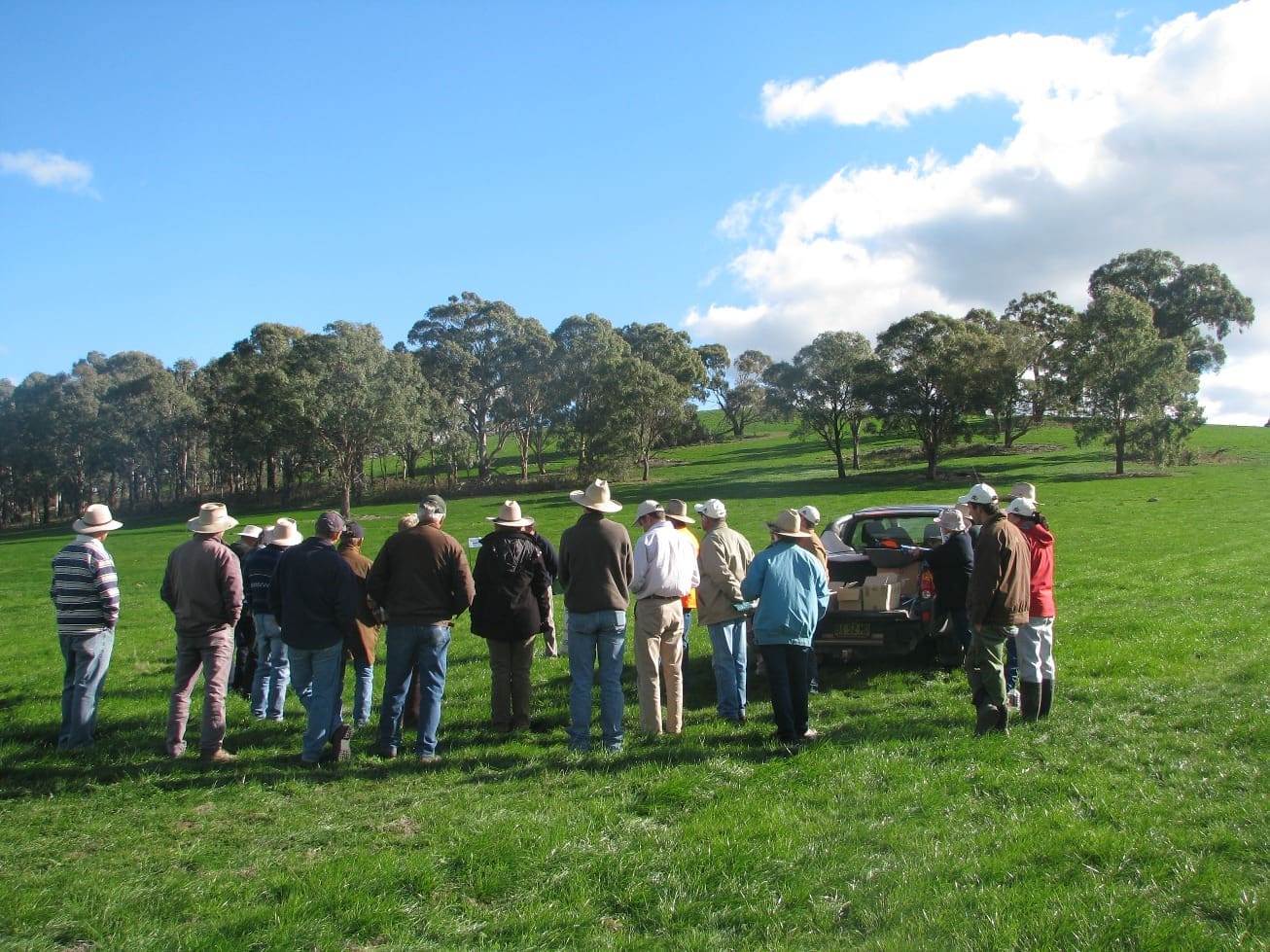
THERE is a joke doing the rounds in farming circles that the average shed meeting looks less like a business planning session and more like a pension fund AGM. It is not far off the mark.
Depending on which numbers you look at, close to 30 percent of the agricultural workforce is now aged 60 or over. Livestock enterprises skew even older, with the average sheep farmer pushing 62 and the average beef farmer closer to 64. The average age of an Australian farmer has crept up about a decade over the past twenty years, to 59, roughly twenty years older than the average worker in most other industries.
None of this is new information to anyone who has spent five minutes at a saleyard, a field day or an annual general meeting. What is new, or at least newly urgent, is the arithmetic. Around half of Australia’s farmers are expected to retire within the next fifteen years. That is not a slow generational drift, it is a queue forming at the exit, and there is not nearly enough of a queue forming at the entrance.
Young people, defined generously as those between fifteen and thirty-four, make up around a quarter of the agricultural workforce, well short of the roughly one third share they hold across the broader Australian economy. Poultry and horticulture attract more of them than broadacre and livestock, for reasons that are not hard to guess. There are worse places to start a career than a shed full of chickens with reliable hours and a bitumen road out front.
So why the reluctance to buy into beef, wool and grain?
 Start with the obvious. Farming leadership and ownership pathways are still overwhelmingly generational, which is a polite way of saying that if you were not born into the right family, or married into it, the on-ramp is narrow. Succession, where it exists at all, is often an informal understanding rather than a plan, discovered by the next generation only when it is too late to negotiate on equal terms. Where there is no family succession in prospect, corporate and leasehold structures are filling some of the gap, but they come with their own, more conventional, career ladders that a school leaver in the city has never heard exist.
Then there is isolation, which does more damage to recruitment and retention than any input cost ever will. It is one thing to romanticise the bush over a long lunch in the city. It is another to actually live three hours from the nearest cinema, an hour from decent mobile coverage, and further still from a peer group of twenty somethings who are not all married with two kids and a ute. Young Australians report some of the highest rates of loneliness of any age cohort, and rural service gaps, in mental health support especially, make that worse rather than better the further you get from town.
Add to that the capital required to get a start in ownership, the physical toll of the work, and a persistent perception problem, that agriculture is short on career progression and long on manual labour, and it is little wonder the pipeline is running thin.
There are green shoots. The National Farmers’ Federation’s AgCAREERSTART program, a paid on farm placement for eighteen- to twenty-five-year-olds, has already placed more than two hundred participants since 2022, with a meaningful share from metropolitan backgrounds who had no prior connection to the land. Early evaluation of the program points to a strong return on the public and industry investment behind it. Various commodity groups now run their own future leaders and young producer programs, aimed squarely at giving the next generation a seat at the table well before the current occupants are ready to vacate it.
These programs matter, but they are treating the symptom, not the disease. The disease is that agriculture, for all its economic importance, still asks young people to accept a level of isolation, uncertainty and capital risk that most other industries do not, without always offering a correspondingly clear path to leadership or ownership in return.
Fixing that is not solely a job for government grants or gap year placements, welcome as they are. It requires industry bodies, family enterprises and corporate operators alike to formalise succession and leadership pathways well before retirement is imminent, to invest properly in rural connectivity and mental health services, and to sell agriculture honestly, as a genuine career with genuine leadership prospects, rather than a lifestyle choice for the already committed.
The current generation of farmers built an industry worth defending. The least we owe them, and the next generation, is a proper plan for who runs it when they are gone.
 Trent Thorne is an agribusiness lawyer with Hamilton Locke
HAVE YOUR SAY