
- This article has been updated since first published to include position statement from WA Farmers

Image: Shutterstock
STATE farm organisations have backed the first major review of the $5-per-head cattle transaction levy in two decades, but say any proposed changes must be backed by detailed business cases demonstrating clear benefits for levy payers.
Beef Central has sought the views of SFOs across Australia this week as the cattle transaction levy review consultation process enters its final stages.
While some organisations are open to greater flexibility in the allocation of levy funds, and potentially an increase in the levy, others oppose changes to its rate, funding streams or direct levy recipients without compelling evidence of value and return on investment for levy payers.
AgForce
AgForce Cattle Board president Lloyd Hick said the organisation supported the review and believed it was long overdue. He called for future reviews to be conducted at fixed and more frequent intervals.
Lloyd Hick
“20 years is too long. Five years is a long time in industry, things change quickly nowadays,” Mr Hick said.
Also high on AgForce’s priority list was greater flexibility to redirect levy funds as industry needs changed, particularly in response to an exotic animal disease outbreak or other emerging threats.
“If we get an outbreak of an exotic disease, we are going to have to be able to get money from somewhere,” Mr Hick said.
The cost of doing business was different from 20 years ago, he said, adding that key programs and organisations such as the National Residue Survey and Animal Health Australia were struggling for funds.
Rather than necessarily taking money from another area, Mr Hick said AgForce was open to modelling that showed how an increase in the levy might work.
“Whether that comes from marketing or somewhere else I am not sure. I’m personally a little against taking money away from somewhere,” Mr Hick said.
“I think our opposition to agriculture have got so much money, we’ve got so much competition against us at the moment that we can’t afford to be cutting corners.
“So as part of the process we would like to see modelling done not only cutting money from certain areas but to actually see what the business model looks like if we actually add something to it.
“Can we achieve more rather than saying we’ve got lots of international markets, we can stop spending there. We are more inclined to think we’ve done a good job, but can we do better a job?”
He said engaged producers were generally open to paying more if the additional money was well managed and delivered demonstrable value.
“They just want people to be held accountable for the spend,” he said.
“I don’t think it is so much on the amount but it is accountability.”
Strong communication with the wider community and domestic and international markets was also important, he said.
 “I just keep going back to telling our story, I think there is a massive amount that we need there.
“We’re losing our connection with our consumer within our country, we’ve moved another generation further away from the grandfather and the uncle owning a farm, and we need to educate our consumer.
“Competition now is higher than it has ever been. We certainly have a lot of markets open to us but things can change very quickly, with Brazil coming in or God help us if we get an exotic disease and we need to find markets that will help take our product after that.”
On funding for national industry representation, Mr Hick said there was a case for better resourcing, but any model using levy money would require strict governance and accountability arrangements.
“It is a really complicated one when you start to dig into it. But we must find some other way rather than just membership to fund our organisations,” he said.
“We can’t protect and run our industry on a few donations from members.”
Cattle Australia and state farming organisations needed sufficient resources to represent producers effectively, particularly as their workloads increased and opposing campaign groups became better funded and organised, he said.
Many industry representatives had travel and meeting expenses covered but received no payment for substantial amounts of time spent away from their businesses.
“We’ve got to realise the value of our industry. And it can’t just be kept being run by volunteers unfortunately, the role is getting bigger and bigger and the opposition are very well funded and very well organised.”
Mr Hick said AgForce remained comfortable with the direction of the review and was encouraging producers to attend consultation meetings, learn more about the levy and contribute their views.
NSW Farmers
NSW Farmers Cattle Committee chair Tony Hegarty said the organisation had maintained a consistent policy for some time, which included no increase in the quantum of the $5-per-head levy and a detailed business case before any proposed change could be considered.
Tony Hegarty
“There needs to be a really good case to present if you even consider a change there,” Mr Hegarty told Beef Central.
NSW Farmers also opposed direct levy funding for national industry representation.
“We’ve always had the policy of no levy to peak industry bodies. We recognise the service level agreements at peak industry body level between MLA is effectively bypassing that.
“Yes, that is there, but our policy is no direct – particularly direct – levy dollars to peak industry bodies.
“And then the other important one is the distribution between the streams, our current policy is not to have that change,” he said.
“We would like to see with any push to have a change there, we would like to see the business case around it – what is the justification, what is the return on investment, where is the best return going to be on that dollar, or those cents, whatever it is, whether it has moved from one thing to another.”
Mr Hegarty said NSW Farmers recognised concerns about the funding available to the National Residue Survey and Animal Health Australia.
“The other thing Cattle Australia have raised is independent streams for various things and one is Industry Systems.
“We’re not sure of the efficiencies there, creating a new body could be adding to the overhead costs and therefore loss of value, but also the biosecurity thing, having an independent biosecurity stream may allow Federal Government to reduce its funding levels.
“But more importantly, really when it comes down a biosecurity issue, certainly at the Federal level there is an overarching management, but the States really do the hard work.
“And if you look at the H5N1 at the moment, yes the Federal Government has a bit of it, the States are really the ones doing the hard work around that biosecurity incursion.
“So we’re very reluctant to have an independent stream of biosecurity.”
Victorian Farmers Federation
Victorian Farmers Federation Livestock Group president Scott Young said the review was important, but emphasised that its focus needed to remain firmly on producer outcomes.
Scott Young
“It is always good to have a review of these levy systems over time,” he said.
“It is growers’ money that goes in. So we want to see outcomes for growers, that is number one.
“It is good to have a look periodically as to whether those levies are still fit for purpose, whether they’re still set at the right rate, and whether there has been sufficient outcomes out of that system to also warrant continuation of the levy.
“So it is good to have a look back and a look forward as to where that money is being spent.”
Mr Young said Victorian cattle producers effectively faced a “double hit”, paying the $5-per-head national levy on every animal sold as well as a state-based duty of up to $5 per head.
The Victorian duty is currently paused from October 2025 until September 30, 2026. Its proceeds go directly to Victoria’s Cattle Compensation Fund, which assists producers affected by mandatory disease-control measures, funds technologies and projects to prevent, control and manage pests and diseases, and subsidises the cost of mandatory NLIS tags for Victorian producers.
“At the moment I don’t hear complaints from producers about the levy, but as soon as you start increasing the levies without showing outcomes to warrant that increase, that is when producers start to be concerned,” Mr Young said.
“I’d definitely be wanting to see some outcomes as to any reason for raising that levy at the moment understanding that Victorian producers already pay an extra state levy for state-based outcomes.”
Mr Young noted that the VFF was not currently a paying member of Cattle Australia.
“At VFF we’re not members of CA at the moment although we still do get engagement from them.”
He said producer turnout at Cattle Australia’s levy consultation meetings in Victoria had been low, attributing that to the short notice provided.
“That was the same story I heard from other States was that the time frame was quite challenging,” he said. “Unfortunately they were a bit last minute, it is hard to get people along.”
Livestock SA
Livestock SA also emphasised the need for more detailed information and business cases before producers decide on the review’s outcomes.
Travis Tobin
“Livestock SA made a formal submission to Discussion Paper One in June. Livestock SA supports reviewing whether the Cattle Transaction Levy remains fit for purpose, but we have not endorsed an increase in the levy, additional levy streams or new levy recipient bodies at this stage,” Livestock SA CEO Travis Tobin said.
“Any proposed change must demonstrate measurable producer benefit, strengthen accountability and transparency, avoid unnecessary duplication, and make the best use of existing levy structures before adding further cost or complexity.”
The South Australian body also prioritised better coordination between livestock-sector representation on national and state issues to avoid duplication.
“Livestock SA also considers that greater attention should be given to how levy-funded functions can be better coordinated across the livestock sectors.
“Many functions funded or proposed for funding through levies, including research, biosecurity, integrity systems, producer capability and industry representation, are not species-specific.
“Producers should not be required to fund duplicative governance, consultation and delivery structures where shared arrangements could achieve better outcomes.”
Livestock SA also called for more detail, including an independent economic analysis, before producers were asked to make a decision on the review.
“Livestock SA has not formed a final position on the additional options raised through the review. Producers should not be asked to consider changes to the levy in isolation from the governance arrangements that would support them.
“All relevant information and evidence should be presented as a complete package, including the independent economic analysis identified at the outset of the review, consultation findings and recommendations, and the proposed implementation details to enable an informed view.”
Northern Territory Cattlemen’s Association
Northern Territory Cattlemen’s Association chief executive officer Romy Carey said the NTCA welcomed the long-awaited review as an important opportunity to ensure the levy remained fit for purpose.

Romy Carey
“Our submission and broader views, informed by our members, support a considered, evidence-based process that strengthens producer confidence and delivers demonstrable value to levy payers.
“We believe the existing levy should first be thoroughly examined to ensure it is operating as effectively and transparently as possible before any change to the overall rate is considered.
“Ultimately, any reform must retain producer confidence, respond to emerging industry priorities and deliver practical benefits across all regions and production systems.”
TasFarmers

Nathan Calman
TasFarmers chief executive officer Nathan Calman said the group had made two submissions to the cattle transaction levy review and encouraged cattle producers to participate directly in the process.
“We are keen to see the sector engage with the review and have its say on the future of the levy.
“Our priority is to ensure producers understand how levy funds are spent and have a genuine opportunity to influence any changes.
“TasFarmers supports greater flexibility in how levy funds may be allocated, provided any changes are underpinned by strong governance and a clear roadmap detailing how they will benefit levy-paying producers.
‘We are open in principle to levy funding being used for broader industry-good activities, including market access and trade-related work.
“However, producers need more detail before they can make an informed decision, including how much funding may be redirected, where it would go and what outcomes it would deliver.”
Pastoralists & Graziers Association
Western Australia’s Pastoralists & Graziers Association (PGA) forwarded a submission it had early provided to Cattle Transaction Leview review, stating that it welcomed the opportunity to contribute to the “long-overdue” review of the grassfed Cattle Transaction Levy (CTL).
 “The last comprehensive review was in 2006, and the industry operating environment has changed considerably since then,” the submission stated.
“The PGA does not support a simple increase in the $5 per head levy.
“Instead, we advocate for structural reform based on four core principles:
1. Move to an ad valorem levy (with a floor and ceiling) to ensure fairness across cattle values.
2. No net increase in total levy collected from producers above current levels.
3. Reallocate expenditure – reduce the proportion spent on marketing, increase funding for Research & Development (R&D), Animal Health Australia (AHA) and the National Residue Survey (NRS).
4. No future compulsory levy funds to be directed to advocacy bodies or agri-political activities of any kind.
“We do not support any new compulsory levy streams for biosecurity or integrity systems unless they are voluntary, contestable, and subject to direct producer approval at each renewal.”
WA Farmers
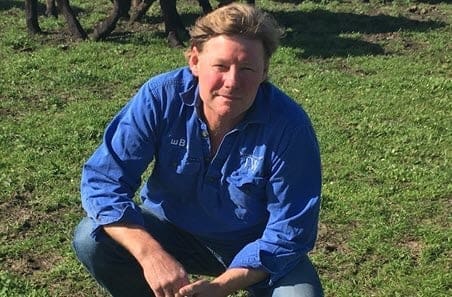
Geoff Pearson
WAFarmers has backed an increase in the Cattle Transaction Levy, arguing the levy should be restored broadly in line with the purchasing power it has lost since it was last set at $5 per head in 2006.
WAFarmers Livestock President Geoff Pearson said leaving the levy unchanged for 20 years had effectively resulted in a substantial reduction in producer investment in industry services.
“Five dollars in 2026 simply doesn’t buy what five dollars bought in 2006. The demands on our industry have increased enormously, but the levy funding those industry-good activities has stood still.”
The current $5 grassfed cattle levy allocates $3.66 to marketing, $0.92 to research and development, $0.13 to Animal Health Australia and $0.29 to the National Residue Survey.
WA Farmers supports reconsidering that allocation broadly in line with Cattle Australia’s position, with greater flexibility to respond to priorities including R&D, biosecurity, market access, traceability and emerging industry risks.
Mr Pearson said producers should view an appropriately structured levy as an investment, but any increase must deliver demonstrable value.
“We are not arguing for a bigger levy simply to build reserves or fund more bureaucracy. If producers are being asked to contribute more, they have every right to expect transparent investment decisions, measurable benefits and proper accountability.”
WAFarmers also supports a five-year review cycle to ensure both the levy rate and its allocation remain appropriate, rather than allowing another two decades to pass without a substantive review.
WAFarmers has also cautioned against allowing compulsory R&D or marketing levy funds to evolve into a general funding source for industry advocacy. The organisation recognises there can be legitimate value in funding independent research, economic analysis and technical evidence that assists industry in responding to government policy.
However, it believes a clear distinction must be maintained between research that informs policy and funding organisations to advocate a policy position. Mr Pearson said the principle was important for all producer representative organisations.
“If compulsory producer levy funds can be accessed by one advocacy organisation to support its policy work, you have to ask where the line is drawn. National, state and specialist organisations could all make a case for access to the same pool of money.”
“Levy funds should support genuine whole-of-industry outcomes. Core advocacy and representation should remain primarily the responsibility of organisations funded by their members.”
Mr Pearson said the growing expectation that levy funds support research associated with increasingly complex policy and regulatory issues actually strengthened the case for reviewing the overall levy rate.
“If we expect the levy to do more – more biosecurity, more research, more market access work and more technical work to support industry policy – then continually carving up the same $5 is not a sustainable answer.”
WAFarmers supports restoring the levy’s real value, modernising its allocation and introducing regular reviews, while establishing clear safeguards around the use of compulsory producer funds.
“The cattle levy has been frozen at $5 since 2006 while the costs and expectations facing our industry have continued to rise. It is time to restore its value, make sure it is directed to the areas delivering the greatest producer benefit, and ensure compulsory levy funds remain focused on genuine industry-good outcomes.”
There are some very worthwhile contributions coming forward in the discussion around the Cattle Transaction Levy, particularly the consistent call for transparency, accountability and a demonstrable return to levy payers.
For my part, I strongly support an increase in the cattle levy.
The levy has remained at $5 per head for twenty years, while the demands on our industry have increased enormously. If we are serious about adequately funding R&D, biosecurity, market access, traceability and importantly telling our industry’s story, then we must be prepared to properly resource those responsibilities.
However, increasing the levy is a very different question from changing the way it is collected.
I strongly support Ian McCamley’s caution against moving from the existing flat transaction levy to an ad valorem model.
I have worked with Ian in industry advocacy for many years. He has one of the sharpest minds in our industry, and when Ian puts forward a position backed by sound reasoning, his wisdom deserves very careful consideration.
His argument here is compelling. Cattle often change hands several times through the production chain. Under an ad valorem system, a breeder, backgrounder and finisher may each add a similar amount of value, yet the levy burden progressively increases because each subsequent owner is also being levied on the value they originally purchased.
That does not strike me as equitable.
I believe there is a strong case to increase the cattle levy and properly resource the challenges and opportunities ahead of our industry. But in doing so, we should retain a collection system that is simple, transparent and fair across the production chain.
On that point, I support Ian McCamley wholeheartedly.